English Entertainment
Laugh it off with Comedy Central’s new summer line up


MUMBAI: Taking forward the promise of unlimited laughter, Comedy Central, India’s leading 24-hour English Entertainment channel, brings to you nonstop laughter and madness. Gear up for a crazy summer as the channel announces the launch of new seasons of some beloved shows and a whole new show with About a Boy – Season 2, Brooklyn 99 – Season 2 and I Survived a Japanese Gameshow – Season 1 and 2. The new seasons are definitely going to give you a splash of high voltage drama filled with humour at its best. Keeping Comedy Central India’s ‘laugh it off’ spirit alive, the channel promises to up the laughter quotient during prime time, beginning this season.
Announcing the channel’s summer season line up, Ferzad Palia, Executive Vice President and Business Head, English Entertainment, Viacom18 said, “The success of Impractical Jokers has shown us India’s appetite for differentiated comedy content. Taking this proposition forward we are happy to entertain Indian audiences this summer with three new shows’ I Survived a Japanese Game Show’; which India will see for the first time, & also the new seasons of Brooklyn Nine Nine & About A Boy. Both these sitcoms are extremely popular in India & have been part of our highest rated shows of 2014”

About a Boy S2
About a Boy is a 2002 British-American comedy-drama film co-written and directed by brothers Chris Weitz and Paul Weitz. It is an adaptation of the 1998 novel of the same name by Nick Hornby. The film stars Hugh Grant, Nicholas Hoult, Toni Collette, and Rachel Weisz. The film at times uses double voice-over narration, when the audience hears both Will’s and Marcus’s thoughts.
Brooklyn 99 S2
Brooklyn Nine-Nine is an American action comedy television series that airs on Fox. Recently won two Golden Globe Awards in 2014. Set in the fictional 99th Precinct of the New York City Police Department in Brooklyn, the single-camera series follows a precinct team of detectives and a newly appointed captain.
I Survived a Japanese Game Show S1 and S2
I Survived a Japanese Game Show (originally titled Big in Japan) is an American reality show that inspired shows like Wipeout and Takeshi’s Castle. The show followed a group of Americans, who leave the United States for Japan where they competed in a Japanese style game show. The winner takes home US $250,000. The series won both the Best Reality prize and the overall prize at the 2009 Rose d’Or ceremony.
These shows will be supported by a 360 degree promotion plan which includes an extensive online leg, PR activations, on-ground events and so much more.





English Entertainment
Ellison takes his Paramount-Warner Bros case straight to theater owners
The Skydance chief goes to CinemaCon with promises and a skeptical crowd waiting
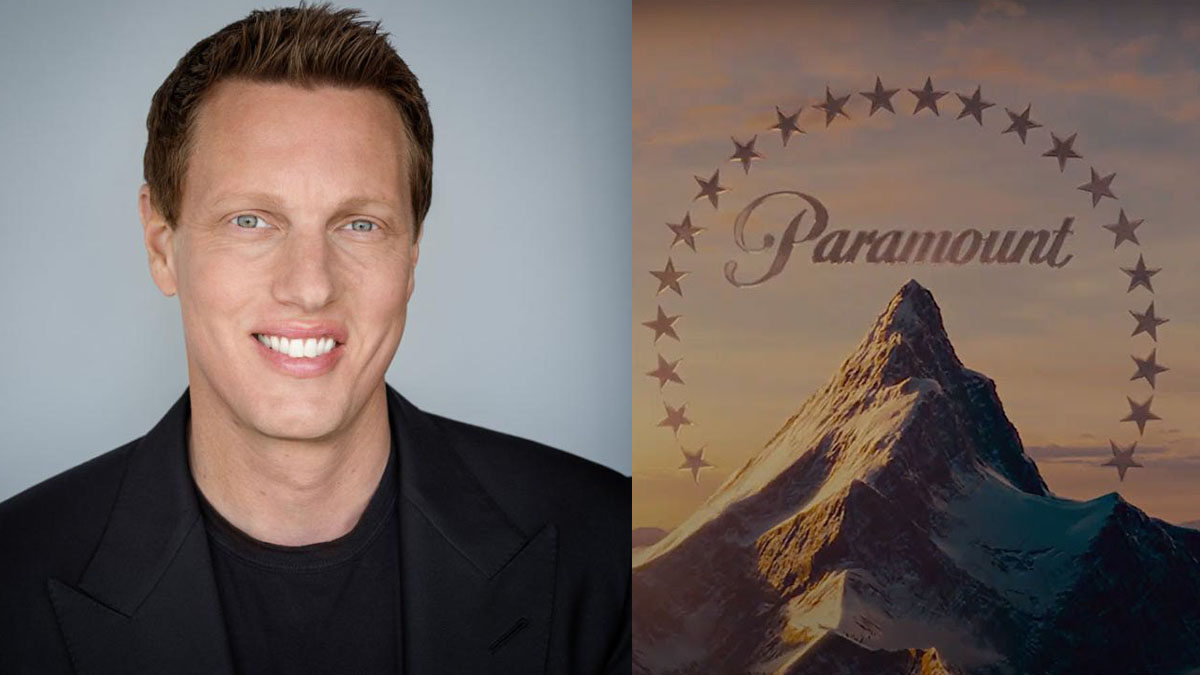
CALIFORNIA: David Ellison strode into a room packed with thousands of cinema owners and executives at CinemaCon in Las Vegas on Thursday and did something rather bold: he looked them in the eye and asked them to trust him.
The chief executive of Paramount Skydance vowed that his company would release a minimum of 30 films a year if regulators greenlight its proposed $110 billion acquisition of Warner Bros Discovery, a deal that has made theater owners deeply, and loudly, nervous.
“I wanted to look every single one of you in the eye and give you my word,” Ellison told the crowd. “Once we combine with Warner Bros, we are going to make a minimum of 30 films annually across both studios.”
It was a confident pitch. Whether it landed is another matter. Cinema operators have already called on regulators to block the deal, and scepticism in the room was hardly concealed.
Ellison pushed back by pointing to recent form. Paramount, born from the merger of Paramount Global and Skydance Media last August, plans to release 15 films this year, nearly double the eight it put out in 2025. Progress, he argued, was already underway.
He also threw theater owners a bone they have long been chasing: all films, he pledged, would run exclusively in cinemas for a minimum of 45 days, drawing applause from a crowd that has spent years fighting for exactly that commitment across the industry.
“People can speculate all they want,” Ellison said, “but I am standing here today telling you personally that you can count on our complete commitment. And we’ll show you we mean it.”
Fine words. The regulators, however, will have the last one.







