GECs
Zee Telefilms chucks out Chakra


It was media baron Subhash Chandra’s pet project to set up a channel advocating ancient Indian medicine, holistic healing, culture, meditation etc under the Organic or Chakra brand.
The channel’s main audience would be in Europe, America, South Africa, Australia, and some south east Asian nations. The channel would be encrypted and carried on both cable TV and DTH systems as a subscription service and was in the planning stages for more than two years. As recently as June, Chandra was heard cheerleading Chakra employees that they could do pull it off.
No more. Last month, the channel was given a quiet burial, in an unreported move, by, sources indicate, Zee Telefilms broadcasting CEO Sandeep Goyal. Apparently, Goyal took the decision to cut off the oxygen to the channel with the transfer of all broadcasting responsibilities to him. Some 10 employees of Chakra have since reportedly departed; a skeleton staff of three or four employees has been left.

The channel was reportedly talked of as a Rs 200 million project within Zee, but was actually sanctioned with only RS 80 million in funds, of which only RS 30 million was disbursed. Some 150 hours of holistic healing programming were created, with another 100 hours slated to be wrapped up and canned very soon.
With the money situation tight, Goyal reportedly decided to pull the plug on Chakra, and instead consolidate the existing businesses. He has, it is believed, told the programme syndication team within Zee TV to sell the rights to the Chakra shows, which have been produced, to anyone interested in buying them, whatever be the sticker price. Insiders claim it would be better if Zee TV would hold on to the programmes as they have plenty of shelf life and could be used later.
In recent times, other new forays such as the Urdu channel UTN have been handed out the same treatment. In fact, Zee Telefilms’ alleged decision not to invest in UTN led to its closure just a month or so ago.
All this at a time, when the company is persisting with an extremely myopic, high-on-cost but very low-on-strategy marketing campaign promoting its gaggle of new shows on mother channel Zee TV. The campaign uses a frail girl mascot Khushi to promote not only Zee TV but also 26 new shows. Basic marketing principles say that it is okay to use an umbrella brand to promote a product range, but sub-brands have to be promoted independently. Analysts have for long been demanding that the company drop its shotgun marketing approach and promote each programme independently. But to no avail. Some RS 120 million has been pumped behind it, which has resulted in just a handful of shows emerging as audience favourites. Among these: Kohi Apna Sa, Nilaamghar, Sarahadein, Baazi Kiski.
Thankfully, the company is doing some rejigging of its programming schedule as far as some of the popular new shows are concerned. It’s over to Messrs Chandra, Goyal and marketing head Partha Sinha to pull out Zee Telefilms and Zee TV from the quicksand of sinking ratings, high costs, and a plunging share price, even as rival Star Plus continues to make gains with viewers.







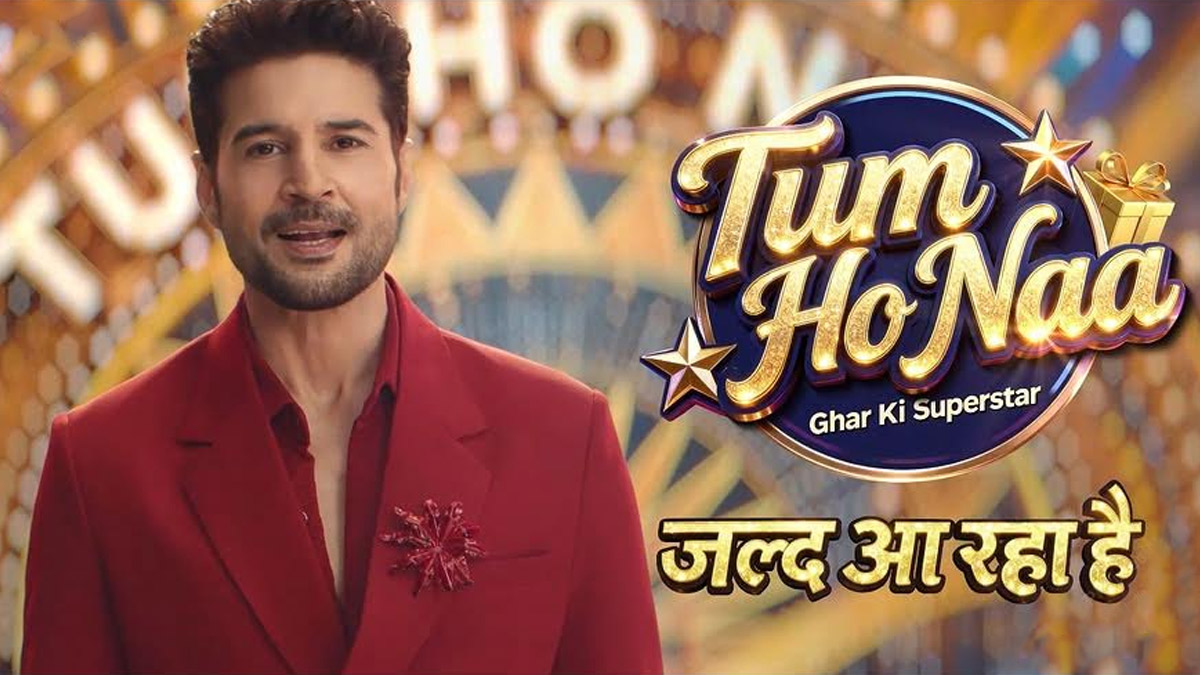
MUMBAI: Lights, camera… connection because this time, the game isn’t just about winning, it’s about who’s with you. Sony Pictures Networks India is gearing up to launch a new reality game show, Tum Ho Naa, expanding its unscripted slate with a format that promises both emotion and engagement.
The show will premiere soon on Sony Entertainment Television and stream on Sony LIV, with Rajeev Khandelwal stepping in as host. Known for his measured screen presence and selective choices, Khandelwal’s return to television adds a layer of familiarity and credibility to the upcoming format.
While specific details of the gameplay remain under wraps, the positioning suggests a reality format that leans as much on emotional resonance as it does on competition, an increasingly popular blend in Indian television, where audiences are gravitating towards content that offers both stakes and storytelling.
Khandelwal, reflecting on his return, noted that his choices have often been guided by instinct rather than convention, describing Tum Ho Naa as a project that feels “close to the heart”. His association also signals Sony’s continued focus on anchoring new formats with recognisable faces who bring both relatability and depth.
The launch comes at a time when broadcasters are doubling down on original non-fiction formats to drive appointment viewing, even as digital platforms expand parallel reach. By placing the show across both linear television and OTT, Sony appears to be aiming for a dual-audience strategy capturing traditional viewers while engaging digital-first consumers.
As the countdown to premiere begins, Tum Ho Naa positions itself not just as another game show, but as a reminder that sometimes, the biggest prize on screen isn’t the jackpot, it’s the journey shared along the way.







