News Broadcasting
Zee Media’s Hawa Badlenge Conclave to kick off on 21st November 2023; a bold move against air pollution


Mumbai: Zee Media, a trailblazer in the realm of meaningful discourse, is set to host the ‘Hawa Badlenge Conclave’ on Tuesday 21 November, a pioneering event dedicated to addressing the critical issue of air pollution. This exclusive conclave will bring together thought leaders, policymakers, and experts from various fields to discuss and deliberate on effective strategies to combat the escalating menace of air pollution.
The upcoming on-ground conclave will kick off with a mesmerizing opening qawwali performance at 11 am setting the tone for a day of insightful discussions, promising a riveting lineup of sessions aimed at addressing the urgent issue of air pollution. The schedule is power-packed with engaging sessions, featuring prominent figures who are actively contributing to the fight against pollution.
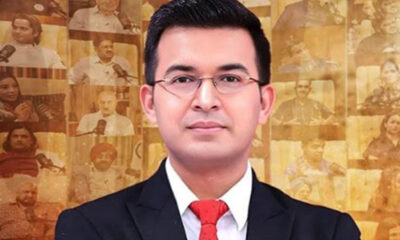
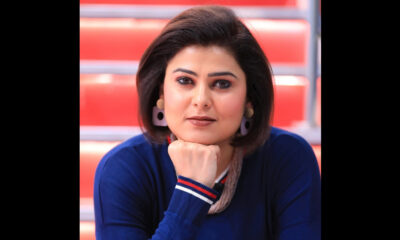
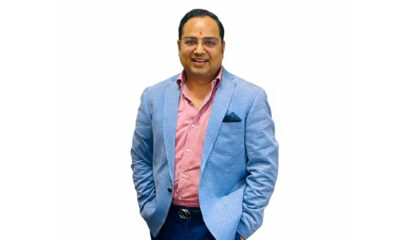
In the inaugural session, “Aap-hum aur hawa,” Government initiatives and the imperative need for not just regulations but also a societal transformation will be discussed by Delhi environment minister Gopal Rai and Punjab agriculture minister Gurmeet Singh Khudian, under the insightful guidance of Shobhna Yadav. Following this, “Hum Sath Sath Hain” will explore the necessity of collective action beyond politics, featuring Uttar Pradesh transport minister Daya Shankar Singh and Haryana development and panchayat Devender Singh Babli moderated by Pranay Upadhyaya. Dr. Swati Maheshwari, Internal Medicine Specialist, and Swami Prem Parivartan (Peepal Baba) will then delve into individual responsibilities in “Lung- Saans aur Dhokha,” chaired by Tarun.

Additionally, “Pollution Maange Solution” will tackle innovative approaches, featuring Department of Science and Technology (DST) senior advisor Akhilesh Gupta moderated by Pranay Upadhyaya. “Tech Aaj Kal” will explore technological interventions with Kent RO Ltd chairman Mahesh Gupta, moderated by Ayaz, and the conclave will conclude with “Hawa Mein Harmony,” a performance and interaction by social activist and music composer Rahul Ram, chaired by Sanya.




News Broadcasting
News18 India launches Command Centre war explainer with Arya
New show shifts from debates to decoding global conflicts and impacts
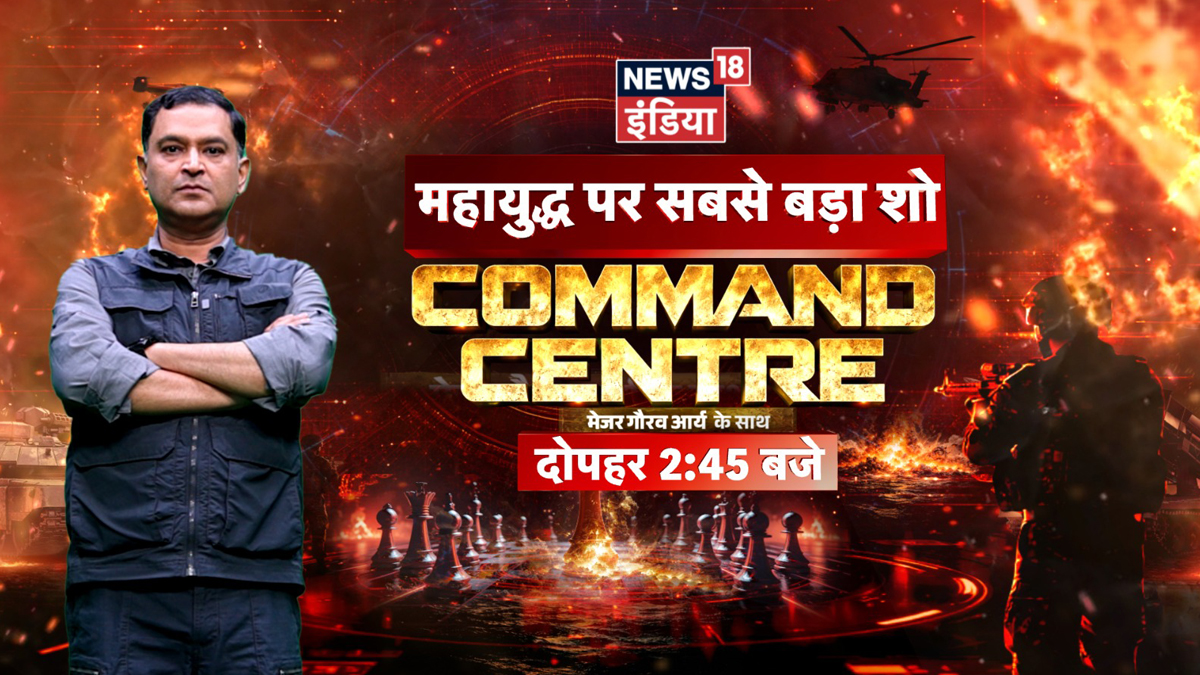
MUMBAI: News18 India has rolled out a new war-focused programme, Command Centre, featuring Gaurav Arya, as it looks to offer viewers a sharper, more grounded take on global conflicts amid rising tensions in West Asia.
Positioned as an “insider war room”, the show moves away from conventional panel debates and instead focuses on explaining military developments, decoding strategy and connecting global events to their everyday impact, from fuel prices to economic shifts.
The format leans heavily on visuals and data. The studio has been designed like a command hub, complete with large LED war maps, real-time graphics and an alert system to track developments as they unfold.
At the centre of it all is Arya, who brings his military background to simplify complex war strategies for viewers. His signature line, “Seedhi baat samjhiye”, anchors the show’s promise of clarity over noise.
News18 India managing editor Jyoti Kamal said, “Command Centre, featuring Major Gaurav Arya is designed to deliver accurate insights and a clear perspective on how evolving conflicts impact everyday life, from household budgets to national security. With expert voices analysing every development in real time, the show goes beyond headlines to decode what’s happening now, what it means, and what could come next.”
Echoing the intent, Gaurav Arya added, “In times of war, confusion is the biggest threat. With News18 India’s Command Centre, we are bringing viewers inside the war room, decoding strategies, tracking every escalation, and explaining, in the simplest terms, what it means for India and for every household. Seedhi baat samjhiye, this is where you understand not just what is happening, but what happens next.”
The weekday show will air in the afternoon slot and will also feature Gaurav Shukla, adding to its editorial depth.
With its mix of analysis, visuals and a clear focus on impact, the show reflects a broader shift in news consumption. Viewers are no longer just watching events unfold, they are looking to understand what those events mean for them.







