News Broadcasting
Zee Media appoints Manish Seth as chief revenue officer

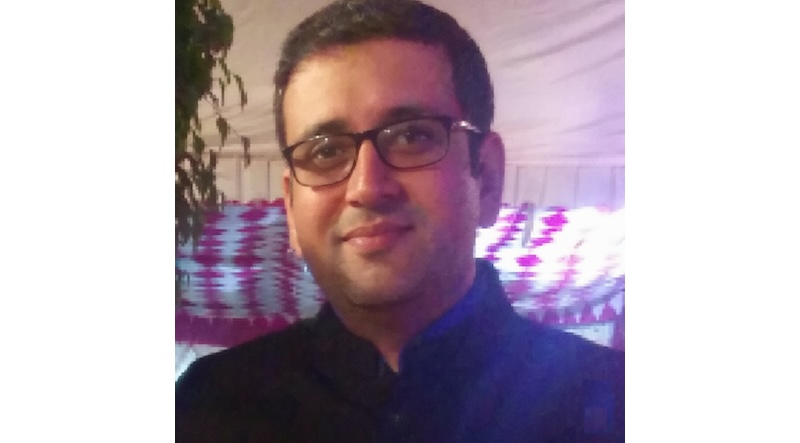
NEW DELHI: Zee Media has brought in Manish Seth as chief revenue officer, banking on his track record of doubling digital revenues to power the broadcaster’s next growth phase.
Seth joins with immediate effect from 28 October, the company told stock exchanges on Monday. The appointment, approved by the board on the recommendation of the nomination and remuneration committee, designates him as senior management personnel under India’s listing regulations.
The new chief revenue officer arrives with a formidable reputation. At TV9 Network, where he most recently served as revenue head for digital and business head for Money9, Seth doubled digital revenues in just two years. He also pioneered integrated television and digital sales models that broke new ground in Indian media.

Before TV9, Seth spent years at Zee Unimedia, Zee Media and Bennett Coleman, consistently delivering double-digit growth and launching multiple channels and products. His expertise spans revenue strategy, sales transformation, go-to-market planning and profit-and-loss management across broadcast and digital platforms.
Seth holds a postgraduate diploma in marketing management from the Times School of Marketing and a bachelor’s degree in science from Delhi University.
Zee Media is betting that Seth’s digital chops and proven ability to build high-performing teams will accelerate its transformation at a time when traditional broadcasters are scrambling to capture online audiences and advertising rupees. With 25 years of trench warfare in media sales under his belt, Seth now has the mandate to write the next chapter of Zee Media’s revenue story.







News Broadcasting
UDF poised to return to power in Kerala, says Manorama-CVoter survey
Massive opinion poll projects shift in Kerala politics ahead of 2026 Assembly elections.
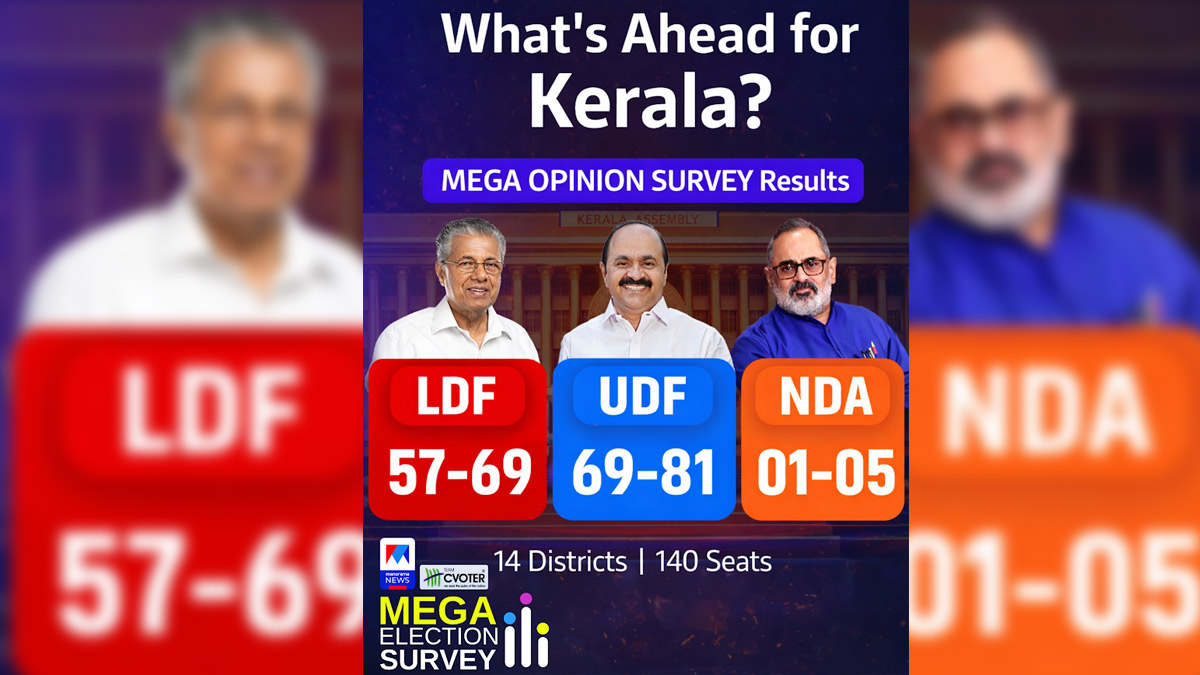
MUMBAI: The winds of change appear to be blowing through Kerala’s political landscape and this time, they seem to favour the United Democratic Front. A comprehensive mega opinion survey conducted by Manorama News in partnership with CVoter projects a potential comeback for the UDF in the upcoming Kerala Legislative Assembly Elections 2026. The survey, covering all 140 constituencies with a massive sample size of nearly 90,000 respondents, predicts the UDF could win between 69 and 81 seats.
The ruling Left Democratic Front (LDF) is expected to secure 57 to 69 seats, a significant drop from the 99 seats it won in the 2021 elections. This would mean the LDF losing 30 to 42 of its sitting seats. Meanwhile, the National Democratic Alliance (NDA), which drew a blank in 2021, is projected to open its account with 1 to 5 seats.
Region-wise, the UDF is expected to make strong gains in Malabar, winning 25 to 34 out of 48 seats, and in Central Kerala, where it could bag 29 to 33 out of 53 seats. In South Kerala, the LDF is likely to retain an edge with 21 to 25 seats, while the UDF may improve to 12 to 16 seats. The NDA could pick up 1 to 3 seats in the southern region.
The survey was conducted between 14 and 26 March 2026, with additional tracker and snap polls carried out from December 2025 to March 2026. A total of 89,693 respondents participated, ensuring representation across all demographics and social segments.
Manorama News has a strong track record of accuracy, with its previous projections closely matching the actual results of the 2019 and 2024 Lok Sabha elections as well as the 2021 Kerala Assembly polls.
In Kerala’s famously fierce political battles, this survey suggests the pendulum may be swinging back. Whether the final verdict matches these numbers or throws up another surprise, one thing is clear, the 2026 Assembly elections are shaping up to be one of the most keenly watched contests in the state’s history.






