iWorld
Zee gets aggressive with dittoTV relaunch


MUMBAI: Media watchers have been speculating for some time about what Zee Entertainment Enterprises Ltd (ZEEL) would do in the live and linear OTT and VOD space with its dittoTV service. The reason: even as rivals Hotstar, Voot and others such as Hooq, YuppTV seemed to be having strategic direction, dittoTV seemed to be going adrift.
The riposte came from the Zee management yesterday with its announcement that it would be launching dittoTV with a bouquet of 100 plus channels at a price point of just Rs 20 per month. As part of the relaunch Zee Digital Convergence Ltd (ZDCL) has re-positioned dittoTV as desh kaTV with a promise to make live television available to every Indian via any device – viz phones, tablet or PC. The price gets even more lip smacking for users subscribing for three months (Rs 50), six months (Rs 90) and annually (Rs 170).
The platform has tied up with major Indian broadcasters with the exception of the SunTV group and Star India giving it a portfolio of 100 plus Hindi, English and regional language channels, encompassing general entertainment, sports, movies, news and lifestyle on board.

“With the new avatar of dittoTV, we aim to change the media landscape to suit the evolving media consumption preferences of consumers. It will allow users to control where they watch television in a way that has not been possible before. We are proud to present a platform that will help scale up this transformation by making it affordable for people across a wide economic spectrum,” opines Zeel MD and CEO Punit Goenka.
dittoTV business head Archana Anand gives the rational for the competitive and low pricing. Says she: “We really wanted to go mass and affordable with this pricing. We see it serving as your first and only screen, as your second screen or just your TV on the go! Keeping the Indian landscape in the mind, dittoTV will soon be available in all regional languages. A huge aspirational audience of ours is college students who we believe will use this especially given the Wifi in the colleges. They are the specific TGs that we are chasing. We have found that there is a huge need gap in hostels and we intend to be at youth festivals and various events to make sure that ditto is their one stop entertainment destination.”
She points out to dittoTV’s adaptive technology which will adjust to a range of internet speeds in order to deliver a seamless viewing experience, making it suitable for both urban and rural markets. A broad marketing campaign – which observers say will include TVCs on the Zee network, Siticable and dishTV – has been drawn out to push the #deshkatv and #beeskaTV to the potential target audience.
In a bid to encourage sampling of dittoTV, ZEEL has partnered with Birla group owned telecom provider Idea Cellular. Under this, a promotional offer has been drawn up which allows customers in Idea 3G and 4G provider circles to subscribe to dittoTV free of cost, along with select monthly data packs until 31 July 2016.
“With the rapid rollout of our 4G services and increased penetration of smartphones in the country, we are providing our customers an array of rich digital services to meet their demand for engaging apps and content,” explains Idea Cellular chief marketing officer Sashi Shankar. “TV being synonymous with entertainment for the Indian masses, we are excited to partner with dittoTV to enable consumers to carry their entertainment wherever they go.”
Anand adds that dittoTV has sewn up carrier billing deals with almost all the telecom providers. Says she: “It’s not just with Idea. But we are glad to have them on board to bundle dittoTV with their data cards. We have reached out to a wonderful telecom partner for our distribution. They also see this as valid proposition for them because there is nothing more massy which consumes data than TV. They see it as a good service for their subscribers and in the process getting data consumed. So, there is an increased synergy between the two.”
dittoTV has also reached out to other service providers within the Essel group – Siti Cable and ITZ Cash – to give it a retail push and make it available to subscribers.
Will the low rates of dittoTV spark off a price war in this segment? The jury is out. A media observer states that it is quite possible that rivals such as YuppTV, Airtel’s PocketTV may have to reduce what they charge to consumers. While YuppTV’s larger offering of 200 plus channels (it also offers SunTV channels) is priced at Rs 99 a month, Airtel’s PocketTV is priced at Rs 45 a month for a bouquet of 150 plus channels. And then there is the Reliance Jio juggernaut which is set to roll with its much larger channel portfolio JioPlay. The pricing for JioPlay has not yet been revealed but observers expect it to bring about a paradigm shift.
Anand, on her part, is not letting the competitive noise frazzle her. “Reliance is going to disrupt everything in the broadband ecosystem. So I don’t let that worry me at all,” says she. “We are focused on offering our customer a service that’s good and that’s ditto for television, which means, offering television to them wherever they go.”
Amen to that!






iWorld
Parineeti Chopra hosts new parenting series Mom Talks on Zee5 and Bullet
Celebrity parents share honest stories in 9-episode show launching 4 April 2026.
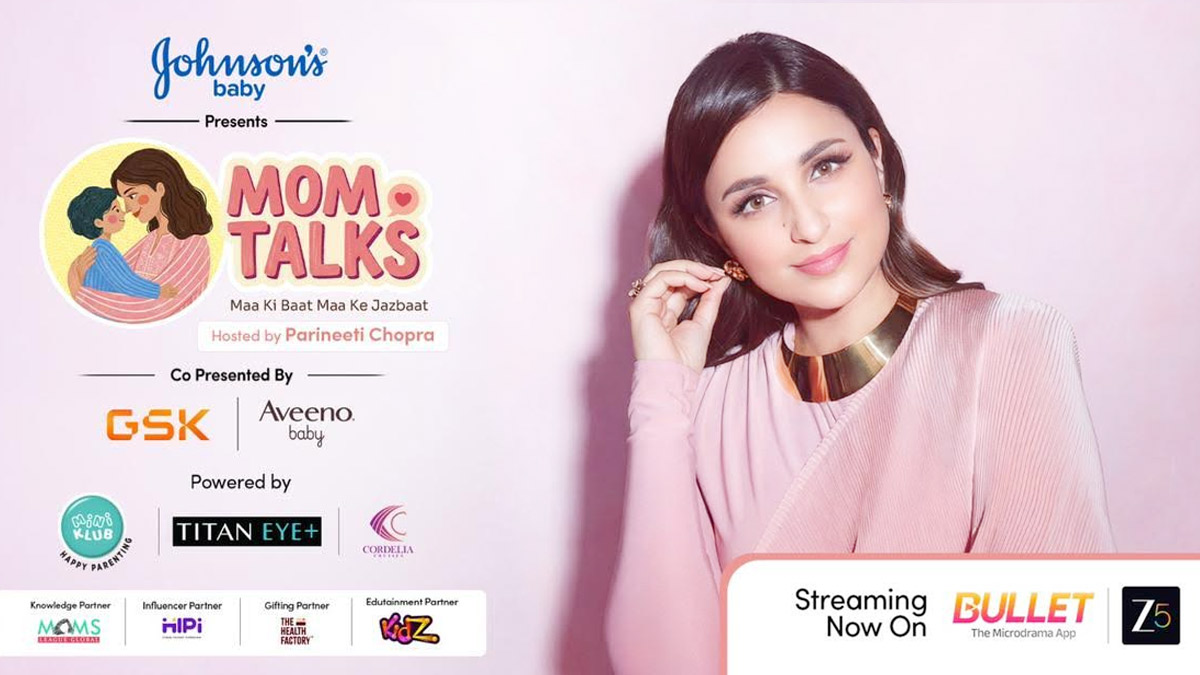
MUMBAI: Parineeti Chopra is stepping into a brand-new role not on the big screen, but as the warm, relatable host helping parents navigate the beautiful chaos of raising children. Bullet microdrama and Zee5 have announced the launch of Mom Talks, a fresh content-led IP hosted by the popular actress. The 9-episode series brings together celebrity parents including Imran Khan, Neha Dhupia, Vikrant Massey & Sheetal, and Gauahar Khan & Zaid Darbar to share candid, real-life perspectives on everyday parenting.
Positioned as a high-engagement format, Mom Talks taps into the growing demand for authentic and credible parenting content. It also offers seamless, contextual integration opportunities for brands. The series is backed by a strong lineup of partners including Johnson’s Baby, GSK, Aveeno Baby, Mini Klub, Titan Eye+ and Cordelia Cruises.
Bullet microdrama app, co-founder & chief business officer Azim Lalani said the show exemplifies how content is evolving towards more rooted, sustained engagement. “It’s about bringing content that people come back to, while creating a natural space for brands to be part of the narrative,” he noted.
Mom Talks creator Bullet head of AVOD & partnerships Munaf Merchant explained the core idea, “We wanted to build a safe, honest, one-stop destination for parents seeking real answers to everyday questions.”
The first episodes will stream for free on ee5 AVOD starting 4 April 2026, with new episodes dropping every Friday and Saturday. The series will also be available on the Bullet microdrama app.
Speaking about their association, Peeyush Unikkat from Johnson’s Baby highlighted the brand’s focus on supporting modern parenting journeys, while Aakash Mehta from GSK emphasised the show’s role in making important health conversations more relatable for new parents.
In a digital space often filled with filtered perfection, Mom Talks promises something refreshingly real honest conversations, celebrity insights, and practical wisdom, all wrapped in Parineeti Chopra’s engaging presence. For Indian parents, this could be the parenting series they’ve been waiting to binge.






