News Headline
World Television Day: Celebrating the screen that changed the world

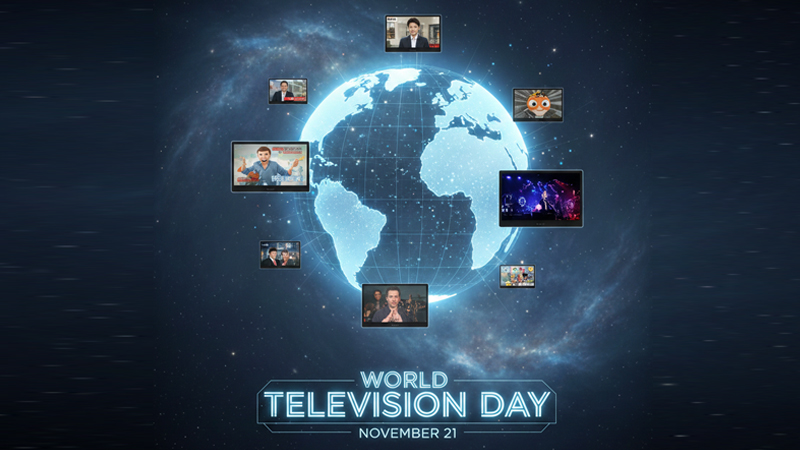
MUMBAI: Every evening, millions of living rooms around the globe glow with the familiar light of a television screen. For decades, this box—once bulky and wooden, now sleek and borderless—has shaped how the world learns, laughs, debates, dreams and connects. On 21 November, World Television Day, we celebrate not just a device, but a global storyteller, educator and unifier.
Why the world marks this day
In 1996, the United Nations declared World Television Day to recognise television’s growing influence on global opinion. The UN saw TV as more than entertainment: it was a mediator of dialogue, a platform for public awareness and a catalyst for diplomacy. Even today, in an age of smartphones and instant notifications, television remains one of the most trusted sources of information.
The screen that reaches the unreachable
While digital platforms dominate urban chatter, a large part of the world still depends on TV for essential information. In developing countries, television often bridges the digital divide, delivering election updates, weather alerts, national announcements, education programmes and public health campaigns to millions who lack stable internet access.

Television continues to be the one medium that enters homes effortlessly—regardless of age, literacy or location.
A century of reinvention:
From the mechanical experiments of the 1920s to today’s ultra-HD smart screens, television has constantly reinvented itself.
● The first full-fledged colour telecast in India took place on 15 August 1982, with Prime Minister Indira Gandhi’s Independence Day address.
● This was followed later that year by the 1982 Asian Games, which brought widespread colour broadcasting to Indian homes.
● The 1990s saw the explosion of satellite channels, opening the doors to global entertainment.
● The 2000s introduced reality TV, daily soaps and 24×7 news cycles.
● In 2000, this website – indiantelevision.com was launched, followed by tellychakkar.com a few years later.
Today, TVs double as gaming consoles, OTT gateways and smart home controllers.
What began as a single-channel pastime is now a personalised, interactive global experience.
The power of shared storytelling
Television has created cultural moments that transcend borders.
Whether it was Ramayan uniting Indian families every Sunday morning, the world pausing to witness the 1969 moon landing or global fandoms obsessing over Friends and Game of Thrones, TV has shaped collective memory.
Television also elevated presenters who became icons—Oprah Winfrey, David Attenborough, Walter Cronkite, Prannoy Roy and Barkha Dutt, guiding viewers through stories that shaped the world.
News that changed history
Live news is television’s most powerful contribution. The medium brought global audiences face-to-face with defining moments:
● The fall of the Berlin Wall in 1989
● The 2001 attacks in New York
● Elections across democracies
Wars, peace agreements, breakthroughs and tragedies in real time
Television transformed news into a shared global experience, influencing public opinion and political discourse like no medium before.
And in India, television became a window to moments that shaped the nation:
● The 1999 Kargil War, where live reporting brought the frontlines into Indian living rooms
● The 26/11 Mumbai attacks, covered minute by minute as the nation watched in shock
● The 2014 general election results, which ushered in a new era of political communication
● The Ayodhya verdict and Ram Mandir developments, which gripped viewers across the country
● The Covid-19 pandemic coverage, from nationwide lockdown announcements to relief efforts
Television once again transformed news into a shared national and global experience.
Sports: The world’s favourite spectacle
From the Olympics to the FIFA World Cup, from Wimbledon to the IPL—television turned sports into a global festival. Innovations like slow-motion replays, drone shots, multi-angle coverage and HD cameras elevated how fans experienced games. Today, sports broadcasts remain among the most-watched content in television history.
A billion-dollar advertising playground
Television revolutionised marketing through powerful visuals and iconic jingles.
Even in 2025, TV ads remain the backbone of high-impact brand campaigns—from Super Bowl commercials to festive season advertising in India. Despite the rise of digital advertising, TV still delivers scale and unmatched reach.
TV vs OTT: A clash or coexistence?
When OTT platforms arrived, many predicted the death of television. Instead, both evolved to coexist.
Smart TVs have turned living rooms into hybrid entertainment hubs, where traditional channels sit alongside Netflix, YouTube, Hotstar and FAST channels.
Television isn’t fading; it’s transforming.
The road ahead
The future of television promises even greater innovation:
AI-powered recommendations, interactive broadcasts, immersive sports viewing, VR-driven channels and smarter integration with home ecosystems.
As long as people crave storytelling and shared experiences, television will remain a powerful companion.
On this World Television Day, we honour a medium that has informed, entertained, united and connected humanity for nearly a century.






NEW DELHI: Hamdard Laboratories gathered a cross-section of India’s achievers in New Delhi on Friday, handing out the Hakeem Abdul Hameed Excellence Awards to figures who have left their mark across healthcare, education, sport, public service and the arts.
The ceremony, attended by minister of state for defence Sanjay Seth and senior officials from the ministry of Ayush, celebrated individuals whose work blends professional success with a sense of public purpose. It was as much a roll call of achievement as it was a reminder that influence is not measured only in profits or podiums, but in people reached and lives improved.
Among the headline awardees was Alakh Pandey, founder and chief executive of PhysicsWallah, recognised for turning affordable digital learning into a mass movement. On the sporting front, Arjuna Awardee and kabaddi player Sakshi Puniya was honoured for her contribution to the game and for pushing women’s participation onto bigger stages.
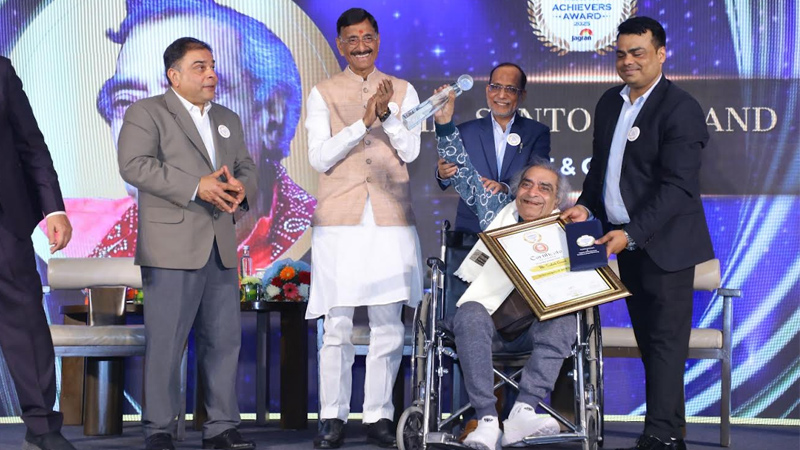
The cultural spotlight fell on veteran lyricist and poet Santosh Anand, whose songs have echoed across generations of Hindi cinema. At 97, Anand accepted the honour with characteristic humility, reflecting on a life shaped by perseverance and hope.
Healthcare honours spanned both modern and traditional systems. Manoj N. Nesari was recognised for strengthening Ayurveda’s place in national and global health frameworks. Padma shri Mohammed Abdul Waheed was honoured for his research-backed work in Unani medicine, while padma shri Mohsin Wali received recognition for his long-standing contribution to patient-centred care.
Education and social development also featured prominently. Padma shri Zahir Ishaq Kazi was honoured for decades of work in education, while former Meghalaya superintendent of Police T. C. Chacko was recognised for public service. Goonj founder Anshu Gupta received an award for his dignity-centred rural development initiatives, and the Hunar Shakti Foundation was honoured for empowering women and young girls through skill development.
The Lifetime Achievement Award went to former IAS officer Shailaja Chandra for her long career in public healthcare and governance, particularly in the traditional systems under Ayush.
Speaking at the event, Hamdard chairman Abdul Majeed said the awards were a tribute to those who combine excellence with empathy. “These awardees reflect Hakeem Sahib’s belief that healthcare, education and public service must ultimately serve humanity,” he said.
Minister Seth struck a forward-looking note, saying India’s young population gives the country a unique opportunity to become a global destination for learning, health and wellness by 2047.
The ceremony also featured the trailer launch of Unani Ki Kahaani, an upcoming documentary starring actor Jim Sarbh, set to premiere on Discovery on 11 February.
Instituted in memory of Unani scholar and educationist Hakeem Abdul Hameed, the awards have grown into a national platform that celebrates those building a more inclusive and resilient India. For one evening at least, the spotlight was not just on success, but on service with substance.






