iWorld
With $120 million infusion, UpGrad poised to turn unicorn
Kolkata: At a time when edtech platforms are booming in India, higher learning major UpGrad has raised $120 million from Temasek, a global investment company headquartered in Singapore. With this, UpGrad is speeding toward a landmark $1 billion valuation.
This is the first external funding raised by the edtech major. Since its founding six years ago in 2015, upGrad has been 100 per cent owned, funded, and run by its co-founders as a capital-efficient business.
The Mumbai-based start-up plans to use the fresh capital to further strengthen its team, scale its global market operations, bolster its technology and product capabilities, pursue M&A opportunities, expand graduate and post-graduate degree portfolio in India, and scale up operations to achieve its $2 billion revenue goal by 2026, thereby reinforcing its position as a global higher-edtech leader emerging from India.
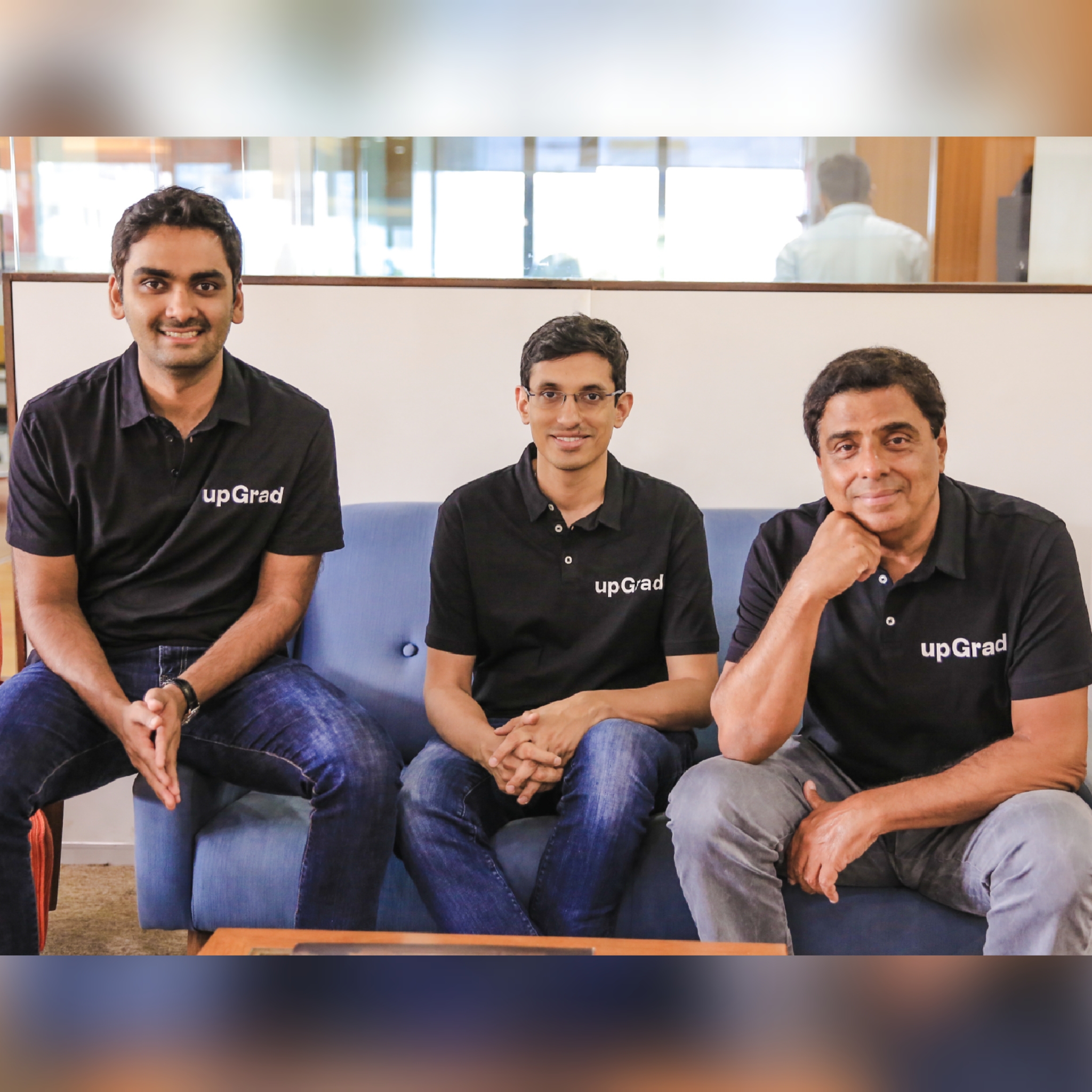
upGrad co-founders Ronnie Screwvala, Mayank Kumar and Phalgun Kompalli said in a joint statement, “We welcome Temasek in our mission to power career success for each and every member of the global workforce as their trusted LifeLongLearning partner and drive meaningful career outcomes. This capital will further fuel our commitment towards global expansion as well as deeper India penetration, as we march forward with our goal of making India the teaching capital of the world.”
Screwvala told Bloomberg that he expects to raise another round of capital in three to six months.
Credit Suisse acted as the exclusive financial advisor to upGrad, and Rajaram Legal acted as legal advisor.
UpGrad’s current repertoire includes over 100 courses in subjects like data science, machine learning, artificial intelligence, coding, finance and law, in collaboration with universities like Michigan State University and the Indian Institute of Technology Madras. About a million learners, mainly from India as well as four dozen other countries, take courses that run from six months to two years.

iWorld
Uber spotlights Rs 25 bike rides with music led IPL campaign
Uber uses 15 second music films with Divine and Roll Rida to push Rs 25 rides
MUMBAI: In a season where ads usually swing for sixes with celebrity spectacle, Uber has chosen to play a clever single sharp, fast, and straight to the point. Uber has rolled out a distinctly stripped-down IPL campaign, putting its product Uber Bike rides starting at Rs 25 for up to 3 km front and centre, rather than leaning on big-budget storytelling. The campaign features hip-hop artist Divine in Mumbai and Roll Rida in southern markets, using music as the primary vehicle for recall.
IPL advertising has long been dominated by high-production narratives packed with cricketers and film stars. Uber’s approach flips that playbook. Instead of elaborate storytelling, the brand opts for 15-second music-led films quick, rhythmic bursts designed to mirror the pace of urban mobility itself.
The message is deliberately simple, affordable, fast rides that cut through city traffic. No layered plots, no extended build-up just a functional promise delivered with cultural flair.
In the Mumbai-led film, Divine zips through traffic on an Uber Bike, turning the Rs 25 price point into a hook with his signature wordplay around “pachisi”. The campaign cleverly reframes affordability as a moment of delight, the kind that leaves commuters with a “32-teeth smile” after beating traffic at minimal cost.
Meanwhile, Roll Rida’s version leans into southern sensibilities, blending Telugu and Tamil influences with high-energy visuals. Set to the beat of tape drums, the film celebrates how low-cost rides can unlock a more connected and vibrant city experience. Together, the films reflect a conscious push towards regional authenticity, rather than a one-size-fits-all national narrative.
The campaign also signals Uber’s sharper focus on India’s growing bike taxi segment. While the company offers multi-modal services spanning cars, autos, metro integrations and intercity travel, this push zeroes in on two-wheelers as a key growth lever in dense urban markets.
By anchoring the campaign around a Rs 25 entry price for short distances, Uber is targeting everyday commuters, particularly younger users navigating congested cities where speed and cost matter more than comfort.
With IPL advertising clutter at its peak, even the most straightforward message risks getting lost. Uber’s answer is to embed the proposition within culture using music, regional nuance and repeat-friendly short formats to drive recall. The creative team has also layered subtle visual cues including multiple references to “25” within frames encouraging repeat viewing and reinforcing the core message without over-explaining it.
The campaign reflects a broader shift in advertising priorities. As attention spans shrink and media environments get noisier, brands are increasingly favouring clarity over complexity and speed over scale.
Uber’s IPL play may not shout the loudest, but it lands where it matters in the everyday commute. Because sometimes, in a marketplace full of grand narratives, a Rs 25 ride is story enough.