News Headline
Wickets Widgets and Wow Moments Make India’s Sports Playbook a Big Hit

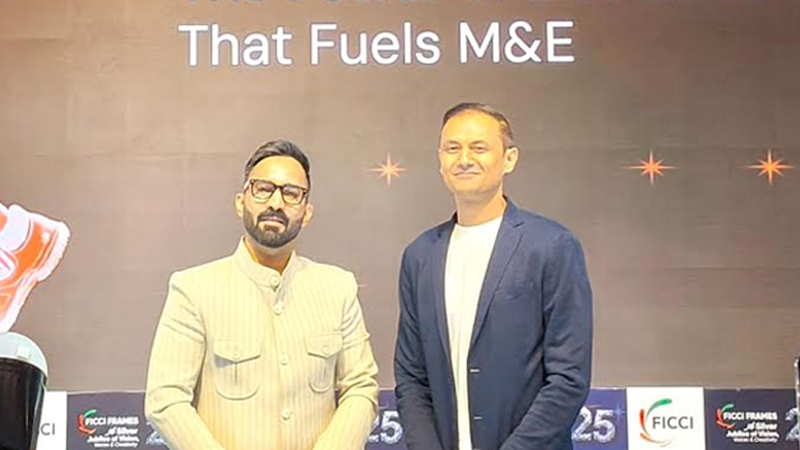
MUMBAI: It’s no longer just about cricket bats, it’s about data stats, fandom maps, and digital laps. At FICCI Frames 2025, Ishan Chatterjee, CEO for Sports, JioStar, set the ball rolling on how India’s sports and media ecosystem is stepping into its biggest growth spurt yet fuelled by inclusivity, innovation, and a nation hooked on both wickets and Wi-Fi.
Chatterjee painted a picture of an industry at “an inflection point”, quoting a Deloitte study that pegs India’s sports economy to leap from 30 billion dollars in 2023 to 70 billion dollars by 2030. “To put that in perspective, Brazil stands at 6–8 billion dollars, and the UK, one of the most advanced markets, is at about 40 billion dollars,” he said, underscoring India’s ascent as a sporting superpower in the making.
But even as men’s cricket continues to mint viewership gold, Chatterjee said the real growth story lies beyond the boundary. “The big trend we’re betting on is the rise of other sports in India whether established ones like tennis, football and kabaddi, or newer ones like e-sports. As soon as Indian athletes start delivering world-class results, fandom accelerates. Just look at what Neeraj Chopra did for the javelin,” he said, drawing cheers from the audience.

If cricket remains the heartbeat, the pulse is diversifying fast. Chatterjee believes the next decade belongs to multi-sport India, where technology and storytelling will be as crucial as talent. “India’s young audience is discovering, following, and even betting emotionally on new sports. What used to be once-a-year cricket fever has become a 12-month sports calendar,” he noted.
At the heart of this transition, he said, lies fandom, a force as unpredictable as it is powerful. “We’ve moved from viewership to ownership. Fans no longer just watch; they participate, react, and create. That’s why sports is no longer just an event, it’s an experience.”
Chatterjee also touched upon what he called one of JioStar’s biggest responsibilities, inclusivity especially in women’s cricket. “Our role as broadcasters is to give women’s cricket visibility, prime-time slots, and the right storytelling so it inspires the next generation. The WPL is one of our biggest priorities,” he said.
He emphasised that women’s cricket is not just a symbolic cause but a commercial and cultural imperative. “From a consumption standpoint, there’s a lot of headroom. From a business perspective, it makes sense to invest in it. But more importantly, for our sporting culture to become truly representative, women’s cricket has to grow,” he added.
Naturally, the talk couldn’t skip India’s favourite sporting spectacle the IPL. “The great thing about the IPL is the scale it operates on. During the last season, we lit up over 1.1 billion screens across TV and digital,” Chatterjee said.
But the magic, he added, lies in customising the experience. “To grow consumption whether it’s more viewers, more matches, or longer watch time, we have to appeal to different interests. For the core fan, it’s about depth and stats. For the casual viewer, it could be entertainment, creators, or even Motu Patlu engaging kids. That mix keeps the IPL ecosystem buzzing.”
If fandom is the fuel, technology is the engine driving this new sports era. “India has always been at the cutting edge of tech adoption,” Chatterjee said. “At JioStar, we are led by consumer behaviour, and our vision for sports viewing is a completely personalised one-to-one feed. Two people can watch the same match, but the experience camera angles, commentary, interactive features will be entirely different for each.”
From AI-driven smart highlights to multi-cam viewing and vertical formats, Chatterjee said technology is already reshaping how fans engage with sport. “This is just the beginning,” he smiled. “Imagine a future where your favourite player’s perspective, the commentator you like, or even the memes you enjoy all are woven into your viewing experience.”
Chatterjee pointed out that India’s unique combination of youth demographics, mobile-first audiences, and insatiable appetite for entertainment positions it perfectly for sports innovation. “Our sports consumption is growing not because we’re copying Western models, but because we’re creating an Indian one built around community, interactivity, and scale,” he said.
From e-sports tournaments drawing millions online to local leagues popping up in tier-two cities, the momentum is unmistakable. “The beauty of India’s sports journey,” he said, “is that every new fan adds to the market, not just shifts within it. Every new sport that takes off expands the universe.”
As the fireside chat wrapped up, one thing was clear, India isn’t just playing more sports; it’s reimagining how sports are played, viewed, and loved.
Chatterjee’s closing line summed up the sentiment perfectly: “For us, sports is not just entertainment, it’s identity. As long as our athletes keep pushing boundaries and our fans keep breaking the internet, India’s sporting story will only get bigger.”
And with a wink to the future, he added, “We’re just in the warm-up. The real game begins now.”






NEW DELHI: Hamdard Laboratories gathered a cross-section of India’s achievers in New Delhi on Friday, handing out the Hakeem Abdul Hameed Excellence Awards to figures who have left their mark across healthcare, education, sport, public service and the arts.
The ceremony, attended by minister of state for defence Sanjay Seth and senior officials from the ministry of Ayush, celebrated individuals whose work blends professional success with a sense of public purpose. It was as much a roll call of achievement as it was a reminder that influence is not measured only in profits or podiums, but in people reached and lives improved.
Among the headline awardees was Alakh Pandey, founder and chief executive of PhysicsWallah, recognised for turning affordable digital learning into a mass movement. On the sporting front, Arjuna Awardee and kabaddi player Sakshi Puniya was honoured for her contribution to the game and for pushing women’s participation onto bigger stages.
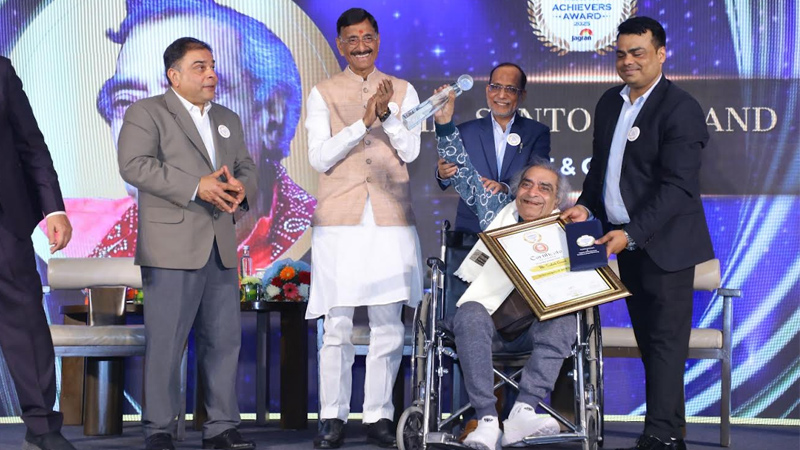
The cultural spotlight fell on veteran lyricist and poet Santosh Anand, whose songs have echoed across generations of Hindi cinema. At 97, Anand accepted the honour with characteristic humility, reflecting on a life shaped by perseverance and hope.
Healthcare honours spanned both modern and traditional systems. Manoj N. Nesari was recognised for strengthening Ayurveda’s place in national and global health frameworks. Padma shri Mohammed Abdul Waheed was honoured for his research-backed work in Unani medicine, while padma shri Mohsin Wali received recognition for his long-standing contribution to patient-centred care.
Education and social development also featured prominently. Padma shri Zahir Ishaq Kazi was honoured for decades of work in education, while former Meghalaya superintendent of Police T. C. Chacko was recognised for public service. Goonj founder Anshu Gupta received an award for his dignity-centred rural development initiatives, and the Hunar Shakti Foundation was honoured for empowering women and young girls through skill development.
The Lifetime Achievement Award went to former IAS officer Shailaja Chandra for her long career in public healthcare and governance, particularly in the traditional systems under Ayush.
Speaking at the event, Hamdard chairman Abdul Majeed said the awards were a tribute to those who combine excellence with empathy. “These awardees reflect Hakeem Sahib’s belief that healthcare, education and public service must ultimately serve humanity,” he said.
Minister Seth struck a forward-looking note, saying India’s young population gives the country a unique opportunity to become a global destination for learning, health and wellness by 2047.
The ceremony also featured the trailer launch of Unani Ki Kahaani, an upcoming documentary starring actor Jim Sarbh, set to premiere on Discovery on 11 February.
Instituted in memory of Unani scholar and educationist Hakeem Abdul Hameed, the awards have grown into a national platform that celebrates those building a more inclusive and resilient India. For one evening at least, the spotlight was not just on success, but on service with substance.






