News Headline
‘Why would BCCI want its biggest new property on a new channel?’

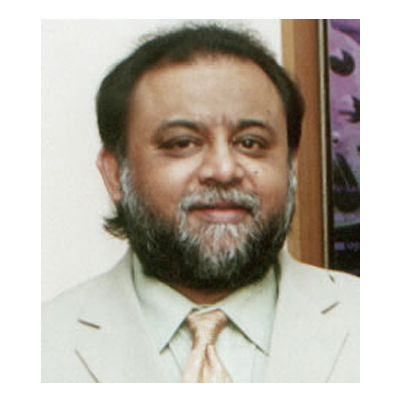
Looking at the larger perspective, what have been the big challenges the broadcast sector faced and will face, going forward?
The pathetically slow pace of digital rollout (Cas) has been the biggest challenge for existing players. Though I do believe digital distribution will come into play from 2008 onwards.
Combating all these new players will be the big upcoming challenge. The (leadership) pecking order will have to be reestablished. Star is not complacent in its position of number 1. Even Zee as a challenger is not complacent. Everybody will face challenge. The whole media business will face challenge.
The industry is seeing huge churn now. The channel explosion is going to further fragment audiences. We will soon have 9/10 channels in each of the genres – news, sports and movies.

You say pathetically slow digital rollout on the cable front is the biggest challenge for the new players as well as the existing players. But if we look at 9X, the numbers they are drawing are not due to cannibalization, but due to new viewers.
It’s not cannibalization of GEC but other genres like music.
So you don’t believe that people have an inherent desire to consume entertainment content but may have been tuned off by the lack of variety presently on offer so they are trying out channels like 9X?
Its not just 9X. Even Bindass is getting new viewers. 9X is making a lot of noise but give me a name of one show that stands out. On NDTV Imagine also, nothing will stand out.
What do we have in 2008. BCCI’s Indian Premiere League will take off and what else?
I don’t know on which channel it will take off. I hope it is on ours.
But as you yourself said, there will be new sports channels launching and we should expect bids from new players.
They can of course bid but why would BCCI want its biggest new property on a new channel? Its not just money, they (the cricket board) have to make it successful.
| New players should enter digital distribution in the cable front. More people are required, more funding is required |
We do have an example of Ten Sports, which launched with World Cup Soccer in 2002.
There were only two channels – ESPN and Star Sports – then. Today there are seven channels (DD Sports, Ten Sports, Zee Sports, ESPN, Star Sports, Star Cricket, Neo Sports). Additionally, Max is half a sports channel.
Each time you launch a new channel, the space will get further fragmented. There is too much out there. There is going be a blood bath.
What about a platform proposition, like in the case of Sky in the UK? For a rights holder, could IPL potentially become as critical as EPL was to Sky?
Firstly, in India no exclusivity is being allowed. Secondly, the new guys bidding for the rights are channels which are not yet launched. If platforms like Dish TV or Reliance were to buy the rights, then I would understand but the guys buying are unknown people. They are all startups. They are doing it for their business valuations. They are not bothered whether IPL succeeds or not. Whereas BCCI wants IPL to succeed. IPL will collapse with new players.
Coming back to the year ahead, how do you see 2008 for your network and the industry?
As far as the industry is concerned, we would want to see the Reliance launches happening. It’s a very big thing. Then IPL should succeed. New players should enter digital distribution in the cable front. More people are required, more funding is required.
As for ourselves, we will take some other new initiatives and continue to build our business. We need one hit show. Saat Phere was the starting point for Zee. I need one hit show from Monday to Thursday. That is my perspective. I have no problem in any other area of my business except that. We need to build up, which is not happening.
Each channel is doing its own thing and so are we. In the meantime, I am doing syndication and international distribution. I am doing everything right except getting that one hit show.







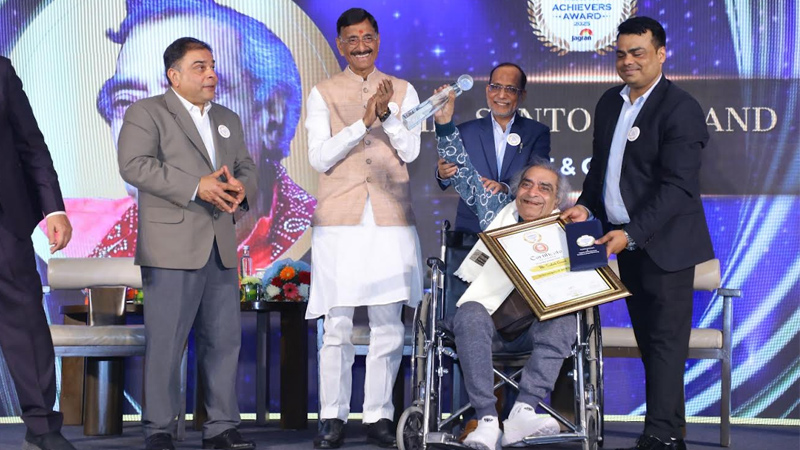
NEW DELHI: Hamdard Laboratories gathered a cross-section of India’s achievers in New Delhi on Friday, handing out the Hakeem Abdul Hameed Excellence Awards to figures who have left their mark across healthcare, education, sport, public service and the arts.
The ceremony, attended by minister of state for defence Sanjay Seth and senior officials from the ministry of Ayush, celebrated individuals whose work blends professional success with a sense of public purpose. It was as much a roll call of achievement as it was a reminder that influence is not measured only in profits or podiums, but in people reached and lives improved.
Among the headline awardees was Alakh Pandey, founder and chief executive of PhysicsWallah, recognised for turning affordable digital learning into a mass movement. On the sporting front, Arjuna Awardee and kabaddi player Sakshi Puniya was honoured for her contribution to the game and for pushing women’s participation onto bigger stages.
The cultural spotlight fell on veteran lyricist and poet Santosh Anand, whose songs have echoed across generations of Hindi cinema. At 97, Anand accepted the honour with characteristic humility, reflecting on a life shaped by perseverance and hope.
Healthcare honours spanned both modern and traditional systems. Manoj N. Nesari was recognised for strengthening Ayurveda’s place in national and global health frameworks. Padma shri Mohammed Abdul Waheed was honoured for his research-backed work in Unani medicine, while padma shri Mohsin Wali received recognition for his long-standing contribution to patient-centred care.
Education and social development also featured prominently. Padma shri Zahir Ishaq Kazi was honoured for decades of work in education, while former Meghalaya superintendent of Police T. C. Chacko was recognised for public service. Goonj founder Anshu Gupta received an award for his dignity-centred rural development initiatives, and the Hunar Shakti Foundation was honoured for empowering women and young girls through skill development.
The Lifetime Achievement Award went to former IAS officer Shailaja Chandra for her long career in public healthcare and governance, particularly in the traditional systems under Ayush.
Speaking at the event, Hamdard chairman Abdul Majeed said the awards were a tribute to those who combine excellence with empathy. “These awardees reflect Hakeem Sahib’s belief that healthcare, education and public service must ultimately serve humanity,” he said.
Minister Seth struck a forward-looking note, saying India’s young population gives the country a unique opportunity to become a global destination for learning, health and wellness by 2047.
The ceremony also featured the trailer launch of Unani Ki Kahaani, an upcoming documentary starring actor Jim Sarbh, set to premiere on Discovery on 11 February.
Instituted in memory of Unani scholar and educationist Hakeem Abdul Hameed, the awards have grown into a national platform that celebrates those building a more inclusive and resilient India. For one evening at least, the spotlight was not just on success, but on service with substance.






