eNews
Why Sam Altman was fired: Microsoft CTO email reveals board failure


WASHINGTON: At OpenAI, the fight was not about artificial intelligence going rogue—it was about who got the GPUs.
An internal email from Microsoft chief technology officer Kevin Scott, sent on November 19, 2023, offers the clearest account yet of the events that culminated in the sudden firing of Sam Altman as OpenAI’s chief executive. Far from a single ideological rupture, Scott describes a combustible mix of resource wars, bruised egos and a board ill-equipped to manage the world’s hottest AI company.
According to the email, addressed to Microsoft chief executive Satya Nadella, president Brad Smith and other senior leaders, OpenAI co-founder Ilya Sutskever had been “increasingly at odds” with Altman on two fronts.
Read the full email below to find out:

[This document is from Musk v. Altman (2026).]
From: Kevin Scott
Sent: Sunday, November 19, 2023 7:31 AM
To: Frank X. Shaw, Satya Nadella, Brad Smith, Amy Hood, Caitlin McCabe
Frank,
I can help you with the timeline and with our best understanding of what was going on. I think the reality was that a member of the board, llya Sutskever, had been increasingly at odds with his boss, Sam, over a variety of issues.
One of those issues is that there is a perfectly natural tension inside of the company between Research and Applied over resource allocations. The success of Applied has meant that headcount and GPUs got allocated to things like the API and ChatGPT. Research, which is responsible for training new models, could always use more GPUs because what they’re doing is literally insatiable, and it’s easy for them to look at the success of Applied and believe that in a zero sum game they are responsible for them waiting for GPUs to become available to do their work. I could tell you stories like this from every place l’ve ever worked, and it boils down to, even if you have two important, super successful things you’re trying to work on simultaneously, folks rarely think about the global optima. They believe that their thing is more important, and that to the extent that things are zero sum, that the other thing is a cause of their woes. It’s why Sam has pushed us so hard on capacity: he’s the one thing about the global optima and trying to make things non-zero sum. The researchers at OAl do not appreciate that they would not have anywhere remotely as many GPUs as they do have if there were no Applied at all, and that Applied has a momentum all its own that must be fed. So the only reasonable thing to do is what Sam has been doing: figure out how to get more compute.
The second of the issues, and one that’s deeply personal to llya, is that Jakub moreso than Ilya has been making the research breakthroughs that are driving things forward, to the point that Sam promoted Jakub, and put him charge of the major model research directions. After he did that, Jakub’s work accelerated, and he’s made some truly stunning progress that has accelerated in the past few weeks. I think that Ilya has had a very, very hard time with this, with this person that used to work for him suddenly becoming the leader, and perhaps more importantly, for solving the problem that Ilya has been trying to solve the past few years with little or no progress. Sam made the right choice as CEO here by promoting Jakub.
Now, in a normal company, if you don’t like these two things, you’d appeal to your boss, and if he/she tells you that they’ve made their decision and that it’s final, your recourse is accept the decision or quit. Here, and this is the piece that everyone should have been thinking harder about, the employee was also a founder and board member, and the board constitution was such that they were highly susceptible to a pitch by Ilya that portrays the decisions that Sam was making as bad. I think the things that made them susceptible, is that two of the board members were effective altruism folks who all things equal would like to have an infinite bag of money to build AGI-like things, just to study and ponder, but not to do anything with. None of them were experienced enough with running things, or understood the dynamic at OAI well enough to understand that firing Sam not only would not solve any of the concerns they had, but would make them worse. And none of them had experience, and didn’t seek experience out, in how to handle something like a CEO transition, certainly not for the hottest company in the world.
The actual timeline of events through Friday afternoon as I understand them:
Thursday late night, the board let’s Mira know what they’re going to do. By board, it’s Ilya, Tash, Helen, and Adam.
Mira calls me and Satya about 10-15 minutes before the board talks to Sam. This is the first either of us had heard of any of this. Mira sounded like she had been run over by a truck as she tells me.
OAl Board notifies Sam at noon on Friday that he’s out, and that Greg is off the board, and immediately does a blog post.
OAl all hands at 2P to rattled staff.
Greg resigns. He was blindsided and hadn’t been in the board deliberations, and hadn’t agreed to stay.
Jakub and a whole horde of researchers reach out to Sam and Greg trying to understand what happened, expressing loyalty to them, and saying they will resign.
Friday night Jakub and a handful of others resign.




eNews
Swiggy sees record orders during India vs New Zealand T20 final
Chicken biryani tops match-day menu as fans order 7,500 times per minute at peak.
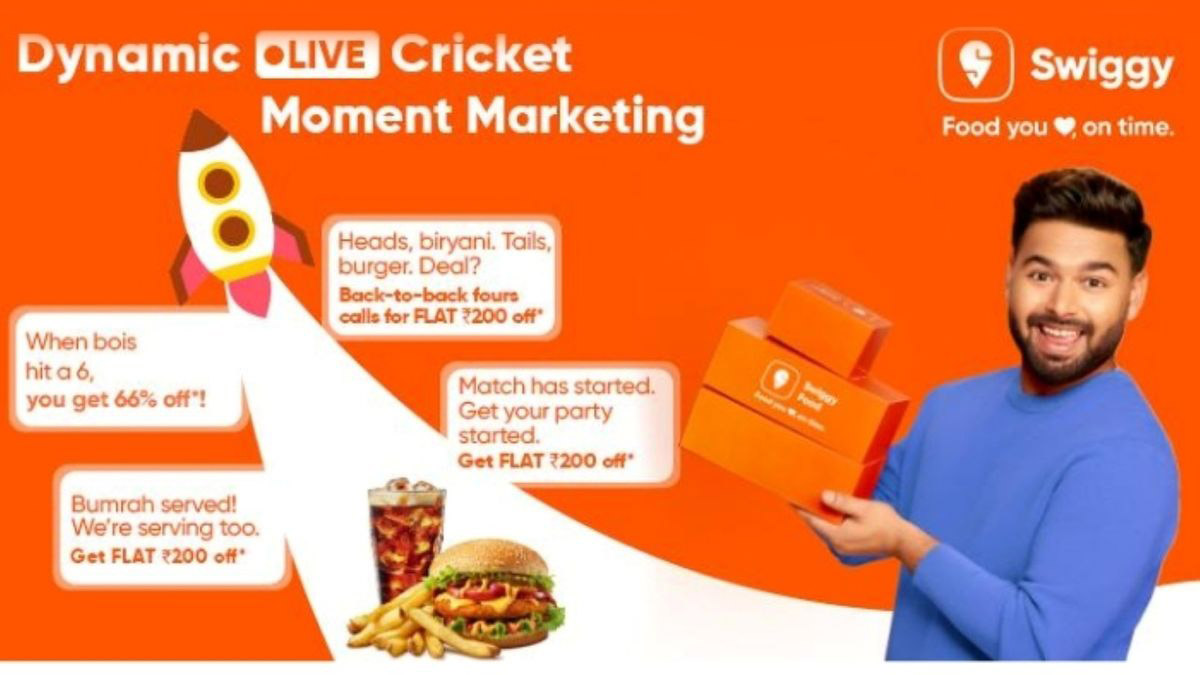
MUMBAI: India’s T20 final didn’t just break stumps, it broke Swiggy’s delivery records, proving cricket fans celebrate victories with plates, not just flags. Swiggy, India’s leading on-demand convenience platform, reported a sharp spike in food orders during the ICC Men’s T20 World Cup final between India and New Zealand. On 8 March 2026, overall orders rose 23.2 per cent year-on-year compared with the same date in 2025, driven by fans turning living rooms into mini stadiums complete with match-day feasts.
Key highlights from the evening:
- Orders during peak match hours (7–10 pm) were 2.1 times higher than pre-match levels.
- The highest order rate hit 7,500 orders per minute at 19:45.
- Chicken biryani reigned supreme as the most-ordered dish, followed by masala dosa, chicken fried rice, garlic breadsticks and paneer butter masala.
While metros such as Bengaluru, Mumbai and Hyderabad led volumes, the cricketing fever spread nationwide. Among emerging cities, Thiruvananthapuram, Surat and Rajkot recorded the strongest order growth. Smaller markets including Shillong, Agartala and Port Blair also showed significant appetite, underlining the expanding footprint of quick-commerce food delivery across India.
The surge reflects a growing trend of pairing major sporting events with doorstep delivery, turning big matches into shared, convenient celebrations. In a night where every boundary mattered, Swiggy proved the real MVP might just be the delivery partner who kept the snacks and the vibes flowing without missing a single wicket.







