News Broadcasting
Why India expansion makes sense to BBC

MUMBAI: BBC is rising to the fact that expansion in India makes logical sense. With the proliferation of news sources, BBC is witnessing a mobile revolution especially in India, Asia and Africa.
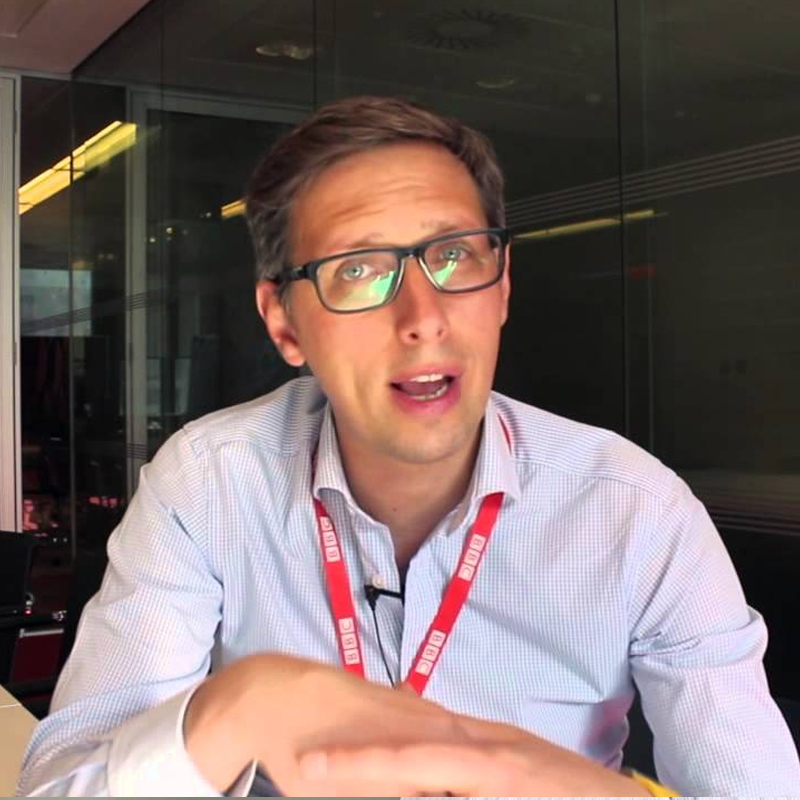
“It would be presumptuous to think that people would come to our websites just because we’ve launched them,” BBC digital editor for World Service Languages Dmitry Shishkin has said, niemanlab.org reported. Shishkin is responsible for allocation of 319 new digital, editorial hires — from developers to social media editors to producers for new TV bulletins.
Things like [Facebook] Instant Articles, Google Accelerated Mobile Pages, and light apps for audio listening, he says, are in our plans. The next ‘hackathon,’ he indicated, will be taking place in India. The way we are launching new BBC services impacts in a very big editorial way how we’re running existing ones, he said. (The BBC has also held several hackathons across Africa that have led to implemented pilot projects, and also to local developers joining the BBC’s product development process).

The BBC World Service already publishes in 28 languages. It plans to make a foray into unusual territory: launching a full-fledged news service delivered in Nigerian Pidgin in West and Central Africa. The BBC groups its language services into six regions — such as growth editors who can analyse data on story performance and make recommendations on how to improve coverage and increase reach.
Every new language service requires its own justification, its own distribution strategy, and its own evaluation of the target audience’s needs. For many of these countries where the BBC plans to launch its new mobile-focused online news services, limited phone data is an issue.
The BBC already has an established workflow that facilitates sharing text and video content among its own language services. It’s also developed new tools to ease cross-language sharing, such as this one that automates translations for videos.
The World Service is changing up how interactives will be produced. Regions will get their own dedicated interactives teams, so instead of pitching ideas to London, they’ll work with their own local teams.
BBC had realised that seeking someone with several years of professional experience in journalism, who spoke the languages they needed, plus had a digital background, was difficult. BBC had decided to look for people who have professional and personal experiences. This allows people to understand the market, because they are the market.
ALSO READ :
BBC Pashto adds arts to its TV offer
Zee Cafe targets 20-40-yr-olds with BBC First drama
BBC Academy launches content in five additional languages including Bangla & Spanish





News Broadcasting
Business Today MindRush returns to Mumbai, spotlight on India’s edge in a fractured world
Policymakers and corporate heavyweights gather to map supply chains, energy security and markets

MUMBAI: As fault lines widen across global trade and geopolitics, Business Today is doubling down on India’s moment. The 14th edition of Business Today MindRush & Best CEOs Awards lands in Mumbai on March 28, pitching India’s strategic edge at the centre of a fragmenting world.
The day-long summit, presented by PwC, will bring together a tight mix of policymakers, industry leaders and market voices to decode shifting supply chains, maritime strategy, defence priorities, energy security and capital markets—sectors now deeply entangled with geopolitics.
M Nagaraju, secretary, department of financial services, ministry of finance, will headline the event, setting the tone for discussions that aim to track how India is repositioning itself amid disrupted trade routes and volatile energy dynamics.
The speaker slate reads like a cross-section of India Inc’s command centre. Krishna Swaminathan will zero in on sea lanes and supply chains, while Prashant Ruia is set to push the case for self-reliance in oil and gas. Ashish Chauhan will weigh in on capital markets at a pivotal juncture, as a panel featuring Vibha Padalkar, Sanjiv Mehta, Amish Mehta and Sanjeev Krishan debates navigating economic uncertainty.
Leadership under pressure will be another running theme. Madhavkrishna Singhania, Sharvil Patel, Karan Bhagat and Anurag Choudhary will unpack how businesses are steering through disruption. Arun Alagappan will turn the spotlight on fertilisers, Arundhati Bhattacharya will reflect on leadership transitions, while Anish Shah and S Vellayan will outline blueprints for building future-ready conglomerates.
The event will close with Aroon Purie setting the broader editorial lens, before the Best CEOs Awards recognise standout corporate leadership across sectors.
At a time when the global order looks increasingly splintered, MindRush 2026 is positioning itself as more than a conference—it is a signal that India intends not just to navigate the churn, but to shape it.








