News Headline
Which TV content grabs south India’s eyeballs?


MUMBAI: When we talk about the television industry, everyone is aware that the Hindi-speaking market is vast. However, a significant part of the industry is concentrated in another part of India — the southern market. Its a highly influential market for advertisers.
A recent newsletter released by the television ratings body Broadcast Audience Research Council (BARC) India ‘South Special Edition’ seeks to answer all the questions as to how the southern India is different from HSM w.r.t. important audience metrics? How southern states differ from each other in terms of programme theme preferences.
Avg. Time Spent (ATS) vs Opportunity to See (OTS) and performance of product categories? How does the popular Hindi content dubbed in southern languages perform? And, most importantly, what the southern market watches on its television sets?

As per the BARC study, south India has a lower share in the movies genre as compared to GEC. On the other hand, its share in GEC and news channels is higher than HSM. Also, within the regions, the relative ranking for most genres remains constant across HSM and South.

Surprisingly, programme themes and channel genres do not show the same trends across HSM and South. Serials, which are the staple of GEC channels (which saw the highest share in terms of channel genre), sees a drop in share for South as compared to the share for channel genre.
Similarly, while movie channels are viewed lesser than HSM, in South, the trend is reversed when it comes to film-based programs i.e. South has a higher share compared to HSM.

The study also shows that South Indian viewership seems to begin earlier in the day than HSM and also end up earlier. South has a higher viewership than HSM only during early morning hours (05:00-08:00).

Tile the gap between HSM and South reduces marginally during 18:00-21:00 hrs. South seems to have an earlier prime¬ time than HSM. It is clear that South and HSM do not have the same viewership trends.

BARC studies showed that the Southern Market shows the highest inclination towards film-based content followed by serials driven by AP/Telangana and Kerala, respectively. Kerala watches less movies as compared to other markets.

On the other hand, AP/Telangana watches less serials and more of news than other southern markets. In most of the markets, the most watched TV content is film-based followed by serials. Content based on music and tourism is the least popular in southern markets.
How different are southern states in terms of rural and urban?
The urban and rural viewership is comparable throughout the day with both seeing a peak during the prime-time. However, as opposed to the rest of the day, during prime-time hours, it is mainly the rural markets which seem to be driving the viewership and not urban markets.

When we look at states within urban and rural markets, while rural markets have similar viewership trends across states, it is not the same case with urban markets. In urban markets, the viewership among markets differs between prime time hours and non-prime time hours. During non-prime time hours, AP/Telangana has a maximum viewership. After AP/Telangana, the maximum viewership alternates between TN/Pondicherry and Karnataka markets with Kerala having the lowest viewership for most day parts.

However, during prime time hours, this order is completely changed. Urban Karnataka has the maximum viewership post 21:00 hrs and this lead continues into late night hours as well.
What is interesting is that even among the rural markets, Karnataka displays similar behaviour with respect to prime time viewership. During late night hours, Kerala, which is a relatively smaller market, sees the highest viewership.

Conversely, TN/Pondicherry, which is one of the bigger markets during non-primetime hours, shows the least viewership during prime time hours in both rural and urban markets.
How is Hindi content dubbed in south languages performing?
Popular content from Hindi GECs is now being dubbed and shown on southern GECs. This phenomenon is seen across all southern states with the exception of Karnataka. Shows from leading channels such as Star Plus (Diya Aur Baati Hum. Siya Ke Ram. etc.), Colors (Naagin. Sasural Simar Ka, Balika Vadhu, etc.), Zee TV (Gangaa, Kumkum Bhagya, Ek Mutthi Aasman, etc.) and Sony (CID, Bade Achhe Lagte Hai, etc.), have been dubbed.
Interestingly, in AP/Telangana market, none of the channels sees an increase in viewership for Hindi dubbed content. In the other two markets, viz. Kerala and TN/Pondicherry, Hindi dubbed content sees a mixed response with some channels seeing a higher viewership than the original content in regional language.
In the Kerala market, the highest spike is seen by Asianet Plus. Similarly, in TN/Pondicherry market, maximum growth is seen by Polimer, where the viewership for Hindi dubbed content is more than double that of the original content. This is on the back of several popular shows.






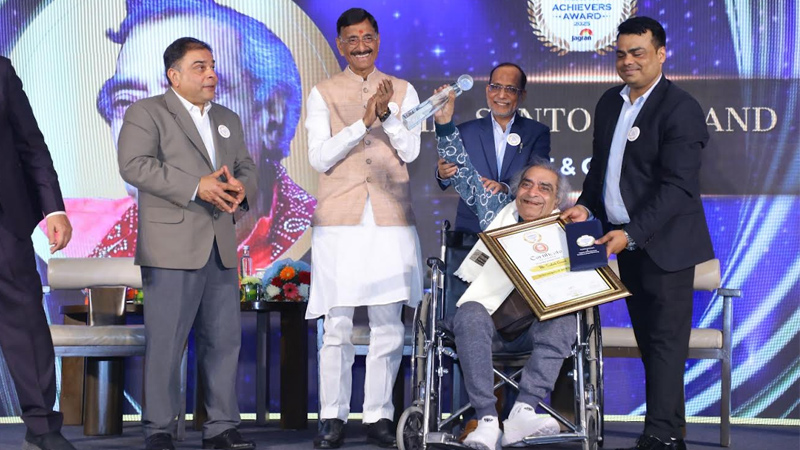
NEW DELHI: Hamdard Laboratories gathered a cross-section of India’s achievers in New Delhi on Friday, handing out the Hakeem Abdul Hameed Excellence Awards to figures who have left their mark across healthcare, education, sport, public service and the arts.
The ceremony, attended by minister of state for defence Sanjay Seth and senior officials from the ministry of Ayush, celebrated individuals whose work blends professional success with a sense of public purpose. It was as much a roll call of achievement as it was a reminder that influence is not measured only in profits or podiums, but in people reached and lives improved.
Among the headline awardees was Alakh Pandey, founder and chief executive of PhysicsWallah, recognised for turning affordable digital learning into a mass movement. On the sporting front, Arjuna Awardee and kabaddi player Sakshi Puniya was honoured for her contribution to the game and for pushing women’s participation onto bigger stages.
The cultural spotlight fell on veteran lyricist and poet Santosh Anand, whose songs have echoed across generations of Hindi cinema. At 97, Anand accepted the honour with characteristic humility, reflecting on a life shaped by perseverance and hope.
Healthcare honours spanned both modern and traditional systems. Manoj N. Nesari was recognised for strengthening Ayurveda’s place in national and global health frameworks. Padma shri Mohammed Abdul Waheed was honoured for his research-backed work in Unani medicine, while padma shri Mohsin Wali received recognition for his long-standing contribution to patient-centred care.
Education and social development also featured prominently. Padma shri Zahir Ishaq Kazi was honoured for decades of work in education, while former Meghalaya superintendent of Police T. C. Chacko was recognised for public service. Goonj founder Anshu Gupta received an award for his dignity-centred rural development initiatives, and the Hunar Shakti Foundation was honoured for empowering women and young girls through skill development.
The Lifetime Achievement Award went to former IAS officer Shailaja Chandra for her long career in public healthcare and governance, particularly in the traditional systems under Ayush.
Speaking at the event, Hamdard chairman Abdul Majeed said the awards were a tribute to those who combine excellence with empathy. “These awardees reflect Hakeem Sahib’s belief that healthcare, education and public service must ultimately serve humanity,” he said.
Minister Seth struck a forward-looking note, saying India’s young population gives the country a unique opportunity to become a global destination for learning, health and wellness by 2047.
The ceremony also featured the trailer launch of Unani Ki Kahaani, an upcoming documentary starring actor Jim Sarbh, set to premiere on Discovery on 11 February.
Instituted in memory of Unani scholar and educationist Hakeem Abdul Hameed, the awards have grown into a national platform that celebrates those building a more inclusive and resilient India. For one evening at least, the spotlight was not just on success, but on service with substance.






