Education
What Famous Cricketers Have to Say About Four-Day Tests

The International Cricket Council (ICC) proposes that the duration of Test matches be changed to four days instead of five. According to the ICC, this was to reduce the numerous pressure points in the global cricket calendar.
If the changes were to take place, it would become mandatory to the World Test Championship starting 2023. The ICC committee is considering that the changes be considered in 2020 in which a lot of cricketers have opposed to.
With four-day Tests, the fifth day will obviously be removed when in fact, it is the most exciting day of a Test match. Also, on cases wherein a day must be washed out due to unpredictable circumstances, the game could still push through within four days. However, if the Test matches are to be shortened in four days and something occurs, the remaining 3 days would not be enough to obtain a proper result.

The issue has filled the cricket world of different statements of opposition against the said matter.
Here’s what some famous cricketers have to say:
Francois ‘Faf’ du Plessis, captain of South African team:
‘I am a fan of Test cricket going five days. The great draws of the game always go to five days’. Du Plessis also said that the result of the game that they had just played would not be the same if in case it was played in just four days.
This statement of du Plessis went against the stand of Cricket South Africa which firmly said that its ‘official policy to support four-day Test match cricket’. This was because of the fact that South Africa had played a four-day Test match against Zimbabwe way back December 2017.
Virat Kohli, captain of India National Cricket team:
Kohli says that he is not a fan of the proposal and that the five-day format and that the Test format should not be altered. The captain of the Men in Blue also slammed the ICC by saying that the intent is not right because sooner or later, they will be speaking of shortening the Test matches to three days and so on until Test matches completely disappear.
Sachin Tendulkar, Indian cricket legend:
Tendulkar, dubbed as the God of Cricket, also disagrees with the changing of Test format. Based on his statement, taking away the fifth day in a Test match for spin bowlers is like taking out the first day for fast bowlers.
Rohit Sharma, player of India National Cricket team:
Sharma backed up their captain’s statement by saying that if a game lasts for four days, then it is a first-class match and not a Test match.
Ben Stokes, vice-captain of England Test team:
Stokes says that he prefers keeping the longer format of the game. ‘It's the best format of the game and it makes cricket and games like these just unforgettable’, says Stokes, referring to the five-day cricket format.
Joe Root, captain of the England Test team:
After England’s win over South Africa, Root gives out his stand on the issue by saying ‘What a great win that was. A great five days of cricket. You wouldn't see it if it was a four-day game, would you? It's a great advert for five-day Test matches’.
Glen McGrath, former Australia fast bowler:
‘I'm very much a traditionalist. I like the game the way it is. To me, five days is very special and I'd hate to see it get any shorter. The introduction of pink Tests, day-night Tests is a great way to continue keeping our game fresh and moving forward. In respects to changing how many days its played, I'm actually against it. I like the way it is’.
Nathan Lyon, Australia fast offspinner:
Lyon also thinks that the idea is ridiculous and that he seriously hopes that the ICC is not considering it to happen. He said that he believes that four-day Tests are most likely to have more draws because the fifth day in a Test is what makes the game crucial.
Aside from the aforementioned statements, the long list of people who are not in favour of four-day Tests goes on. Despite many opposing statements, there are still a handful of players who agree to ICC’s proposal. For more details on this issue, tune in and be updated with the latest cricket news on Sportsadda.com.







Education
Scaler appoints new heads for its online and offline businesses
Amar Srivastava becomes chief executive of the online business and group chief product officer; Vidit Jain takes charge of the offline schools
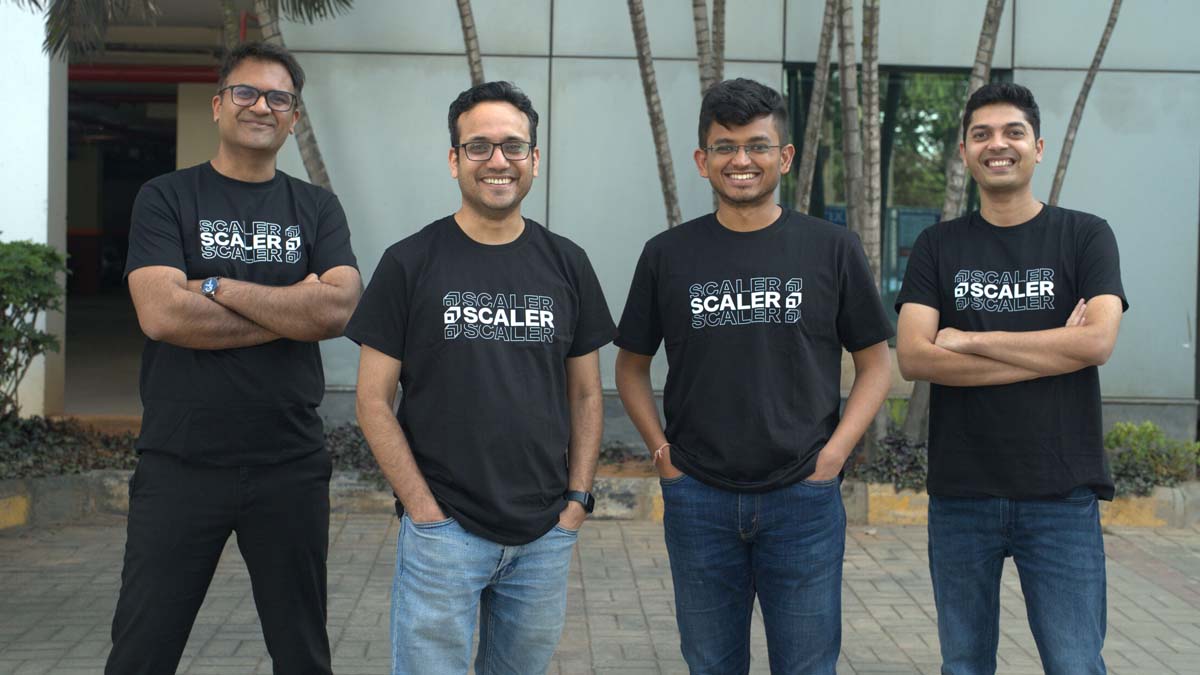
BENGALURU: Scaler is shuffling its top deck as the AI skilling race heats up. The Bengaluru-based tech education company has elevated two senior executives to lead its online and offline businesses, signalling a sharper push into an AI-driven market.
Amar Srivastava, previously senior vice president for product and business, has been appointed chief executive of the online business and group chief product officer. Vidit Jain has been elevated to senior vice president and head of Scaler School, taking charge of the company’s offline education units, the Scaler School of Business and the Scaler School of Technology.
The company has also recently appointed Ratnakar Reddy as head of enterprise for India and the Middle East and North Africa, with a brief to drive partnerships with governments and enterprises for AI-led skilling programmes.
Abhimanyu Saxena, co-founder of Scaler, said the promotions reflect the company’s confidence in both leaders and the direction it is heading. “Amar and Vidit have been central to Scaler’s journey, and their elevations reflect our conviction in their leadership and the direction we are shaping as a company,” he said. “With leadership now in place across the business, we remain focused on building engineers the world’s best companies want to hire. In an AI-first economy, that mission is more urgent and more achievable than ever. Our next chapter is centred on building an AI-native workforce from India, equipped to compete in a technology-driven global economy.”
Srivastava brings over a decade of experience building education-focused ventures. He previously founded Intellify and was part of the early team at Doubtnut. At Scaler, he will lead the online business with a focus on growth, profitability and expansion into new segments, while strengthening the product ecosystem across the group. He is blunt about what the AI economy actually needs. “The AI economy does not have a shortage of tools. It has a shortage of engineers who can think clearly, build reliably, and keep learning as the ground shifts. That is what we are building toward,” he said.
Jain brings more than 15 years of experience across startups and consulting, including stints at MPL and McKinsey and Company. He will oversee growth and profitability of Scaler’s offline business. His priorities are immediate and unambiguous. “The offline experience is where depth gets built, and that depth is critical in the AI era. Over the next 12 months, our focus will be on consistent growth, stronger unit economics, and delivering outcomes for students while building long-term employer partnerships,” he said.
Founded in 2019, Scaler is valued at $710 million and backed by Peak XV Partners, Tiger Global and Lightrock India. Its parent firm, InterviewBit, has featured on the Financial Times’ Asia Pacific High Growth Companies rankings every year from 2021 to 2025. On average, Scaler’s learners see a 4.5x return on investment and a salary increase of around 126 per cent.
With leadership locked in across every business unit, Scaler is betting that the next wave of global tech hiring will be won or lost on the quality of engineers coming out of India. It is a big bet. But the numbers, and the promotions, suggest the company is in no mood to hedge.







