iWorld
Welcome offer lands Reliance Jio in 4G speed soup

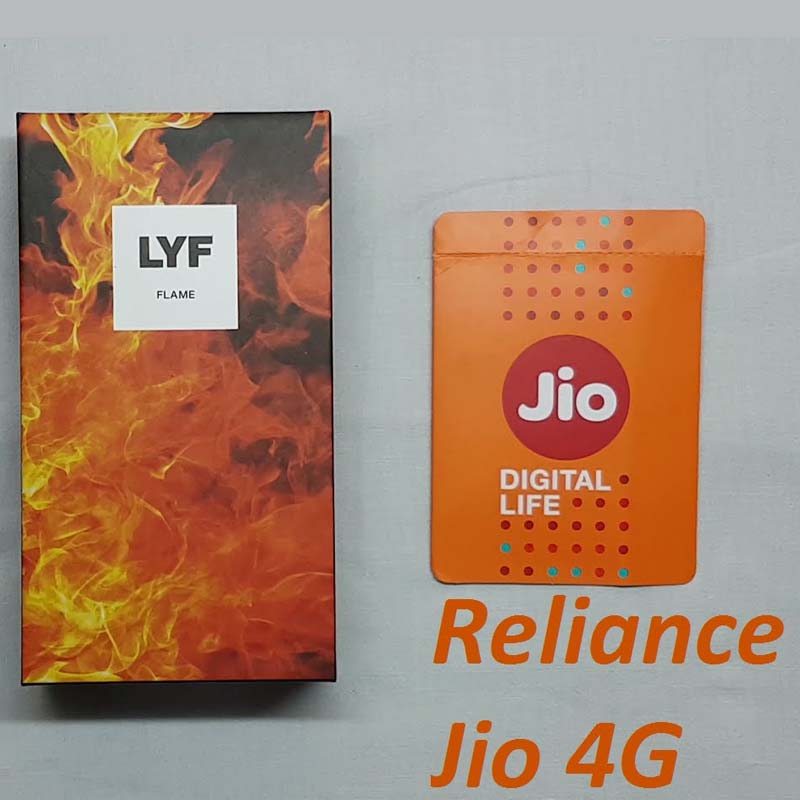
MUMBAI: Even as Reliance Retail today launched 4G F1, the first device under the LYF brand outside the four elements branding, Reliance Jio seems to have received a setback with TRAI declaring its speed to be the poorest among five telecom operators. LYF F1 has been launched with advanced 4G for Reliance Jio at 13,399.
Reliance Jio entered the telecom market with the aim of democratising Internet access in India. But, according to data by Telecom Regulatory Authority of India recently-launched My Speed website, the average pan-India 4G download speed by Reliance Jio stands at 6.2Mbps, making it only the fifth-fastest network in the country. TRAI data has found Reliance Jio 4G speed is the slowest in India. It is sixth in upload speed, and lags in internet speeds in all major markets. However, Jio has said that its Fair Usage Policy (FUP) policy has caused the average speed to come down
In Delhi circle, for example, Jio’s ranking on the same parameter rises to third, but the speed decreases to 5.9Mbps. In Mumbai, a major market, Jio’s download speed goes up to 10.7Mbps and its position rises to second. In Karnataka circle, Jio fell out of the top 5 entirely, despite an average download speed of 7.5Mbps. Jio’s average download speed of 6.2Mbps, on the other hand, still makes it the fastest network in the country if the ‘technology’ on the TRAI website is set to ‘all’, which includes 2G and 3G networks as well.
In a statement, Reliance Jio said that it has performed an internal analysis of its network and found that “the comparison of Jio speeds with other operators has an inherent bias against Jio data usage.”
Statement from a Reliance Jio spokesperson:
“With reference to statistics published TRAI’s analytics website, we have performed an internal analysis of the same. The nature of this skew is explained below. As you may be aware, under the Jio Welcome Offer, there is a daily fair usage policy (FUP) limit of 4GB data consumption per user. This limit has been setup with the express intention of preventing heavy data users from degrading the experience of other users.
Before this FUP limit is reached, Jio customers enjoy unmatched 4G LTE speeds on the Jio network. However, after the FUP usage limit is reached, speeds are reduced to 256kbps. Full 4G LTE speeds are once again restored once the next 24-hour period begins. Historically, we have observed that a disproportionate number of speed tests are performed once the FUP comes into effect. This is so since most users don’t consider performing the test until they observe a deterioration of speed. Such users also tend to perform multiple tests until full speeds are restored.
Given that data usage under Jio Welcome Offer is completely free, a higher proportion of Jio users run up against the FUP limit. In comparison, not all non-Jio users have FUP based plans (rather their usage is completely stopped, and they are entirely prevented from performing the speed test), and even those who have FUP based plans face this situation only once a month. Further, such customers tend to recharge quickly and restore full speeds.
This difference in the offer structures, and associated customer behaviors, result in a large proportion of the speed tests being conducted on Jio network when the speeds are reduced via FUP to 256kbps. This has the effect of dragging the average far below the speeds experienced by Jio customers who are enjoying full 4G LTE speeds.
Having said that, we continuously measure the speeds experienced by Jio customers – adjusting for factors such as FUP, and are proactively working to improve service levels for all our customers.”