I&B Ministry
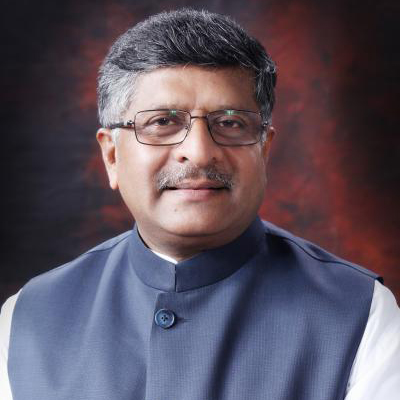
Website hacking on a rise in last four years: Ravi Shankar Prasad
NEW DELHI: A total number of 21699, 27605, 28481 and 32323 websites were hacked by various hacker groups spread across the world from 2011 to 2014, clearly showing an increase in incidents of hacking.
According to the Indian Computer Emergency Response Team (CERT-In), these also include a total number of 308, 371, 189 and 155 Government websites hosted under ‘gov.in’ and ‘nic.in’ domains during the year 2011 to 2014.
Among the comprehensive measures to tackle the problem, the Government says all Central Government Ministries / Departments and State / Union Territory Governments have been advised to conduct security auditing of entire Information Technology infrastructure.
All the new government websites and applications are to be audited with respect to cyber security prior to their hosting. The auditing of the websites and applications is to be conducted on a regular basis after hosting also. CERT-In provides necessary expertise to audit IT infrastructure of critical and other ICT sectors.
It has been mandated that all government websites are to be hosted on infrastructure of National Informatics Centre (NIC), Education and Research Network (ERNET) or any other secure infrastructure service provider in the country.
NIC, which hosts the government websites is continuously engaged in upgrading and improving the security posture of its hosting infrastructure. NIC has been directed not to host websites, which are not audited with respect to cyber security.
All major websites are being monitored regularly to detect malicious activities, Communication and Information Technology Minister Ravi Shankar Prasad told Parliament today.
CERT-In issues alerts and advisories regarding latest cyber threats and countermeasures on regular basis and has published guidelines for securing the websites, which are available on its website (www.cert-in.org.in). It also conducts regular training programmes to make the system administrators aware about secure hosting of the websites.
The hacking of websites is tracked on a 24×7 basis and alerts issued to the concerned website owners to restore the hacked websites and taking further actions to secure the websites.

I&B Ministry
Government sets up AI governance group to steer policy
AIGEG to align ministries, assess jobs impact, guide AI deployment.
MUMBAI: If artificial intelligence is the engine, the government is now building the dashboard and making sure everyone reads from the same screen. The Centre has constituted a new inter-ministerial body to coordinate India’s approach to AI, formalising a key recommendation from its governance framework and the Economic Survey. The AI Governance and Economic Group (AIGEG), set up by the Ministry of Electronics and Information Technology, will act as the central platform to align AI-related policy across ministries, regulators and departments, an attempt to bring coherence to what has so far been a fragmented and fast-evolving landscape.
The group will be chaired by union minister Ashwini Vaishnaw, with minister of state Jitin Prasada as vice chairperson. Its composition reflects both technological and economic priorities, bringing together the principal scientific adviser, the chief economic adviser, and the CEO of NITI Aayog, alongside key secretaries from telecommunications, economic affairs and science and technology. A representative from the National Security Council Secretariat is also part of the group, while the MeitY secretary will serve as member convenor.
At its core, AIGEG is designed to do two things: coordinate and anticipate. On the policy front, it will review existing regulatory mechanisms, issue guidance across sectors and ensure companies remain compliant with evolving legal frameworks. Beyond that, it will oversee national initiatives on AI governance, with a focus on enabling responsible innovation rather than merely regulating it.
The economic dimension is equally central. The group has been tasked with assessing how AI-driven automation could reshape jobs identifying which roles are most at risk, where those impacts may be geographically concentrated, and whether technology will augment or replace human labour. Based on these assessments, it will develop mitigation strategies and transition plans, signalling a more proactive stance on workforce disruption.
In parallel, AIGEG will work with industry stakeholders to chart a long-term roadmap for AI adoption, categorising use cases into “deploy”, “pilot” or “defer” buckets depending on readiness factors such as data availability, skill levels and regulatory clarity. The aim is to move from broad ambition to structured execution deciding not just what can be built, but what should be built now.
The group will function as the apex layer in India’s AI governance architecture, supported by a Technology and Policy Expert Committee that will track global developments, emerging risks and regulatory priorities. Together, the two bodies are expected to shape both the pace and direction of AI adoption in the country.
In a landscape where technology often outruns policy, the creation of AIGEG signals an attempt to close that gap ensuring that India’s AI journey is not just rapid, but also coordinated, accountable and economically grounded.