International
We intend to launch localised channels in APAC countries: Sushruta Samanta

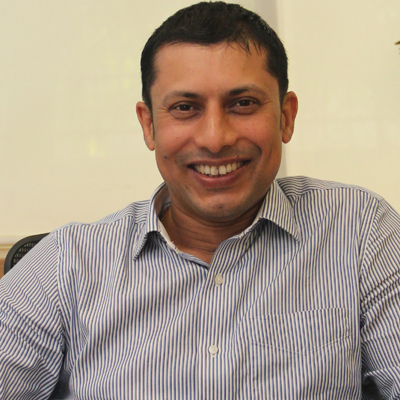
MUMBAI: It’s been a hectic time for Zee Entertainment Enterprises Limited (Zeel), having forayed into the Thai market with Zee Nung just last week. However, Zeel Asia Pacific (APAC) business head Sushruta Samanta took time out from his busy schedule to speak to indiantelevision.com about the future roadmap of the newly-launched channels as well as further expansion plans of the company in the APAC region. Excerpts…
What is Zeel’s strategy in the APAC region?

There are two kinds of markets in APAC. One is the already developed markets including Japan and Korea, China could also be a part of it but it’s still developing in terms of GDP and Media at a faster pace. These three together would probably be 65 per cent of APAC, excluding India. The remaining are the emerging markets that are growing at a very fast rate in terms of pay TV penetration as well as economy and GDP size. In terms of sizing, excluding India, pay market in the rest of APAC would be approximately $45 billion in terms of net ad and subscription revenue put together.
From the Zeel perspective, we have a two-prong strategy: one is how do we enter bigger markets that are already kind of Red oceans in nature, second is the new emerging fast-growing markets where we believe it is the right time to enter. Pay business is such that the later you enter, the higher are the entry barriers, issues like bandwidth, placement, carriage and others. So, timing is very critical.
In the emerging markets, where we did our feasibility research first, there are three kinds of business models we target. The first part is where we take our Indian channels and connect with the Indian viewers. This is the NRI and PIO population. They are the ones who want to connect and consume Indian content the Indian way, with the same language and packaging, probably with additional subtitling only.
The second is the local audience. This is a much bigger segment and the one we prefer to connect through repackaging and redirection of our content. When we conducted our research in selected APAC countries, we identified specific countries we wanted to enter first. These are the markets where we saw a huge connect and an affinity for Bollywood and Indian content. The general population in these markets would love to consume Indian content if it is repackaged well as per their taste, language and culture. In some markets, dubbing works well while in others, they prefer to consume the content in the subtitled format. The third is to create content locally when the time and opportunity is right.
How has the APAC business shaped up for Zee Bioskop and what are the plans for Zee Nung?
We started with research and focus groups in key cities in Indonesia and designed the product based on those inputs. We are already on four key platforms in Indonesia including Aora TV, Kompass, Orange TV, Transvision and are scheduled to launch on two more now. Zee Bioskop is currently reaching out to half a million pay TV homes there. Indonesia is an interesting market as it has more than nine DTH operators along with cable operators operating separately. It is a small pay penetration market but growing at a quantum speed now. The 2013 subscriber base saw a growth of more than 35 per cent over 2012. This trend is expected to continue and is hence an important market for us at this point of time. We have an office in Jakarta for the first time and a local team under Maria Liza, country head Indonesia, driving this business.
Once we launched Zee Bioskop, we realised that the model was working well in Asia Pacific and we looked at the second market identified earlier during our research and entered Thailand with Zee Nung. One critical aspect of this business model is that we are very clearly a pay channel model, which means we make platforms believe in our product and they are then ready to share the revenues per subscriber basis. In Thailand, we launched on Cable Thai Holding (CTH), the biggest pay operator in the market, because they thought the product will work really well. Zee Nung is on FTA mode till 15 June for mass trial after which we will convert it to pay mode. Veria Living is next in line. In Thailand, CTH has a market penetration of 65 per cent and we are in talks with them for other products as well including Veria. We also opened an office in Bangkok headed by Vaishali Kasturia, Country Head Thailand who is driving the business locally.
3) What is the long term goal for Zeel in APAC?
We were the first to launch channels targeting Indians across the world but their number in APAC will be very less, less than even 1 per cent of the total population in the region. The main audience will have to be the locals in these countries, which is the mainstream segment and a far bigger revenue pie. Once our strategy of these repackaged & redirected channels is successful, the next step will be to move to the next level and create locally produced content and probably a completely local channel.
In Indonesia we are planning to do local production with Zee Bioskop once we start our ad sales for the channel. We are currently not doing ad sales because we want to give the initial value to consumers and boost to the channel. We will start with a reality show down the line and a year or a year and a half later, we will look at regular production of local content for the market. These will compete directly with the local channels.
Launching movie channels first is the base for understanding the market insights and viewing behaviour, setting up a strong local team and then slowly getting in with local content production. We first want to establish the Zee brand at the household level. Brand Zee has a very strong equity in APAC but we need to transfer that to the viewer level. Once that happens, we will extend it to local channels.
4) What is the business model for movie channels?
We have a library of more than 3,500 Indian movies, one of the largest in the world, and we can use that to our advantage to launch channels. We are focusing on subscriber revenue more than advertising because it is bigger and growing faster in this region. At Zee, we are also very particular on our branding and positioning strategy in each of these countries. We have some of the best agencies working for us, eg Grey for Zee Nung, FCB Jakarta for Zee Bioskop and Lowe for the upcoming channel in Vietnam. These initiatives will also play a crucial role in popularising Bollywood to the masses in these countries.
5) What is the contribution of the APAC business to Zeel’s entire international business?
The contribution of APAC to our international business is relatively low as compared to the other territories at this point of time. However, with the series of channel launches planned, we are looking at quantum growth and increase of our share in the next couple of years. The APAC ARPU at consumer levels fluctuates widely by country; however, the average is about $7.5. Markets like Thailand and Indonesia are above the average on key platforms that we are targeting.
6) Which are the other APAC markets that Zeel is targeting?
We are the only Indian channel to have been given the hotel landing license in China which is a big deal, we are now looking at making that business grow big and also create possible products targeting the mainstream Mandarin audience. We would also like to look at markets like Philippines, Cambodia, Myanmar and Sri Lanka with a cost effective model to launch since their market sizes are not that large yet but growing fast. Japan, Australia and New Zealand are also big markets and we are currently doing our feasibility researches to identify and design suitable products targeting the local population. For Australia and New Zealand, we already have a team in Sydney working on this. In the next three years, all our new launches will start bearing fruit increasing our market share in the region significantly. In the next five to seven years, we should be a leading local player in these markets. In line with our corporate philosophy and goal, to become a leading player at a global level will be possible once we are localised and mainstream across markets.






International
Russia-India cinematic spectacle Persimmon of My Love set for grand Moscow debut
Hindi cinema style musical revives Indo-Soviet cinema ties for today

MUMBAI: A new chapter in cross-border storytelling is set to unfold as Persimmon of My Love gears up for its premiere in Moscow on 1 April 2026, marking the first large-scale cinematic collaboration between Russia and India in decades.
Positioned as a modern nod to the cultural exchange that once brought Indian classics to Soviet audiences, the film blends Hindi cinema flair with Russian storytelling, aiming to rekindle a long-standing cinematic friendship.
Directed by Marius Weisberg, the musical comedy follows two brothers navigating a lively world of music, family and romance. The lead roles are played by Demis Karibidis and Mikhail Galustyan, with Karibidis also contributing as a screenwriter.
Shot entirely in India, the production leans heavily into Hindi cinema style spectacle. Filming took place across Mumbai studios and the cities of Udaipur and Jodhpur, whose architecture was used to create the fictional setting of Khurmada. A crew of over 350 worked on the project, with large-scale sequences featuring up to 1,000 extras.
The film also brings Indian creative talent into the mix. Dance sequences are choreographed by Jay Kumar, while music by Zurab Matua features songs in both Hindi and Russian, adding to its cross-cultural appeal.
Backed by TNT channel, MyWayStudio and the Russian Cinema Fund, the project reflects a broader push to strengthen cultural ties between the two countries.
With its mix of colour, comedy and cross-border collaboration, Persimmon of My Love is not just a film release but a reminder that cinema, much like music, travels well across borders.






