International
Warner Bros Consumer Products launches global licensing programme for ‘Man of Steel’


MUMBAI: As the legendary DC Comics superhero Superman returns to the big screen, Warner Bros Consumer Products has teamed up with a slate of global licensees for a broad, multi-category licensing program to support ‘Man of Steel‘.
In anticipation of ‘Man of Steel‘, global master toy licensee Mattel unveiled its toy line, including action figures, vehicles, playsets and collectible figures, highlighted by the Movie Masters line, which aims to capture the superior accuracy and details of the film‘s characters. Mattel will also introduce ‘Man of Steel‘ QuickShots, a new way to play with Superman, incorporating elements of flight and strength into the toy.
Also supporting ‘Man of Steel‘ are global licensees such as Lego, with construction sets inspired by memorable scenes from the film; and Rubie‘s Costume with a new line of ‘Man of Steel‘-inspired costumes and accessories for both kid and adult fans.
Warner Bros Consumer Products president Brad Globe said, "With a Super Hero as iconic and beloved as Superman, it is no surprise that fans worldwide are excited for Zack Snyder‘s new vision of this classic story. We are thrilled to be a part of the phenomenon as we work closely with our licensees to offer fans a variety of products that bring ‘Man of Steel‘ to the world beyond the big screen."
Additional toys, games, and collectibles partners bringing the ‘Man of Steel‘ products to life include Thinkway Toys, with a full role-play line, interactive figure and other toys; Jakks Pacific, with a 31-inch collectible Superman figure; and Cardinal Industries, with games and puzzles; among many other licensees.
There will also be statues from sideshow collectibles; authentic prop replicas from The Noble Collection; an 18-inch articulated figure from NECA; fun, stylised plush and vinyl figures from Funko; and high-end creations from Kotobukiya and SquareEnix.
The roster of licensees includes categories like apparel, accessories, stationery and publishing. Perennial partner Bioworld brings a line of ‘Man of Steel‘- inspired apparel and accessories, utilising a number of graphics and icons; high-end t-shirt label Kinetix offers statement S-Shield t-shirts; New Era Cap Company with a range of hats; and Under Armour with high-end sportswear. Publishers include Insight Editions, with an official ‘Man of Steel‘ guide and a behind-the-scenes look at the film; Titan Books, with the film‘s official novelisation; and HarperCollins, with a range of children‘s books based on ‘Man of Steel‘. Additional licensees include Mead Westvaco, Hallmark, Bakery Crafts, and many more.
Around the world licensees have started to celebrate the debut of ‘Man of Steel‘ with offerings in their local markets. Throughout the Europe, Middle East and Africa (EMEA) region, partners supporting ‘Man of Steel‘ include TV Mania, FCUK, Prenatal, Aquarapid, Leomil and others, with fun designs in apparel and accessories. D‘Arp?je and Maverix offer outdoor fun with ‘Man of Steel‘ outdoor products; while Pyramid, Proburo, and Cartorama bring the fun indoors, with themed back-to-school and paper products.
In Asia and Australia, fans can listen in style with Gavio‘s ‘Man of Steel‘ digital lifestyle collection, or collect their favorite scent with the Heat Group‘s ‘Man of Steel‘ eau du toilette, among other fun products. In Latin America, apparel from Aurimoda and Distribuidora de Textiles Avante is sure to delight, and kids can‘t wait to get back-to-school with fun items from Targmex.





International
Russia-India cinematic spectacle Persimmon of My Love set for grand Moscow debut
Hindi cinema style musical revives Indo-Soviet cinema ties for today
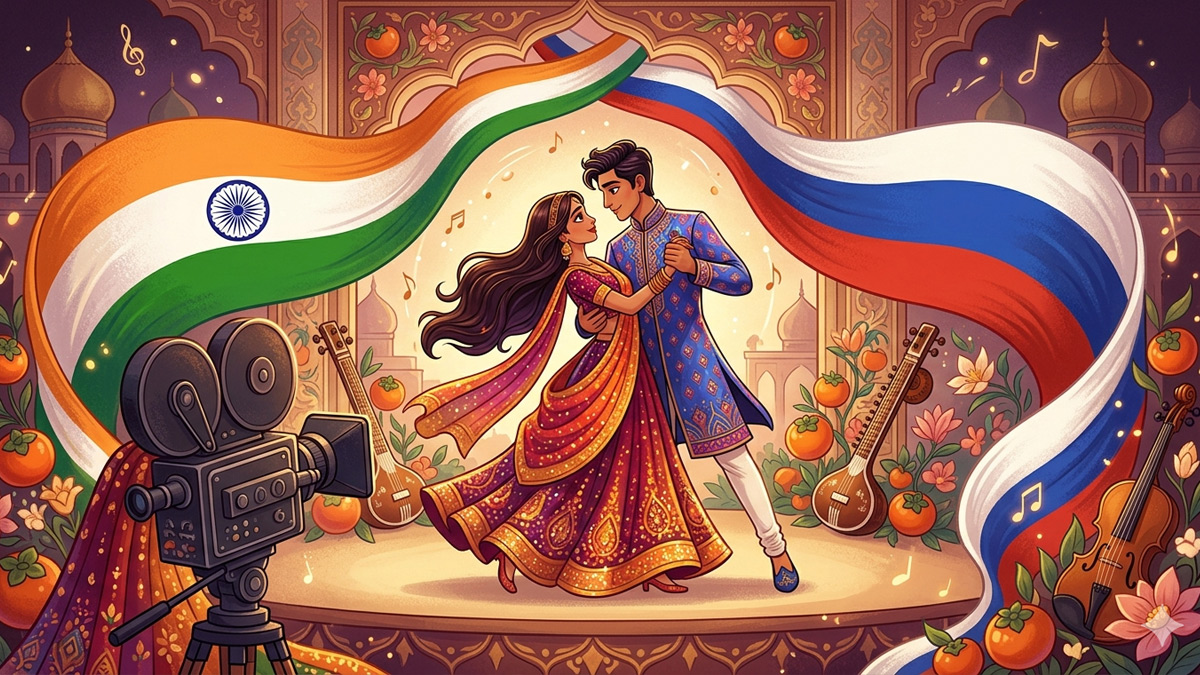
MUMBAI: A new chapter in cross-border storytelling is set to unfold as Persimmon of My Love gears up for its premiere in Moscow on 1 April 2026, marking the first large-scale cinematic collaboration between Russia and India in decades.
Positioned as a modern nod to the cultural exchange that once brought Indian classics to Soviet audiences, the film blends Hindi cinema flair with Russian storytelling, aiming to rekindle a long-standing cinematic friendship.
Directed by Marius Weisberg, the musical comedy follows two brothers navigating a lively world of music, family and romance. The lead roles are played by Demis Karibidis and Mikhail Galustyan, with Karibidis also contributing as a screenwriter.

Shot entirely in India, the production leans heavily into Hindi cinema style spectacle. Filming took place across Mumbai studios and the cities of Udaipur and Jodhpur, whose architecture was used to create the fictional setting of Khurmada. A crew of over 350 worked on the project, with large-scale sequences featuring up to 1,000 extras.
The film also brings Indian creative talent into the mix. Dance sequences are choreographed by Jay Kumar, while music by Zurab Matua features songs in both Hindi and Russian, adding to its cross-cultural appeal.
Backed by TNT channel, MyWayStudio and the Russian Cinema Fund, the project reflects a broader push to strengthen cultural ties between the two countries.
With its mix of colour, comedy and cross-border collaboration, Persimmon of My Love is not just a film release but a reminder that cinema, much like music, travels well across borders.






