News Broadcasting
Vivek Makker returns to NDTV as national revenue head

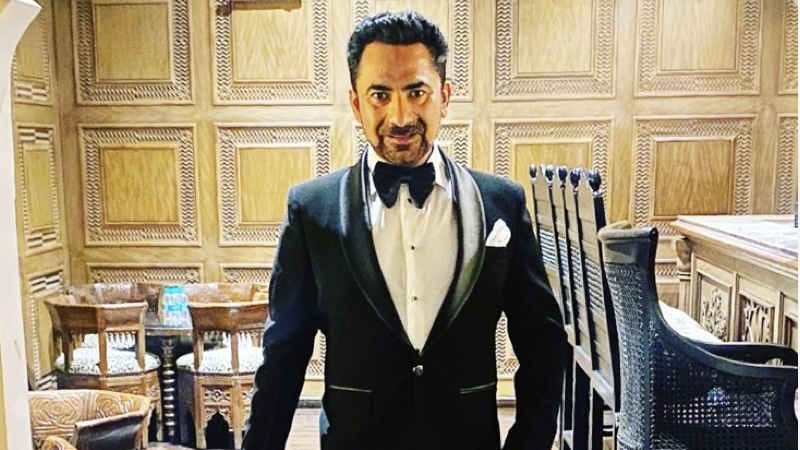
NEW DELHI: NDTV has brought back seasoned sales leader Vivek Makker as national revenue head for NDTV India, NDTV Madhya Pradesh–Chhattisgarh and NDTV Rajasthan, entrusting him with the task of supercharging advertising revenues across its flagship Hindi news network.
Makker knows the terrain well. From 2012 to 2022 he climbed the NDTV ladder to become national head of NDTV India, shaping strategy and client relationships in the intensely competitive Hindi news segment. He now returns after a three-year stint at News Nation, where as executive vice-president he steered national sales, digital marketing and customer experience.
His earlier career spans nearly every corner of India’s broadcast and out-of-home market. At Star India he managed northern-region sales, while at JSL Media he headed the outdoor revenue function. At Times Innovative Media he was part of the core team that launched airport advertising in Delhi and Mumbai in 2007, taking monthly billings from zero to Rs 10 crore within a few years. He recruited and retained a high-performing team and built direct relationships with top developers such as DLF, Emaar and Unitech, as well as brands from Volkswagen to GM and BMW.

Makker started out in media marketing at Hindustan Times in 1999, later moving to Star TV to handle marquee real-estate and IPO clients. Across these roles he earned a reputation for meticulous client servicing, sharp sales strategy and the ability to build lasting partnerships in a sector known for churn.
The NDTV executive say his mandate is clear: grow advertising share in Hindi heartland markets while deepening ties with national advertisers and agencies. With more than two decades of experience and a track record of turning fledgling revenue streams into major profit centres, Makker is expected to give NDTV’s Hindi channels fresh commercial momentum as the network readies for the next phase of expansion.




News Broadcasting
UDF poised to return to power in Kerala, says Manorama-CVoter survey
Massive opinion poll projects shift in Kerala politics ahead of 2026 Assembly elections.
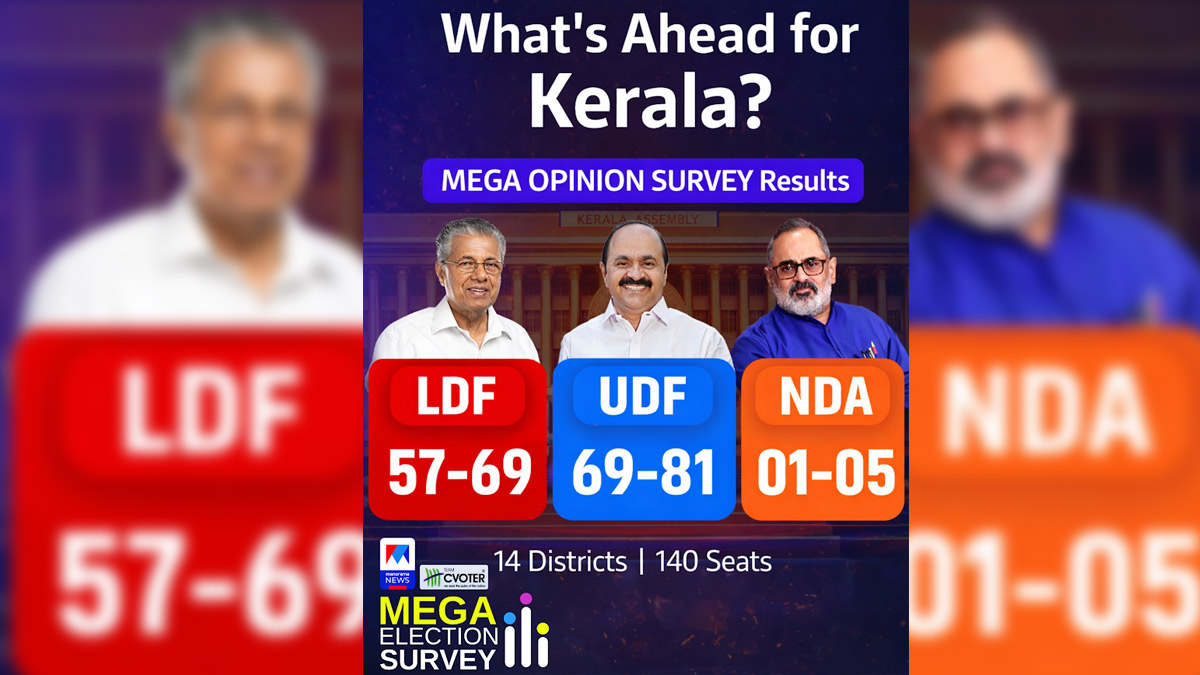
MUMBAI: The winds of change appear to be blowing through Kerala’s political landscape and this time, they seem to favour the United Democratic Front. A comprehensive mega opinion survey conducted by Manorama News in partnership with CVoter projects a potential comeback for the UDF in the upcoming Kerala Legislative Assembly Elections 2026. The survey, covering all 140 constituencies with a massive sample size of nearly 90,000 respondents, predicts the UDF could win between 69 and 81 seats.
The ruling Left Democratic Front (LDF) is expected to secure 57 to 69 seats, a significant drop from the 99 seats it won in the 2021 elections. This would mean the LDF losing 30 to 42 of its sitting seats. Meanwhile, the National Democratic Alliance (NDA), which drew a blank in 2021, is projected to open its account with 1 to 5 seats.
Region-wise, the UDF is expected to make strong gains in Malabar, winning 25 to 34 out of 48 seats, and in Central Kerala, where it could bag 29 to 33 out of 53 seats. In South Kerala, the LDF is likely to retain an edge with 21 to 25 seats, while the UDF may improve to 12 to 16 seats. The NDA could pick up 1 to 3 seats in the southern region.
The survey was conducted between 14 and 26 March 2026, with additional tracker and snap polls carried out from December 2025 to March 2026. A total of 89,693 respondents participated, ensuring representation across all demographics and social segments.
Manorama News has a strong track record of accuracy, with its previous projections closely matching the actual results of the 2019 and 2024 Lok Sabha elections as well as the 2021 Kerala Assembly polls.
In Kerala’s famously fierce political battles, this survey suggests the pendulum may be swinging back. Whether the final verdict matches these numbers or throws up another surprise, one thing is clear, the 2026 Assembly elections are shaping up to be one of the most keenly watched contests in the state’s history.






