iWorld
Vidnet Summit 2023- Leader Speak: Industry Update on the Current Trends, Challenges & Opportunities for OTT

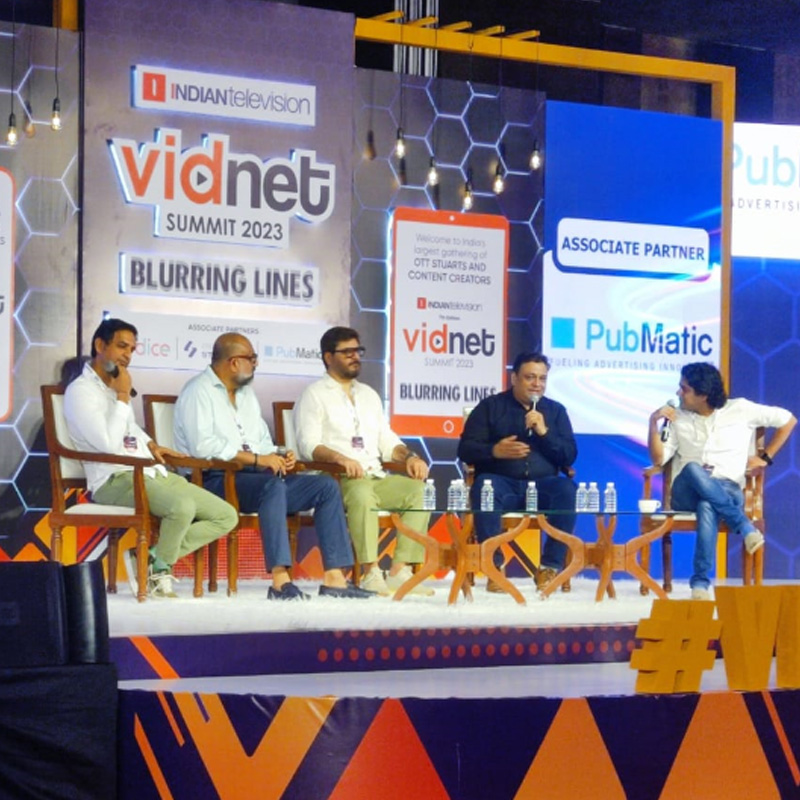
Mumbai: Today the lines are blurred as the streaming business is getting more complex and complicated, as monetization gets unclear. There is so much disruption happening, AVOD is offering SVOD and vice versa. Premium content is provided absolutely free and much more happening in this sector. Subscriber add-ons are slowing down. Time spent viewing on OTTs has plateaued for almost each and every platform, and high churn continues despite attractive annual schemes being offered by them. However, the good news is that the paid OTT subscription market in India continues to excite an increasing number of advertisers who are willing to put out their ads on these platforms. Mobile continues to be the main device of consumption even as connected TVs are increasingly getting into Indian homes. Investments in content continue to burgeon as viewers’ insatiable appetite continues to demand more and more.
It is certain that this new ecosystem is calling for new relationships to be forged, new partnerships to be developed as TV manufacturers, Cable TV, and DTH, and telcos and other aggregators’ presence as gatekeepers to their customers is increasingly being felt. So, what is the way forward for the OTT platforms? Where do the opportunities lie? What are the challenges?
This year’s Vidnet 2023 will look at all these scenarios and more, and find answers to some of these questions along with experts from the industry.
The moderator for this session was film critic, journalist and author Mayank Shekhar and the panellists were Contiloe Pictures CEO & founder Abhimanyu Singh, Juggernaut Productions CEO Samar Khan, Rose Audio Visuals producer, director & showrunner Goldie Bahl and Jio Platforms Ltd. senior VP content licensing & partnerships Kaushal Modi.
Shekhar started the session by asking a question to Singh, “ How did you start your firm? Where was it when you started it? Where is it now and how has the scene changed since we talked about OTT quite often in reference to cinema, but the fact is it impacted television as well. Take us through your whole journey so we can get off how the world has changed.”
Singh said, “I started in the mid-’90s, and at that time there was very little satellite broadcast and it was largely Doordarshan, which was the terrestrial channel. At that time we had to sell our own content so you learn the business of selling, marketing as well as producing. But from there on Star, Sony and broadcasters came in, which increased the amount of content and the requirement for content and the first disruption at that time. So there were lot of makers that would do a lot of scope for Doordarshan, they got disrupted because you need to reinvent with each tectonic shift in technology. If you look now at what’s happening in the OTT space, there has been a change as far as the requirement of content and genre that you can tell.”
Shekhar also asked the same question to Khan who responded, “ Everything has changed and nothing has changed. When I say everything has changed I think the opportunity to tell stories has increased. When we started off our careers in the 90s, there were so many stories to tell but there was only a limited avenue. That avenue has grown. So this is why there are more diverse stories being taken out.”
Shekhar asked Bahl about his journey and said, “ I was about 15-16 years when I started Bollywood and business has changed a lot. The greatest learnings are from the tragedies and jumping straight into the deep end. So I got to learn the tough part of the business. The trend of individual producers, selling it to distributors, showing a little bit of their film and raising some more money then marketing it to their own audience directly, speaking to the exhibitors is coming back. So one has seen all that how it works.”
Modi said, “ I started off with FMCG and then decided I want to do something different. Those days the internet was not even 256kbps connectivity dial-up, it would take 30 seconds to load a home page of the website. But the realisation there was, the internet was there to stay, but the way it would get consumed would change.”
Mayank concluded the session by asking Kaushal, “ Do you think the OTT industry would take the model of Hollywood.” To which Kaushal said, “Its an open market, people will come and people will create, business models are gonna be different, you will have a social media platform, you will have an SVOD platform.”






