Hardware
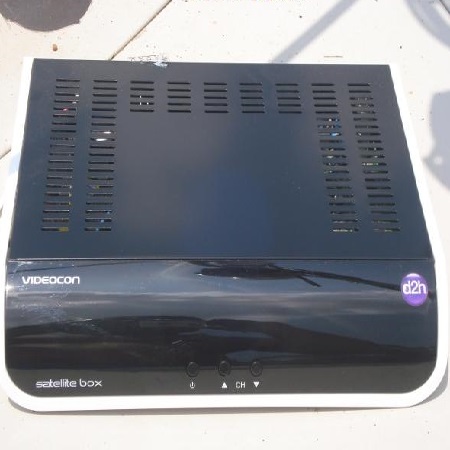
Videocon Industries plans new STB capacity by end-2014
MUMBAI: The Indian government last year raised the import duties of set top boxes (STBs) from five per cent to 10 per cent in a bid to encourage Indian entrepreneurs to start making them indigenously. To no avail, Indian MSOs, DTH players, continued importing the boxes from China, Korea and Taiwan to meet the government mandate of digitising India’s cable TV sector.
At least one player yesterday announced that it had taken up the gauntlet: electronics major Videocon Industries. Director Anirudh Dhoot told Press Trust of India that his company is planning to set up a one million STB manufacturing plant by end-2014. Dhoot told PTI that the plant is likely to be set up in either Punjab or Madhya Pradesh.
The Videocon group also runs Videocon d2h – one of the fastest growing DTH players in India.
The digitisation of cable TV in phase III and phase IV towns is expected to require around 80 million STBs; of which 60 million will likely be rolled out this year itself, totting up to a business potential of an estimated Rs 7,500 crore at factory prices. The second and third phases of digitisation are scheduled to be completed by end 2014, but everyone in the industry expects a delay of about three to six months. If Videocon manages to get its plant to start churning out STBs by end this year, it could meet some of that demand.
The Indian cable TV industry has deployed around 22 million STBs during the first and second phase of digitisation; even as DTH players have deployed around 45-50 million STBs collectively over the years since DTH launched in India.
Most of these were imports. Videocon, on its part, upped the capacity at its existing STB plant from 700,000 per annum to one million during the festival season last year. Now it plans to set up a new plant. Other players who are involved in the manufacture of STBs domestically include: Noida-based Dixon Technologies and Kortek Electronics.

Hardware
Specs Inc. partners with Qualcomm for next-generation smart glasses
Snap subsidiary to power future Specs with Snapdragon XR platforms.
MUMBAI: Snap’s Specs are about to get a serious upgrade and this time, they’re teaming up with Qualcomm to make sure the future looks crystal clear. Specs Inc., a Snap subsidiary, has announced a multi-year strategic agreement with Qualcomm Technologies to power future generations of its advanced smart eyewear with Snapdragon system-on-a-chip (SoC) technology.
This marks the first flagship engagement for Specs Inc., which is preparing to launch its standalone, see-through smart glasses for consumers later this year. The Specs are designed to seamlessly blend digital experiences into the physical world, allowing users to see, hear, and interact with digital content as if it were part of their real surroundings.
By integrating Snapdragon XR platforms, the glasses will benefit from edge AI and high-performance, low-power computing. This combination enables intelligent, context-aware experiences to run directly on the device, delivering faster and more private interactions.
The partnership builds on more than five years of collaboration between Snap and Qualcomm, during which Snapdragon platforms have powered multiple generations of Snap’s Spectacles.
Snap Inc., co-founder and CEO Evan Spiegel said, “We believe the future of computing will be more human and grounded in the real world. Our work with Qualcomm provides a strong foundation for the future of Specs, bringing advanced technology and performance that pushes the boundaries of what’s possible.”
Qualcomm Incorporated president and CEO Cristiano Amon added, “The next era of computing will be defined by devices that understand what you see, hear and say, and respond instantly to the world around you. Our collaboration on Specs will enable power-efficient interactive AR devices that feel natural and intuitive.”
The agreement establishes a scalable foundation for developers and partners building experiences for Specs, supporting a predictable product roadmap and increasingly sophisticated digital interactions over time.
In a world racing toward augmented reality, Specs Inc. and Qualcomm are ensuring that the next pair of smart glasses doesn’t just look good on paper, they perform brilliantly in real life. The future of wearable computing just got a powerful new lens.