Cable TV
Video and Broadband Summit 2019 to discuss way forward with NTO & changing digital landscape

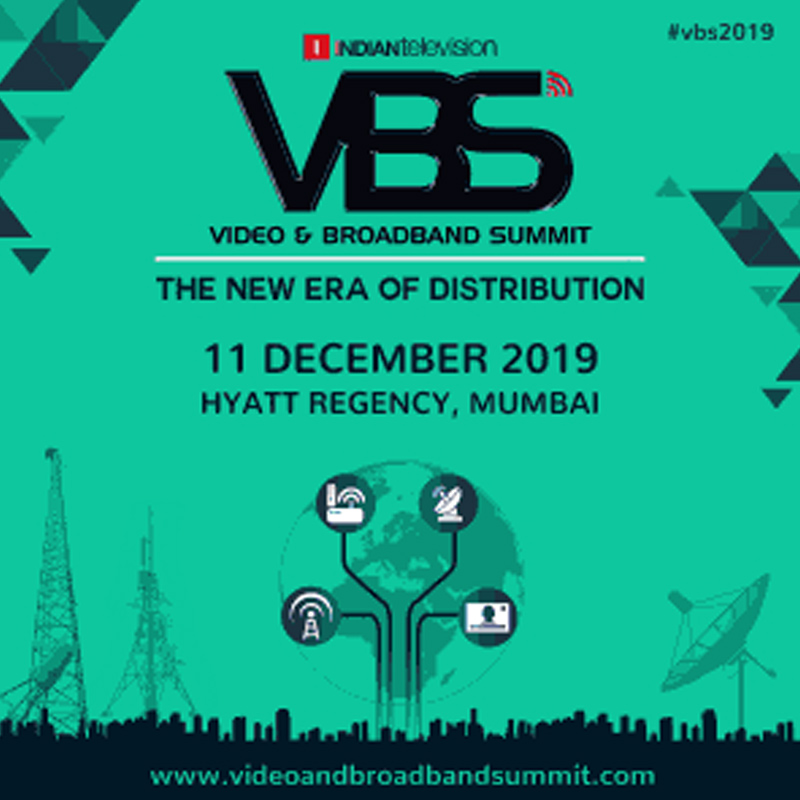
MUMBAI: How is the new tariff order (NTO) impacting the broadcast and video distribution landscape in India? How can broadcast networks effectively partner with LCOs and MSOs to successfully navigate the post-NTO environment? These are some of the key themes which will be discussed at the Video and Broadband Summit 2019.
Running in its sixteenth year, the summit will be held in Mumbai on 11 December and will bring together stalwarts from television broadcasting, internet and distribution sectors under one roof to discuss and deliberate key issues facing the sector and recognise the accomplishments of key stakeholders.
Over the last one-and-a-half-decades, VBS (earlier IDOS) has grown to become India's definitive Pay-TV and video distribution get together. However, this year’s summit is critical given that 2019 has witnessed some of the most fundamental changes in the pay TV and broadcast industry.

While, on the one side TV networks, LCOs, MSOs and DTH players are still adjusting to the fundamental changes introduced by the NTO – described by many as the most significant reform in broadcast TV in decades – on the other, India has seen exponential growth of OTT players. Together, these changes will fundamentally alter how Indians consume entertainment in the years to come.
If these changes were not enough in themselves, the telecom and internet distribution sectors are also undergoing fundamental changes. While, the entry of Reliance Jio Fibre has not proved to be the ultimate disruptor industry experts were expecting it to be, the recent Supreme Court ruling on the AGR (adjusted gross revenue) issue, asking telecom companies to pay Rs 92,000 crore has considerably dampened the industry sentiment and can negatively affect their ability to raise funds for broadband, network expansion and digital India.
Not surprisingly, since the Supreme Court ruling, all major telecom operators in India, ranging from Airtel, Vodafone Idea and Reliance have announced mobile tariff charge hikes by as much as 20 per cent. Given that Airtel and Reliance are also deeply entrenched in providing broadband services, any tariff hike can impact broadband penetration as well.
The delegate profile for this year’s VBS is a reflection of the concerns facing the industry. As many as 60 per cent of the participants in this year’s VBS will be LCOs, MSOs and distributors, while 15 per cent delegates will be coming from broadcast networks including Star India – also a summit partner. Significantly, 25 per cent of the delegates this year will come from telecom, broadband, technology and data platforms. Without doubt, apart from getting the industry perspective on various issues ailing the industry as well as future opportunities, the summit will also provide an excellent opportunity for networking between the various stakeholders in the media and entertainment industry.
Some of the key sessions in the summit will be:
• Free To Air: The roadmap ahead
• NTO: The future roadmap; TRAI consultation paper and how will the amendments to the existing tariffs play out?
• Transforming the sector to fuel growth: What are the key issues facing the sector? How can more transparency and discipline be injected into it?
• The distribution challenge: How are distribution companies innovating to stay ahead of the curve? What measures are they adopting to counter relentless disruption?
• Internet: The changing role in video distribution
• Role of the LCO: How has the role of the LCO changed under the new regulatory framework and its significance going forward?
• The advertisers’ view: Advertisers’’ view on dynamic Pay-TV landscape and how AdEx is likely to fare going forward with more changes anticipated to the NTO.
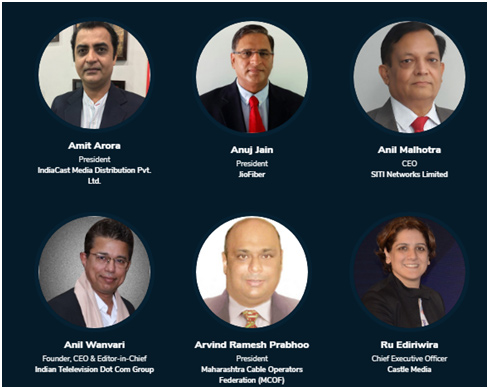
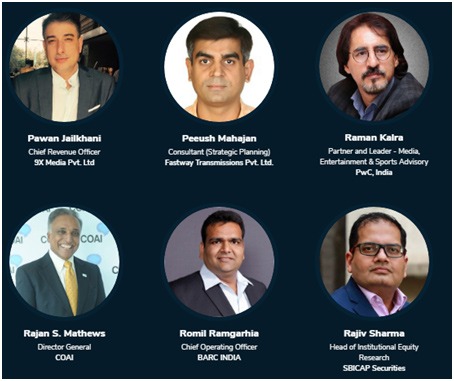
To discuss all these relevant issues, the summit has also lined up a distinguished panel of more than two dozen speakers. Among them are:


The VBS summit is an initiative of Indiantelevision.com. Started in 2000 by media and television analyst Anil Wanvari, Indiantelevision.com is the first online information and interactive service focusing on the Indian television and media business. Indiantelevision.com organises close to a dozen events every year, among them are The Indian Telly Awards, Tele-Wise Tamil, Media HR Summit, Brandvid Awards, Vidnet, The Indian Telly Technical Awards, and The Content Hub.