iWorld
VBS 2024: The OTT Aggregation game

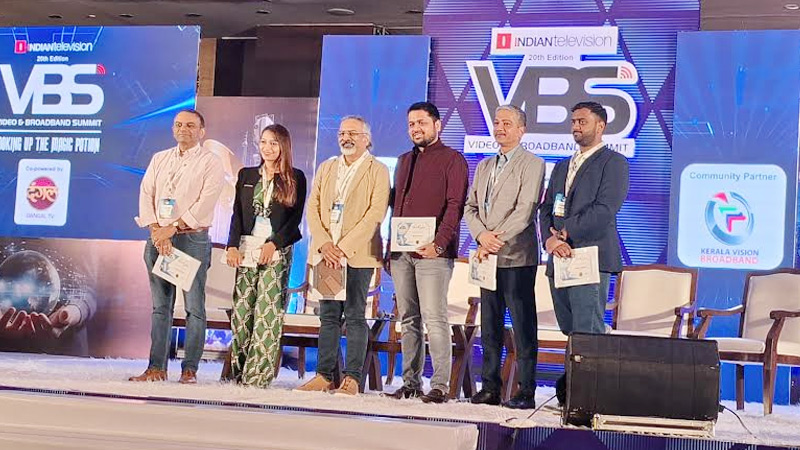
Mumbai: India is in the grips of seisnic changes regarding video and broadband consumption. Pay TV cord-cutting is rampant even as free TV subscriptions are on the rise and OTT buy-ins are churning with the signs up for certain platforms stagnating even as others are seeing rapid increases and some are seeing cataclysmic drops.
Aggregators of OTTs are popping up on the horizon promising cheap bundles along with value-added services for cable TV and DTH. There’s a rush to set up free advertising-supported TV channels by TV set manufacturers and smart TV device makers. There’s the Jio factor where it seeks to convert most pay TV customers to free streaming of video content by offering free access to consumers at no cost. The consumer continues to demand bandwidth higher than ever imagined even as prices drop. Margins are under pressure as every player goes one-up on each other to acquire and retain customers.
The video and broadband distribution landscape has not been as vibrant as it is now.. How long will this pot-boiling continue? What will the magic potion of video and broadband look and taste like? And what’s the end game? Indiantelevision.com has held the 20th edition of Video and Broadband Summit better known as VBS at Sahara Star Hotel, Mumbai.

The session chair for this panel was media consultant Anuj Gandhi along with the panelists: Arha Media & Broadcasting CEO Ravikant Sabnavis, GTPL Hathway Ltd senior VP Yatin Gupta, Dangal Play head Akshat Singhal, Playbox TV founder & CEO Aamir Mulani and OTT-Chana Jor, VHunt Digital Media COO Archita Jasani
To light up the atmosphere, Gandhi asked the audience how many hours on average people spend on their mobile phones. He also dropped another question while spending time looking at phones, how much time is spent on watching SVOD OTT? The response was quite positive as an overwhelming number of people in the audience watched content on their mobile phones for a longer duration.
As there was a considerable amount of audience who watched other lots of content besides OTT, Gandhi asked a broader question to all the panelists, “There is a belief and everybody says that aggregation is what went above consecutive recession, people said people subscribed to two and a half entities, but individual OTS there is a belief that beyond the point from D to C perspective or direct to consumer, you cannot cross the customer acquisition costs. There is another cost that is there.
Sabnavis said, “If I look at it from the consumer perspective, Most perspective, there’s a lot of entertainment. Right? Be it a YouTube video, or simply chatting with somebody on the phone. I’m probably oversimplifying to make the point. There are limits to my time when whether it be five hours or three hours and in that time, I’m trying to watch OTTs as well, besides doing whatever I am for entertainment. So therefore you’re possibly right that there comes a time when growth when you look at it from our perspective around the consumer’s approach slows down. They’re gonna find it increasingly difficult to a) reach out to consumers and b) convince them to subscribe to a platform.”
Jasani said, “There is a stagnation which is happening especially in metro cities. When we see that people, there is a capacity on how many hours can be on the mobile phones. Beyond that, I feel a lot of growth that can happen in tier-two and tier-three cities. Because these are the consumers who are town-tasting in the OTT and entertainment segments. So here we see that there is a glass ceiling, probably happening towards the metros, but there is a use of potentiality in tier two and tier three cities. So hence the aggregation makes sense in a way that there is a d2c and b2c as well, which helps us to get the hang of the consumers.
Amir Mulani commented that 90% of the time, consumers know what they want to watch, they will come to search, click the movie, and just start watching it. So I think my responsibility as a platform or as an aggregator, is beyond me to give him something that he wants to, and trying to keep it so easy, that it’s not confusing for them to decide.”
Singhal said, “Earlier, people used to go to OTT platforms and search for content because the OTT platforms were very messy. Now, with so many OTT platforms, we need to go to the users, and see what they have. So that’s why like it’s important.”
Gupta opined, “ We already have a cable product, which is an aggregation of channels. We have broadband as a service to augment this along with OTT. Looking at the consumer and saying that from this household. He’s already got cable, he’s already got broadband, and we may be able to give him OTT services as an aggregation.
Whether it makes economic sense or not, of course, is a big question mark, because the OTT players are expecting a certain amount of guarantees, which may or may not. So we’ve been looking at all of that while deciding whether to go ahead with it and what to do.”







iWorld
Veto onboards B4U Network channels to boost its entertainment offering
Partnership adds films, music and regional fare as platform sharpens its large-screen pitch
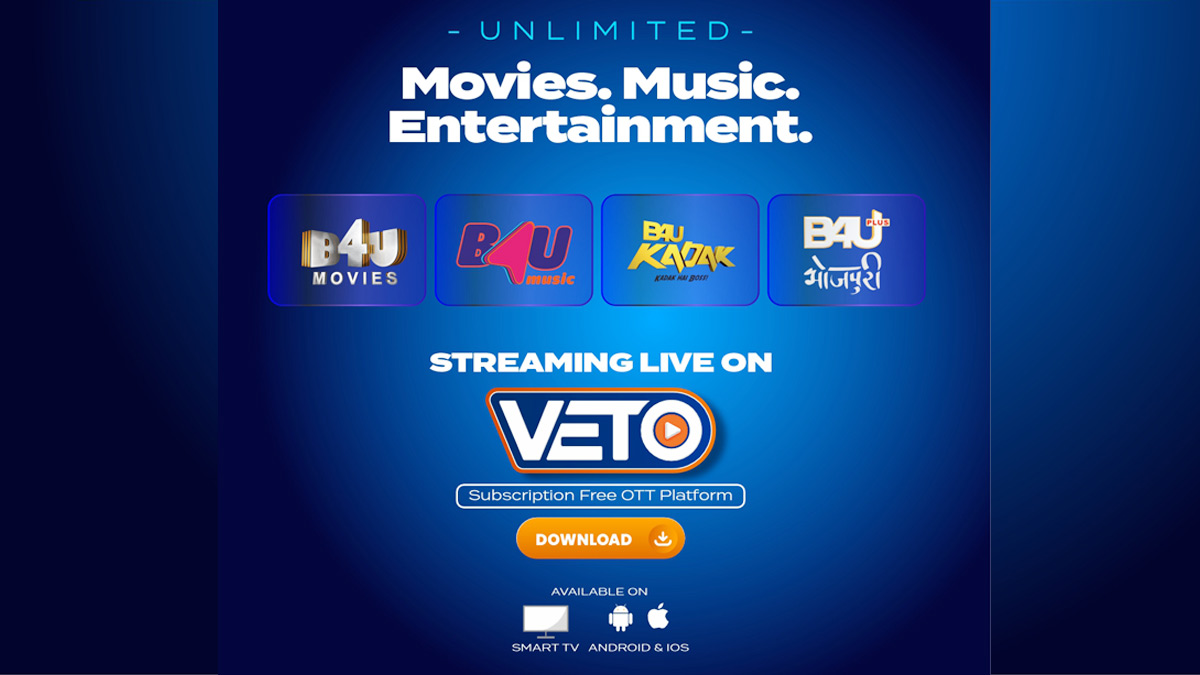
NEW DELHI: Veto is stacking its content deck. The family-first CTV-focused OTT platform has onboarded B4U Network, plugging in a slate of Bollywood, music and regional programming to widen its appeal in India’s living rooms.
The tie-up brings B4U Movies, B4U Music, B4U Kadak and Bhojpuri+ onto Veto, offering a broader mix of films, songs and vernacular content aimed at diverse audience cohorts. The move is designed to deepen engagement and nudge growth as competition in connected TV heats up.
Ritu Dhawan, managing director, Veto, framed the partnership as a scale play. “At Veto, our vision is to redefine large-screen entertainment for Indian households by creating a trusted, free, and unified viewing experience. Partnering with B4U Network strengthens our ability to offer deeply engaging and regionally relevant content, helping us connect more with audiences across India,” Dhawan said. “As we grow, our focus remains on delivering relevant, high-quality entertainment that families can enjoy together.”
The integration is expected to expand Veto’s audience base while improving content discovery and depth. The platform positions itself as a no-login, large-screen-first service, bundling live TV, news, sports, movies, music, podcasts and on-demand programming into a single interface tailored for connected TVs.
As streaming fragments and screens multiply, Veto is betting on aggregation and simplicity. More content, fewer clicks, broader reach—the pitch is clear, and the living room is the battleground.








