Cable TV
VBS 2019 to focus on post NTO environment, relevance of cable and rise of internet


MUMBAI: The year 2019 has fundamentally changed Indian TV broadcast industry. The long-awaited New Tariff Order (NTO) was finally greenlit in February, forcing broadcast networks, DTH players and cable operators to move to a new tariff regime. However, even as TV broadcasters and distribution platforms were adjusting to the NTO, TRAI floated a new consultation paper on tariffs in August, causing further uncertainty and disruption in the already volatile market.
Amidst this flux and all-around uncertainty, Indiantelevision.com is bringing together stalwarts from the industry on a platform that dissects the various issues at the heart of the NTO, how it’s impacting broadcasters and distributors, changes proposed to it and why broadcasters are unhappy with TRAI for floating a new consultation paper within six months of NTO.
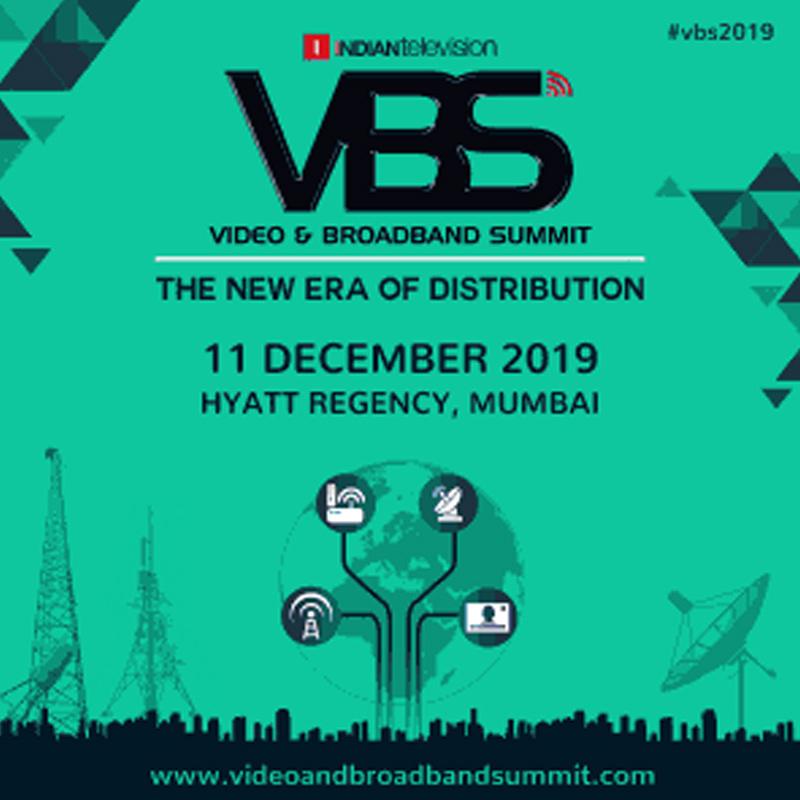
The initiative is called Video and Broadband Summit (IDOS in its earlier avatar) to be held at Mumbai on 11 December. Leaders from DTH, cable and broadband, broadcast, regulatory bodies, and technology segments will discuss the state of the industry, address issues and find solutions.
After a keynote address by Anil Wanvari, founder Indiantelevision.com, doyens of broadcast industry and distribution platforms like IndiaCast Media Distribution President Amit Arora, Star India Distribution President Gurjeev Singh Kapoor, IndusInd Media and Communications CEO Vynsley Fernandes, GTPL Hathway VP Yatin Gupta, The Remediation Company founder Shyamala Venkatachalam and Bhima Riddhi Digital Services promoter Nagesh Narayandas Chhabria will discuss the TRAI consultation paper on tariffs in a panel discussion to be moderated by Elara Capital VP Karan Taurani.
While TRAI has faced a barrage of criticism from industry players for the new consultation paper, it’s important to note that distributors (DTH, LCOs and MSOs) and broadcasters, both have very different grievances from TRAI. While broadcasters are nearly unanimous that TRAI should not disallow them from creating bouquets, nor impose a discount cap on these bouquets – two of the key issues discussed in the TRAI consultation paper – among the cable distributors there is a general consensus that broadcast networks have indeed misused their freedom to create bouquets by offering unlimited discounts on these packs. Distributors are also unhappy with the discounting cap imposed for them but not for the broadcasters.
Even the recent Open House Discussion, organised by TRAI at Delhi in October, failed to resolve the issue or bring together broadcast networks and distributors on the same page. VBS 2019 provides yet another opportunity for broadcasters and distributors, two of the key constituents of the media and entertainment industry, to deliberate on these issues in a rapidly changing regulatory framework.
To oversee and participate in these deliberations, there will be TRAI Advisor Arvind Kumar, who will also address the gathering and will bring some much-needed clarity on TRAI future course of action on the consultation paper for which it received nearly 300 comments from broadcast networks, DTH, LCOs and MSOs, as well as from ordinary consumers.
To give the perspective of distributors on how the NTO, and the expected amendments to it, affected their businesses, there will be a panel discussion in which SITI Networks CEO Anil Malhotra, GC member of SCTE India Shaji Mathews, Fastway Transmissions Consultant Peeush Mahajan and Bhima Riddhi Digital Services Promoter Nagesh Narayandas Chhabria will participate.
Advertising industry is at the other end of the spectrum, the other big sector that had to adjust to post NTO environment. To discuss the advertisers' view and their take on the dynamic pay-TV landscape, there will be Godrej head media services Subha Sreenivasan Iyer, ITC PR and media head Jaikishin Chhaproo and Havas Media Group managing partner West & South Kunal Jamaur. They will participate in a panel discussion to be moderated by Castle Media CEO Ru Ediriwira.
There will also be a presentation from Broadpeak business development manager Hervé Creff, on "Keeping control of HDMI1 with Android TV Operator Tier – the "super-aggregator" approach."
This will be followed by a panel discussion on how to transform the TV broadcast sector to fuel growth – what are the key issues facing the industry and how can more transparency and discipline be injected into it? PwC partner and leader Raman Kalra, Elara Capital VP – research analyst (media) Karan Taurani, KPMG India partner, head-media and entertainment Girish Menon and BBC News head of distribution – South Asia Sunil Joshi will participate in a panel discussion to be moderated by SBICAP Securities head of equity research Rajiv Sharma.
Local cable operators also constitute an important link in the TV broadcast value chain in India. Despite the presence of strong DTH players like Tata and Bharti Airtel and the rise of OTT, as much as 65 per cent of TV homes in India are still connected through these local cable operators, as per TRAI estimates. Maharashtra Cable Operators Federation (MCOF) president Arvind Ramesh Prabhoo and IndusInd Media and Communication COO Rouse Koshy will participate in a panel discussion on how has the role of the LCO changed under the new regulatory framework and its significance going forward.
The rise of some of the Free to Air (FTA) channels in the post NTO environment has been another prominent feature of 2019. To discuss the roadmap ahead for FTA channels, there will be a panel discussion in which SAB Group CEO Manav Dhanda, Enterr10 TV MD – Fakt Marathi Shirish Pattanshetty, Republic Media Group CEO Vikas Khanchandani, 9X Media chief revenue officer Pawan Jailkhani and Shemaroo Entertainment COO Kranti Gada will participate.
There will also be a presentation by Romil Ramgarhia, COO, BARC India will also do a presentation on ‘TV viewership trends in post NTO era,’ and will share with the audience the changing dynamics of TV industry since the NTO. Has TV viewership declined post NTO, are people subscribing to more or less channels post NTO, has the NTO benefitted FTA channels will be some of the themes Romil will take in his presentation.
Internet has emerged as another prominent distributor in the broadcast industry. Not only have OTT players emerged as challengers to broadcast networks, but also Reliance Jio Fiber is partnering with LCOs and MSOs to deliver video broadcast services. A string of channels are now also available on OTT platforms.
To discuss the role of the internet in the broadcast industry, there will be a fireside chat between Anil Wanvari and Jio Fiber president Anuj Jain. The summit will end with a panel discussion on the role of the internet in video distribution in which Google Industry head media and entertainment Sandeep Ramesh, Jio VP – advertising and strategy Mohit Kapoor, COAI director General Rajan S Mathews, ZEE5 chief revenue officer and business head Taranjeet Singh and MediaKind head of marketing – APAC Chiranjeev Singh will participate.