iWorld
Vama.app launches Vama TV with spiritual micro-dramas


MUMBAI: Spiritual storytelling in India has found a new home and it fits neatly into a smartphone. Vama.app has launched Vama TV, an in-app content platform that serves up short spiritual dramas designed for modern, mobile-first audiences.
Billed as India’s first spiritual micro-drama platform, Vama TV blends mythology, faith and fast-paced storytelling into episodes that last little longer than a coffee break. The idea is simple but timely. Ancient stories are retold in a format shaped by today’s scrolling habits.
The platform opens with Hanumant Shani Leela, a ten-episode series of 90-second instalments that revisits well-loved tales of devotion and destiny. Familiar characters, temple lore and childhood myths are reimagined in crisp, studio-quality visuals produced in-house by Vama’s AI-powered content team.

Vama TV is aimed squarely at millennials and Gen Z users, particularly in tier 1 and tier 2 cities, who may be curious about faith but prefer stories over sermons. Rather than lengthy explanations, the platform offers quick narratives that spark interest and invite reflection.
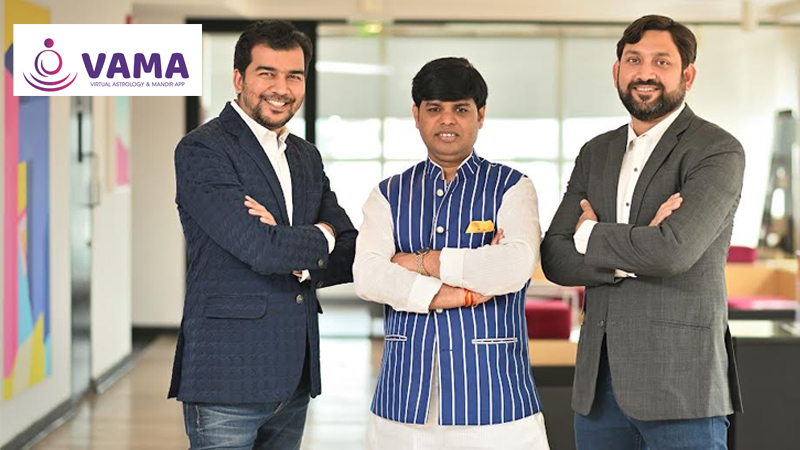
Vama.app co-founder and CEO Manu Jain, said spiritual consumption in India is changing shape. A generation raised on televised epics now watches short videos on social platforms, and their children are growing up entirely on mobile screens. According to Jain, younger seekers want more than rituals. They want context, meaning and a connection to their roots. Vama TV, he says, is designed to provide exactly that.
New series exploring temples, pujas and deities are already in the pipeline, with fresh episodes set to drop every week. For a limited period, all Vama TV content will be available free within the app.
The launch also signals Vama’s wider ambitions. Alongside content, the company is expanding its temple partnerships, growing its spiritual e-commerce arm, Vama Mall, and preparing to roll out offline spiritual travel experiences. With 1.5 million lifetime users and more than 500,000 pujas facilitated so far, Vama is positioning itself as a one-stop spiritual companion for a digitally fluent India.
With Vama TV, devotion meets short-form drama, and ancient stories find a new rhythm for the age of the swipe.



e-commerce
ONDC names Vibhor Jain MD and CEO; Rohit Lohia joins as CBO, Manoj Thakur as CTO
Leadership formalised as open commerce network sharpens focus on scale and user value

The Open Network for Digital Commerce has formalised Vibhor Jain as managing director and chief executive officer, cementing a leadership transition at India’s ambitious open commerce platform as it pushes for scale and relevance.
Jain, who had been serving as acting chief executive officer since April last year following the exit of Thampy Koshy, steps into the role with effect from 7th April , according to a report by The Economic Times. He previously served as chief operating officer at the government-backed network, which enables buyers and sellers to transact across applications through an open, interoperable system.
Setting out his strategy, Jain underscored the network’s differentiated architecture. “Going forward, we are concentrating on what open, interoperable infrastructure can uniquely enable, things that no single platform has the incentive or the architecture to do,” he said.
He added that the immediate priority is to widen ONDC’s impact across user cohorts often underserved by platform-led commerce. “My priority is to deepen the value ONDC creates for the people it exists to serve: kisaans, karigars, kiranas, gig workers, first-time investors, and daily commuters across India,” he said.
Jain also flagged leadership reinforcement within the organisation, noting that ONDC has “a strong and exciting leadership team in place”, with Rohit Lohia joining as chief business officer and Manoj Thakur as chief technology officer.
With over 18 years of experience spanning entrepreneurship and consulting, Jain brings a track record in technology-led, large-scale transformation programmes and internet businesses. At ONDC, he has been closely involved in shaping strategy and operations as the network seeks to move digital commerce away from platform-centric models towards an open network approach.
Before ONDC, Jain worked with JUMO, where he helped set up the fintech firm’s India operations, and led the India launch of Mobike, handling regulatory, policy and operational aspects of its market entry. Earlier, he co-founded Atlanta Healthcare, an air quality management company, and spent more than a decade in consulting roles at Andersen and EY, advising governments on public policy and technology-driven reforms, including work on the Aadhaar programme and tax systems.
The mandate is clear but the path is complex. As ONDC attempts to rewrite the rules of digital commerce, Jain now carries the burden of turning open architecture into mass adoption, in a market still dominated by platform power.






