Applications
US state department spends $630,000 to boost Facebook ‘likes’

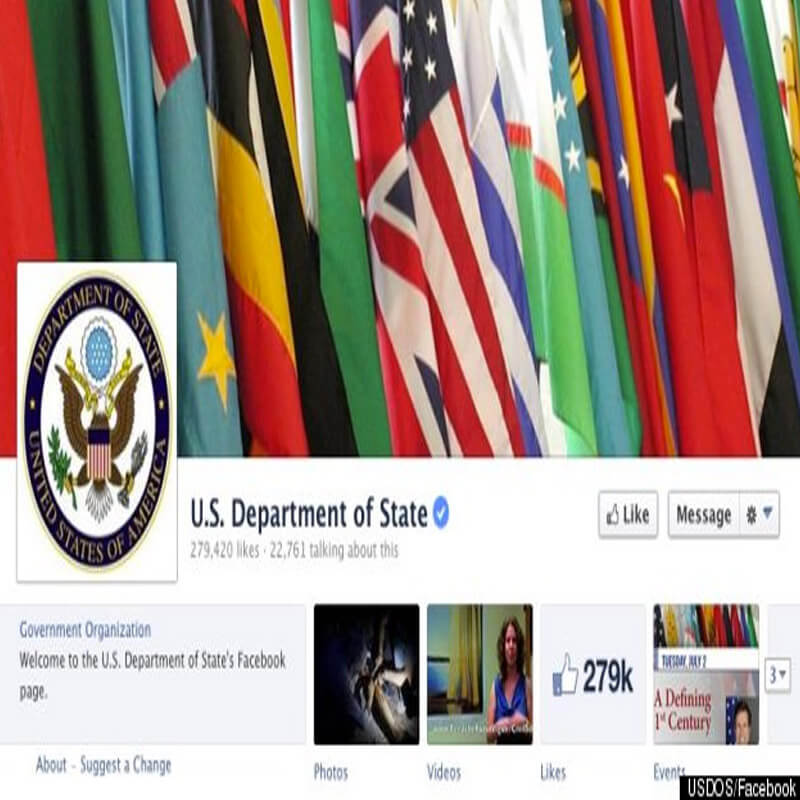
MUMBAI: The US state department has in a bid to boost its Facebook fan base has spent USD 630,000 on its Facebook strategy. The strategy has helped the state department in increasing its Facebook followers from 100,000 to more than two million in a span of two years between 2011 and 2013.
Describing the social media strategy, the US state department report stated, “The strategy is simple. It involves buying fans who may have once clicked on an ad or ‘liked‘ a photo but have no real interest in the topic and have never engaged further.”
Defenders of this plan argued that Facebook page discovery is difficult enough to merit the use of Facebook ads ‘to increase visibility.‘

The US state department may be content that after its six figure investment, each of its four Facebook pages had 2.5 million fans that were acquired through advertisements and viral photos, but a funds-rich social media strategy doesn‘t necessarily mean that they‘ve acquired loyal fans. The rate of engagement would be the judge of that.
No surprise here: Just two per cent of fans were found to be engaging with these Facebook pages, which also meant that there were few people who are actually paying attention to the U.S. state department‘s Facebook presence. And that has to sting, given that the department felt they were worth spending quite a bit of cash on.
“Engagement on each posting varied, and most of that interaction was in the form of ‘likes.‘ Many postings had fewer than 100 comments or shares; the most popular ones had several hundred.”
The State Department acknowledged in the report that buying fans wasn‘t a terribly worthwhile investment. Maybe that will be a lesson to everyone buying Facebook fans out there: The state department shelled out and look where it got them. Apparently you really can‘t buy popularity.







Applications
With 57 per cent single new users, Ashley Madison rebrands as discreet dating platform
Platform says majority of new members now identify as single

INDIA: Ashley Madison is shedding the “married-dating” label that defined it for two decades, repositioning itself as a platform for discreet dating in what it calls the post-social media age.
The rebrand, unveiled in India on 27 February, 2026, marks a structural shift in business model and identity. Once synonymous with married dating, the company now describes itself as the “premier destination for discreet dating” under a new tagline: Where Desire Meets Discretion.
The pivot is data-driven. Internal figures show that 57 per cent of global sign-ups between 1 January and 31 December, 2025 identified as single: a notable departure from the platform’s married core. The company argues that its community has already evolved beyond its original positioning.
“In an age where our lives have been constantly put on public display, privacy has become the new luxury,” said Ashley Madison chief strategy officer Paul Keable. He framed the platform’s offering as “ethical discretion” for singles, separated, divorced and non-monogamous users seeking private connections.
The shift also taps into wider digital fatigue. A global survey conducted by YouGov for Ashley Madison, covering 13,071 adults across Australia, Brazil, Canada, Germany, India, Italy, Mexico, Spain, Switzerland, the UK and the US, found mounting discomfort with hyper-public online lives.
Among dating app users, 30 per cent cited constant swiping and messaging as a source of fatigue, while 24 per cent pointed to pressure to curate public-facing profiles and early personal disclosure. Some 27 per cent said fears of screenshots or information being shared contributed to exhaustion; an equal share cited unwanted attention.
The retreat from oversharing appears broader. According to the survey, 46 per cent of adults actively try to keep most aspects of their life private online. Only 8 per cent feel comfortable sharing most aspects publicly, while 35 per cent say they are becoming more selective about what they disclose.
Ashley Madison is betting that this cultural recalibration towards controlled visibility can be monetised. By doubling down on privacy infrastructure and reframing itself around discretion rather than infidelity, the company is attempting to convert reputational baggage into a premium proposition.






