News Broadcasting
Urbanites spend less time in front of telly – NRS 2002


The good news first. The National Readership Survey 2002 (NRS) for the year just out, spells cheer for those with an eye on the couch potatoes – access to C&S homes has jumped from 29 million homes in 1999 to 40 million homes in 2002 – a sprightly 31 per cent growth, more than twice the growth of the TV market.
Ironically, and sadly for those with their finger on the pulse of the TV watching populace, there has been a decline in time spent in front of the telly by urban audiences. Despite growing programme options, average viewing time has come down from 85 minutes in 1999 to 82 minutes per day in 2002. TAM, which supports NRS studies from this year, (along with IMRB and TNS Mode) confirm the suspicion – TAM data points to viewership time of two hours and 20 minutes in 1999 having slipped to two hours and ten minutes in 2002.
According to the National Readership Studies Council (NRSC), the health of the television industry otherwise shows brisk growth – homes with colour TV have increased from 19.4 m in 1999 to 27.8 m in 2002, while C&S subscription has now penetrated 50 per cent of all TV homes. TV of course continues to command a 72 per cent share of the average 13 hours spent on traditional media among urban audiences. The data, culled from a sample size of 213,000 respondents, across the country shows that Tamil Nadu, Karnataka, Andhra Pradesh and Gujarat dominate markets with a high reach of TV (over 42 per cent) and also high penetration of C&S (49 per cent of all TV homes).

More statistics for those with a yen for figures –
Of the 192 million (urban and rural) households with access to television, 42 per cent homes boast of at least one TV set. While urban TV penetration is high at 76 per cent of the population (42 million homes), in rural areas it is at 29 per cent of the population, but still a whopping 39 million homes.
Total TV viewership this year has been placed at 383 million, with C&S accounting for 139 million. Both Maharashtra and Punjab rank high in TV reach , but low in C&S penetration. The highest rate of growth in reach (16 Per cent) has however been noted in Punjab as well as in the north eastern states.
An interesting observation of the NRS 2002 is that the growing C&S reach is taking a toll on magazine readership in the country.
However, the urban reader still spends about 16 per cent of this total media time, ie 18 minutes per day reading a daily or a magazine. Internet reach now exceeds six million, but offices are no longer the main place of access. 43 per cent users use a cyber caf, while over 20 per cent surf from home, the survey says.
Radio currently reaches 28 per cent of the adult population, and even notes a slight decline in listenership. The share of FM has however increased in a stagnant urban market – 31 per cent or 15 million now tune on to any FM station – an increase of six per cent since 2001.






News Broadcasting
CNN-News18 to host Fury in the Gulf conclave on West Asia crisis
Three-hour summit to unpack geopolitical fallout and impact on India
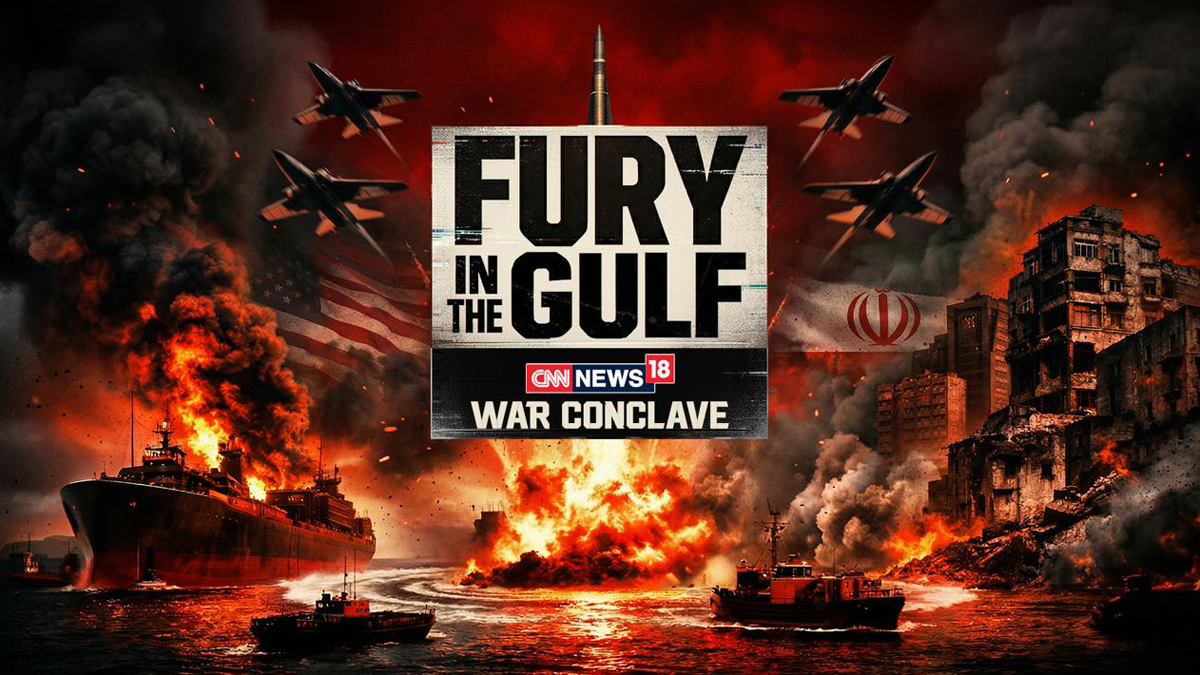
MUMBAI: CNN-News18 is set to host a special three-hour broadcast, Fury in the Gulf – War Conclave, on April 7, aiming to decode the escalating West Asia crisis and its far-reaching implications for India.
Scheduled from 4:00 PM to 7:00 PM, the conclave comes at a time when tensions between Iran and the United States are reshaping global geopolitics and triggering economic uncertainty. With India’s deep energy ties, trade links and large diaspora in the Gulf, the developments carry significant domestic relevance.
Built around the theme ‘Conflict, Consequences, and The Future,’ the programme will feature six curated sessions combining one-on-one interviews and panel discussions. The focus is to cut through the clutter and offer viewers a clearer understanding of the fast-evolving situation.
Key sessions include ‘Diplomacy in Times of War’ featuring Shashi Tharoor, and ‘World After the Iran Conflict’ with voices such as Ram Madhav, Reuven Azar, representatives from the European Union and the Iranian Deputy Envoy. Another session titled ‘Another Dunkirk?’ will bring together K. J. S. Dhillon and Jitin Prasada among others.
CNN-News18 editorial affairs director Rahul Shivshankar said, “In times of war, clarity becomes the most powerful tool. Fury in the Gulf – War Conclave brings together credible voices to address the questions and confusion that arise amid an overwhelming influx of information.”
He added that the initiative is aimed at delivering “facts, perspective, and insight” at a time when misinformation can easily cloud public understanding.
Echoing the sentiment, CNN-News18 CEO– English and business news Smriti Mehra said the conflict marks a defining global moment, with consequences that extend well beyond the region. She noted that the conclave seeks to present the crisis with “depth, nuance and responsibility” so audiences can better grasp its real-world impact.
As geopolitical tensions continue to dominate headlines, the conclave positions itself as an attempt to bring order to the noise, offering viewers a structured, insight-led look at a complex and rapidly shifting global situation.






