News Headline
Union Minister Jitendra Singh presents ISRO report card

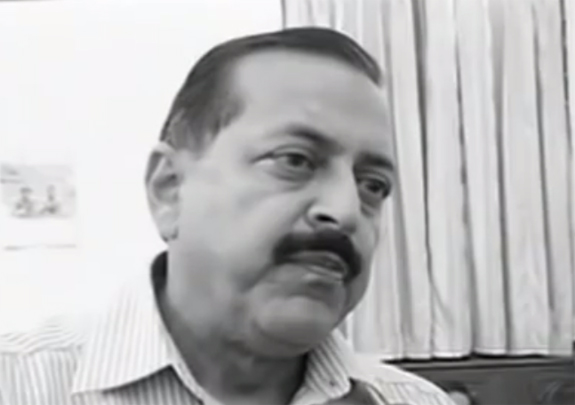
MUMBAI: The Indian Space Research Organisation’s (ISRO) commercial arm Antrix Corp has been involved in 10 satellite launches of eight foreign countries from the two operational satellite launch pads at Satish Dhawan Space Centre, Sriharikota over the last three years. In the process, it has earned revenues of 540,000 euros in 2001-2012 and 21.09 million in 2012-2013. This was disclosed by Union Minister of State for Science & Technology and ministry of earth sciences, department of atomic energy and department of space Jitendra Singh in a written reply in the Lok Sabha today.
Singh revealed that the government is considering setting up a new satellite launching pad, referred as Third Launch Pad, at Sriharikota. The Third Launch Pad is intended to support increased launch frequency, provide active redundancy to existing launch pads and to support launching requirements of advanced launch vehicles. The possible site for the Third Launch Pad has been identified in Sriharikota taking into account the safety distances and maximal utilization of existing launch pad facilities. The existing launch pads are used exclusively for launch vehicles developed by ISRO.

Singh added that ISRO’s satellites have done yeoman’s service in improving telecom, long-distance education, telemedicine in rural and flung areas of the company. He pointed out that ISRO satellites have helped in achieving 100 per cent coverage of the Indian mainland and rural and far flung areas for direct to home (DTH) satellite television.
Additionally, they have helped in three other areas:
* Telecommunication: About 1.75 Lakh satellite communication terminals are supporting various applications like village telephony, data connectivity, broadband connectivity, Automatic Teller Machines (ATM) of banks, etc., covering the rural and far flung areas of the country.
* Tele-Education: 56,000 classrooms connected through satellite networking, of which 51,000 are Receive Only Terminals (ROTs) and around 5000 are Satellite Interactive Terminals (SITs) catering to all the sectors of education from primary to higher and professional education.
* Telemedicine: The Telemedicine network connects the patients at a remote hospital to a speciality hospital for tele-consultation. 60 specialty hospitals connected to 308 remote and rural hospitals and 16 Mobile Vans.
The Developmental Education and Communication Unit (DECU) of ISRO conducted a study to ascertain the utility of tele-education and tele-medicine networks over the years, a Press Information Bureau (PIB) release states. The findings of the study indicate the following.
* Tele-education networks are very effective to reach out remote and rural areas of the country and also to enhance the understanding level of the students. The target audience for tele-education include students from school, technical education, higher education, teachers training including physically challenged students. On an average 2-3 hours of programmes are transmitted for 4-5 days in a week.
* Tele-medicine networks are very useful in treating the patients located in remote and rural areas. Through tele-medicine patients get the best doctors for consultation. Tele-medicine provides the advantage of saving time and money to the patients and also provides relief to family members from the hassles of accompanying the patient to speciality hospitals in the urban areas. Mobile tele-medicine vans are found to be ideal to cover larger geographical area with treatment in the fields of Ophthalmology, Diabetic screening, Cancer, General Medicine and hearing impairments in the infants.





NEW DELHI: Hamdard Laboratories gathered a cross-section of India’s achievers in New Delhi on Friday, handing out the Hakeem Abdul Hameed Excellence Awards to figures who have left their mark across healthcare, education, sport, public service and the arts.
The ceremony, attended by minister of state for defence Sanjay Seth and senior officials from the ministry of Ayush, celebrated individuals whose work blends professional success with a sense of public purpose. It was as much a roll call of achievement as it was a reminder that influence is not measured only in profits or podiums, but in people reached and lives improved.
Among the headline awardees was Alakh Pandey, founder and chief executive of PhysicsWallah, recognised for turning affordable digital learning into a mass movement. On the sporting front, Arjuna Awardee and kabaddi player Sakshi Puniya was honoured for her contribution to the game and for pushing women’s participation onto bigger stages.
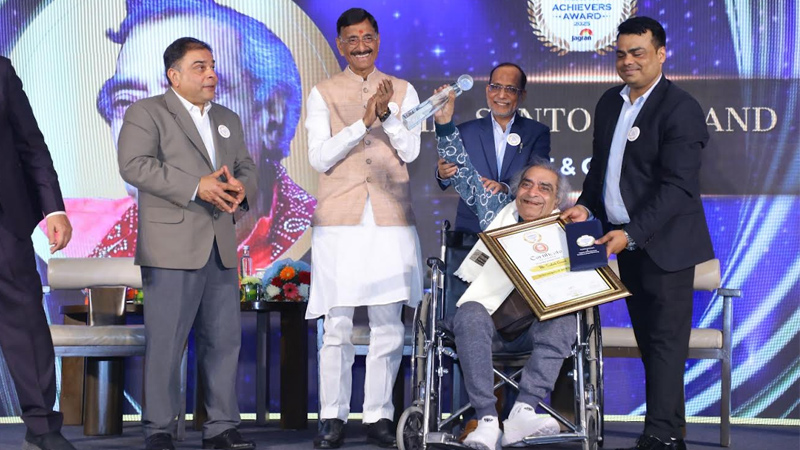
The cultural spotlight fell on veteran lyricist and poet Santosh Anand, whose songs have echoed across generations of Hindi cinema. At 97, Anand accepted the honour with characteristic humility, reflecting on a life shaped by perseverance and hope.
Healthcare honours spanned both modern and traditional systems. Manoj N. Nesari was recognised for strengthening Ayurveda’s place in national and global health frameworks. Padma shri Mohammed Abdul Waheed was honoured for his research-backed work in Unani medicine, while padma shri Mohsin Wali received recognition for his long-standing contribution to patient-centred care.
Education and social development also featured prominently. Padma shri Zahir Ishaq Kazi was honoured for decades of work in education, while former Meghalaya superintendent of Police T. C. Chacko was recognised for public service. Goonj founder Anshu Gupta received an award for his dignity-centred rural development initiatives, and the Hunar Shakti Foundation was honoured for empowering women and young girls through skill development.
The Lifetime Achievement Award went to former IAS officer Shailaja Chandra for her long career in public healthcare and governance, particularly in the traditional systems under Ayush.
Speaking at the event, Hamdard chairman Abdul Majeed said the awards were a tribute to those who combine excellence with empathy. “These awardees reflect Hakeem Sahib’s belief that healthcare, education and public service must ultimately serve humanity,” he said.
Minister Seth struck a forward-looking note, saying India’s young population gives the country a unique opportunity to become a global destination for learning, health and wellness by 2047.
The ceremony also featured the trailer launch of Unani Ki Kahaani, an upcoming documentary starring actor Jim Sarbh, set to premiere on Discovery on 11 February.
Instituted in memory of Unani scholar and educationist Hakeem Abdul Hameed, the awards have grown into a national platform that celebrates those building a more inclusive and resilient India. For one evening at least, the spotlight was not just on success, but on service with substance.







