Hindi
UFO Moviez aims to reach 500 screens by Diwali; to make international foray


MUMBAI: United Film Organizers (UFO) Moviez a pioneer in digital cinema and with 400 theatres across 14 cities in India having its installations, has plans to increase the figure to 500 by Diwali.
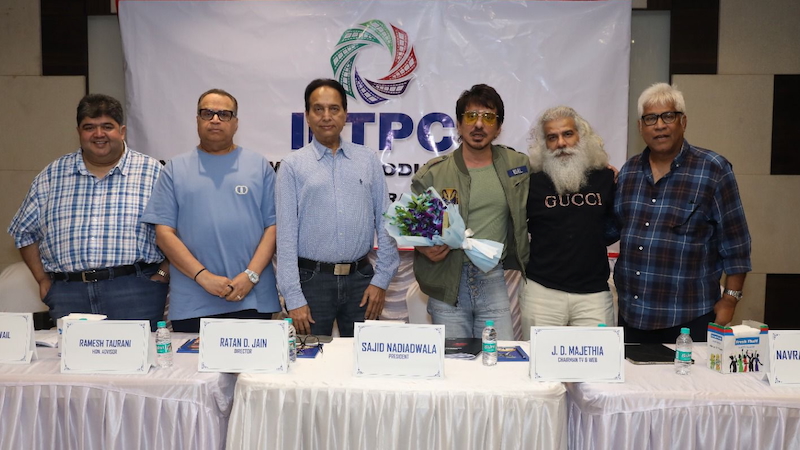
UFO moviez has tied up with producer Sajid Nadiadwala for his forthcoming film Jaan-e-mann for brand building promotion and to create awareness about digital cinema.
“Our association with Jaan-e-mann is a joint promotional and brand building exercise. UFO will showcase the film in its 400 theatres across India and Jaan-e-mann will carry the branding of UFO in their print and optical media,” said UFO Moviez vice chairman and director Raaja Kanwar at a media briefing yesterday.

UFO executive director and CEO Sanjay Gaikwad added, “By the time the film releases in Diwali, we will achieve our target of 500 theatres. And as per UFOs’ roll out plan we are to achieve a target of 1000 theatres by March 2007 and 2000 by March 2008.”
With an objective to revolutionise the distribution and exhibition system in cinema, UFO was officially launched in November 2005 and within less than a years time, plans a foray into the international market.
This initiative has been taken by UFO after acquiring the rights to Mpeg 4 Digital Cinema Solutions from DG2L Technologies Pvt Ltd.
“The response that we have got from India is helping us to take this leap in the international market, say Middle East and European nations, where Bollywood films are popular. And with Mpeg 4 digital cinema solutions, the task will become easy. This technology will provide greater flexibility, effieciency and cost savings,” added Gaikwad.
Digital screening of films through the technology offered by UFO not only reduces the cost of prints but also helps the distributors and exhibitors, who have to pay a nominal amount for acquiring the print of the film and showing it in theatres.
“The distributer pays Rs 250 for a single print and the exhibitor pays Rs 275 for the same as compared to the Analog print for which they have to spend something between Rs 16,000 – Rs 17,000. Moreover, the server in the UFO system installed at the theatre can store upto 15 films, which gives flexibility to the exhibitors to play different films at different times of the day,” said Gaikwad.
This technology is proving beneficial for the distributors and exhibitors in B and C cities where films would hit the theaters two-three weeks after its release, which would in return hamper the box office collection. But with digital cinema installations in these cities, audience are getting to see the films in the very first week of its release.
UFO Moviez had recently announced that it will invest Rs 1.5 billion in the next three years to digitise 1,000 movie halls of Chennai-based Pyramid Saimira Theatres Ltd. As per a tie-up agreement between the two companies, UFO Moviez would provide end-to-end digital cinema solutions for these 1,000 theatres.





Hindi
MIFF 2026 to return to Mumbai; film entries open till April 12
19th edition to host WAVES Doc Bazaar, spotlighting global documentary talent
MUMBAI: The 19th edition of the Mumbai International Film Festival 2026 is set to take place from June 15 to 21 at the NFDC Complex, with film submissions currently open and the deadline fast approaching on April 12.
Organised by the National Film Development Corporation under the Ministry of Information and Broadcasting, the biennial festival remains one of South Asia’s most prominent platforms for documentary, short fiction and animation films.
Filmmakers, producers and content creators from across the globe have been invited to submit entries via the Film Freeway platform for the Competition Section. Offline submissions will not be accepted, reinforcing a fully digital entry process.
MIFF 2026 continues to sweeten the deal with a robust awards pool of Rs 55 lakh. The coveted Golden Conch for Best Documentary carries a top prize of Rs 10 lakh, alongside multiple awards across categories, making it one of the most lucrative non-feature film festivals in the region.
A key highlight this year will be the second edition of the WAVES Doc Bazaar, scheduled from June 16 to 18 alongside the festival. Designed as a hub for collaboration, the Doc Bazaar will feature a co-production market, viewing rooms and a work-in-progress lab, bringing together global buyers, sellers and creators under one roof.
Since its inception in 1990, MIFF has built a reputation as a serious showcase for non-feature cinema, drawing participation from filmmakers worldwide. The previous edition saw over 350 films from more than 30 countries, underlining its growing international footprint.
With submissions closing soon and preparations underway, MIFF 2026 is shaping up to be a vibrant meeting point for storytelling, collaboration and cinematic craft, offering filmmakers both a stage and a springboard.







