Hindi
UFO announces Digital Film Fest
NEW DELHI: New and amateur filmmakers will get an opportunity to showcase their talent in the upcoming digital film festival — UFO 0110 International Digital Film Festival – which is introducing a contest to promote new talent and fresh ideas in the industry.
The festival will be organised from 23 February to 1 March at Siri Fort Auditorium in New Delhi.
Christened as ‘Film in 6 Days‘, the competition will present a challenge to young filmmakers to direct a short film in a brief span of six days. To facilitate this process and help the participants bring their imagination into life, the organisers will provide all the logistical support to them.
‘Film in six days‘ competition will select six to 10 teams (consisting of director, director of production, and editor) on the basis of their past experience and interviews. The selected candidates will be given a topic by the festival organisers to make a film within six days. These films then will be reviewed by a jury comprising senior people from film fraternity who will select winner will be rewarded with prize money/editing software/equipment.
Festival Director and Ekaa Films founder Madhureeta Anand said, “The six-day competition is an integral and important part of the UFO 0110 International digital Film Festival. It is our way of seeing that budding filmmakers get a chance to make films that on the one hand can be a showcase of their work and on the other hand can be learning experience. For us at the film festival it‘s our way of planting seeds. We hope that these very filmmakers will, in the future, send in films to the festival and add to the viewing experience and quality of the festival.”
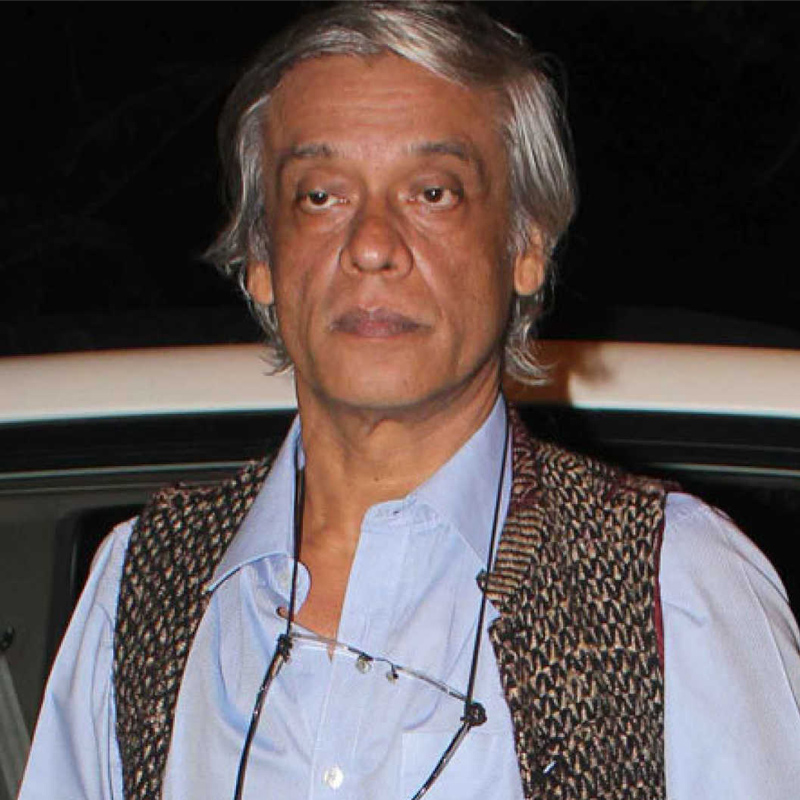
Filmmaker Sudhir Mishra, Jury member of the last IDFF feels “Digital format of filmmaking is an amazing format that gives you the freedom to shoot things, make a movie, put forth your viewpoint about an issue/agenda etc while overcoming the constraints of inadequate funding or networking etc. It is a wonderful medium for independent voices and certainly more and more people are now open to the idea of digital film making.”
“As a jury member, I have very fond memories of the festival. Even the quality of films churned out by amateur filmmakers/directors such as students or those coming from non- film industry background is very exciting. The technique used by one filmmaker/story teller inadvertently varies with that used by another and this is the surprising element that one comes across fests such as IDFF. Festival like IDFF should be promoted so that maximum talent can be discovered.”
The 0110 International Digital Film Festival is an annual event showcasing cutting edge digital films from around the world. The mission is to take the digital art and film movement forward and provide fresh and innovative content to the viewers and create a space for new styles of form and content that can become the resource pool for filmmakers in South Asia and the rest of the world. It is the only film festival in India that travels to 11 cities.

Hindi
India’s telecom subscribers cross 1.32 billion in February 2026
Broadband base swells past 1.06 billion as Jio and Airtel tighten grip on the market.
MUMBAI: India’s telecom sector is ringing in steady growth once again adding millions of new connections every month while the race for broadband supremacy continues to heat up like a fiercely contested cricket match. According to the latest data released by the Telecom Regulatory Authority of India (TRAI) on 1 April 2026, the total telephone subscriber base in the country reached 1,321.31 million at the end of February 2026. This marked a net addition of 7.31 million subscribers during the month, translating into a monthly growth rate of 0.56 per cent.
Wireless subscribers (including mobile and Fixed Wireless Access) stood at 1,273.31 million, registering a net addition of 6.97 million and a growth rate of 0.55 per cent. Within this, urban wireless connections grew to 730.75 million (growth 0.70 per cent), while rural wireless subscribers reached 542.56 million (growth 0.35 per cent).
Wireline subscribers, though much smaller in scale, showed slightly faster growth. The total wireline base increased to 47.99 million, with a net addition of 0.34 million and a monthly growth rate of 0.70 per cent. Urban areas continued to dominate wireline connections with a share of 89.41 per cent.
Overall tele-density in India improved to 92.66 per cent. Urban tele-density stood at 150.68 per cent, while rural tele-density edged up to 60.02 per cent.
The broadband subscriber base crossed a significant milestone, reaching 1,059.05 million at the end of February 2026. This reflected a healthy net addition of 6.33 million subscribers and a monthly growth rate of 0.60 per cent from January’s figure of 1,052.72 million.
Segment-wise, mobile wireless access continued to drive the majority of growth with 996.52 million subscribers. Fixed Wireless Access (including 5G FWA) added 16.51 million, while wired broadband stood at 46.02 million.
Reliance Jio Infocomm Ltd. maintained its commanding lead with 519.64 million broadband subscribers. Bharti Airtel Ltd. followed with 364.14 million, Vodafone Idea Ltd. with 129.36 million, Bharat Sanchar Nigam Ltd. with 28.70 million, and Atria Convergence Technologies Ltd. with 2.38 million.
Together, these top five players command a massive 98.60 per cent share of the total broadband market.
In the wireless (mobile) segment, private operators continued to dominate with 92.59 per cent market share, leaving public sector undertakings (BSNL and MTNL) with just 7.41 per cent.
Out of the total 1,257.29 million wireless (mobile) subscribers, 1,177.60 million were active on the peak Visitor Location Register (VLR) date, representing an impressive 93.66 per cent activity rate. Bharti Airtel led in this metric with 99.42 per cent of its subscribers active.
Meanwhile, 14.47 million subscribers submitted requests for Mobile Number Portability (MNP) in February, indicating healthy competition and customer churn across zones.
While urban areas still lead in absolute numbers, rural connectivity is slowly catching up. Rural wireless tele-density stood at 59.46 per cent, compared with the much higher urban figure of 142.32 per cent.
Fixed Wireless Access using 5G technology also showed promising traction, growing to 11.93 million subscribers. Reliance Jio and Bharti Airtel are the primary players driving this segment.
The data paints a picture of a maturing yet still rapidly expanding telecom ecosystem. With total telephone subscribers now well past the 1.32 billion mark and broadband users comfortably above 1.06 billion, India continues to solidify its position as one of the world’s largest and most dynamic digital markets.
From bustling city streets to remote villages, more Indians are staying connected than ever before proving that when it comes to telecom, the country’s appetite for growth shows no signs of hanging up anytime soon.