News Broadcasting
TVTN Q3 net profit up 14.12 % YoY


MUMBAI: For Aroon Purie’s TV Today Network (TVTN), the second fortnight of January started with one bang and ended with another. Fortunately for the company, both resonated with positive vibrations. After listing on the BSE on 16 January at a premium of 132 per cent over its issue price of Rs 95, the media hotshot has come up with a positive third quarter report card.
Q3 net profit up 14.12 per cent YoY to Rs 101 million
Q3 revenues up 23.68 per cent YoY to Rs 415.8 million

TVTN that owns and operates popular news channel Aaj Tak has posted a healthy growth of 14.12 per cent in its third quarter net profit over the corresponding quarter in the previous fiscal. The net profit for the quarter ending 31 December 2003 stands at Rs 101 million vis-?-vis Rs 88.5 million in the third quarter of 2002. Aggregate revenues for the quarter stand at Rs 415.8 million, which is up 23.68 per cent year on year (YoY) from Rs 336.2 million in the same quarter last fiscal.
Taking away from the profits is a 40.25 per cent YoY increase in TVTN’s total expenditure, which was largely because TVTN’s English news channel, Headlines Today that was launched in March 2003 was moved to a new studio in December 2003. The aggregate expenditure stands at Rs 227.5 million in Q3 2004 from Rs 162.2 million in the corresponding quarter of the previous fiscal.
The over 40 per cent YoY rise in expenditure is drawn from the hike in the company’s production and transmission costs, which shot up 68 per cent to Rs 49.6 million in Q3 2004 over Rs 29.5 million in Q3 2003. The company also clocked a 40 per cent YoY rise in other expenses.
For the nine months ended 31 December 2003, TVTN notched up net profits of Rs 226.8 million against Rs 194.4 million in the previous corresponding period. This translates into a 16.67 per cent hike in net profit. The company clocked aggregate revenues of Rs 978.8 million for the nine months ended 31 December 2003, which is up 25.63 per cent from Rs 779.1 million in the corresponding previous period.
Basic and diluted earnings per share for the third quarter stands at Rs 2.10 vis-?-vis second quarter’s Rs 1.91.
The TV Today scrip debuted on the stock exchanges on 16 January in a correctional market phase with an impressive high of Rs 225 in the very first minute of commencing trade. However, in today’s date, the stock has pared down 19.19 per cent to Rs 146.55 from its first day’s close of Rs 181.35. A cross section of market analysts believe that the stock is still over weight at these levels and will settle at Rs 150-170 levels once the initial excitement over the stock settles down.
Note: The results declared are unaudited third quarter financial results.





News Broadcasting
CNN-News18 to host Fury in the Gulf conclave on West Asia crisis
Three-hour summit to unpack geopolitical fallout and impact on India
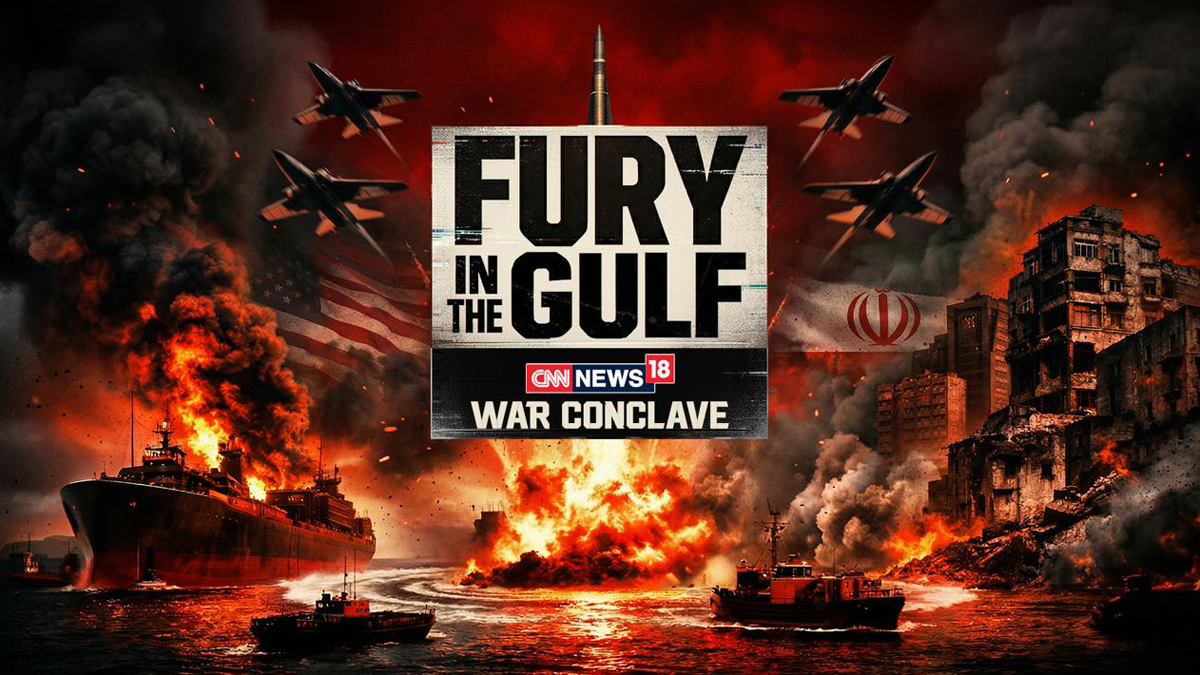
MUMBAI: CNN-News18 is set to host a special three-hour broadcast, Fury in the Gulf – War Conclave, on April 7, aiming to decode the escalating West Asia crisis and its far-reaching implications for India.
Scheduled from 4:00 PM to 7:00 PM, the conclave comes at a time when tensions between Iran and the United States are reshaping global geopolitics and triggering economic uncertainty. With India’s deep energy ties, trade links and large diaspora in the Gulf, the developments carry significant domestic relevance.
Built around the theme ‘Conflict, Consequences, and The Future,’ the programme will feature six curated sessions combining one-on-one interviews and panel discussions. The focus is to cut through the clutter and offer viewers a clearer understanding of the fast-evolving situation.
Key sessions include ‘Diplomacy in Times of War’ featuring Shashi Tharoor, and ‘World After the Iran Conflict’ with voices such as Ram Madhav, Reuven Azar, representatives from the European Union and the Iranian Deputy Envoy. Another session titled ‘Another Dunkirk?’ will bring together K. J. S. Dhillon and Jitin Prasada among others.
CNN-News18 editorial affairs director Rahul Shivshankar said, “In times of war, clarity becomes the most powerful tool. Fury in the Gulf – War Conclave brings together credible voices to address the questions and confusion that arise amid an overwhelming influx of information.”
He added that the initiative is aimed at delivering “facts, perspective, and insight” at a time when misinformation can easily cloud public understanding.
Echoing the sentiment, CNN-News18 CEO– English and business news Smriti Mehra said the conflict marks a defining global moment, with consequences that extend well beyond the region. She noted that the conclave seeks to present the crisis with “depth, nuance and responsibility” so audiences can better grasp its real-world impact.
As geopolitical tensions continue to dominate headlines, the conclave positions itself as an attempt to bring order to the noise, offering viewers a structured, insight-led look at a complex and rapidly shifting global situation.






