News Headline
TV-owning households grew 6.9% to reach 210 million: BARC report

MUMBAI: Television measurement body Broadcast Audience Research Council India (BARC India) has revealed TV owning households have continued to grow, reaching 210 million in 2020. Home to over 1.3 billion people across 300 million households, India’s television viewing universe has expanded across several metrics, according to the TV Universe Estimates 2020 (TV UEs) report released by BARC.
Findings of the study play an important role in the structuring of BARC India’s sample design and in ensuring the selected panel represents a true microcosm of India. Equally important is that TV UEs also serve to properly project audience estimates to the population.
Households and individuals

According to BARC India’s TV UEs 2020, 210 million Indian households now own a TV set, an increase of 6.9 per cent from 197 million in 2018. Simultaneously, TV viewing individuals also surged 6.7 per cent, reaching 892 million from 836 million in 2018, an increase of 57 million individuals in 2020. TV-owning female population grew by seven per cent, while male population grew by six per cent. In terms of age-groups, the highest growth was witnessed in the “kids” category (age two to 14) at nine per cent.
Markets
TV households in Urban markets grew by four per cent from 87.8 million in 2018 to 91 million, whereas Rural markets have grown by nine per cent, up from 108.9 million to 119.2 million in 2020. While TV households across India grew by 6.9 per cent, Hindi-speaking markets grew by eight per cent, outpacing All India as well as the south states which grew by five per cent.
NCCS
As the Indian population continues to move up the socio-economic pyramid, changes have been observed in the NCCS profile of TV households. The TV UE-2020 indicates that the proportion of NCCS A and B has increased to 27 per cent and 31 per cent respectively while NCCS DE has further contracted to nine per cent of TV households in the country.
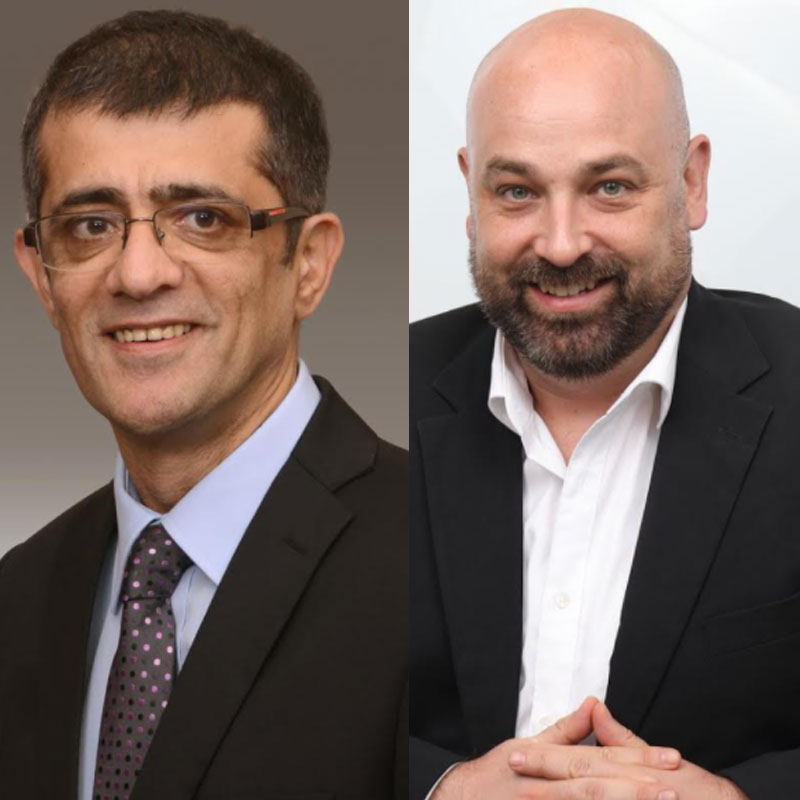
BARC India CEO Sunil Lulla said, “As a body that is deeply rooted in data science, BARC India is committed to providing its stakeholders with a true representation of the television universe. We are happy we have been able to ascertain that television continues to be the screen of choice for Indians. With an additional 13 million TV households and an opportunity for another 90 million households that are yet to own a TV set, India’s broadcast ecosystem continues to have a significant potential for growth in the years to come.”
BARC India measurement science & business analytics chief Dr. Derrick Gray, said, “UE 2020 aptly sums up India’s linear TV ecosystem and highlights that TV owning households continue to grow. Given the global pandemic scenario, the updated estimate is robust and is developed with the help of data and findings based from various previously validated field studies. We are certain that these estimates will help the industry to a great extent. We will continue to provide the industry with a currency that is reliable and of global standards.”
TV UE 2020 has been developed by computing the linear growth of TV Households and TV Individuals from Broadcast India (BI) studies conducted in 2016 and 2018 at geographic and demographic levels. The distribution of the TV population by NCCS was taken from the most recent Indian readership survey (IRS). BARC India will implement the findings from the TV Universe Estimates 2020 for its data starting week 14, 2021, which will release on 16 April 2021. The updated estimates will reflect for BARC India subscribers in the YUMI Analytics platform with immediate effect.






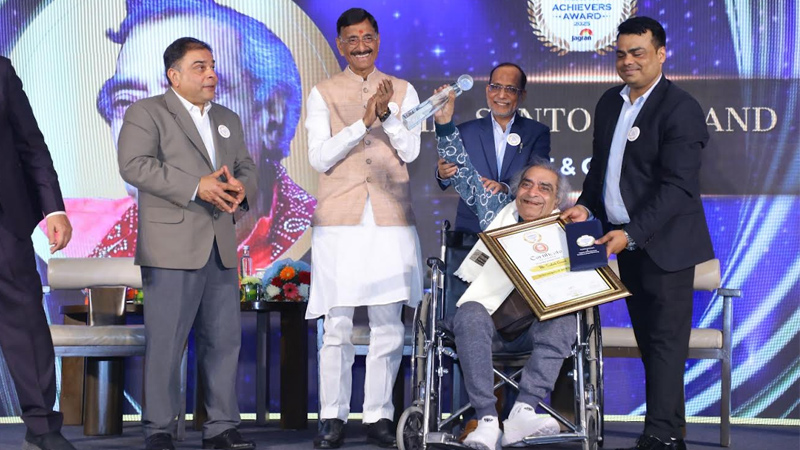
NEW DELHI: Hamdard Laboratories gathered a cross-section of India’s achievers in New Delhi on Friday, handing out the Hakeem Abdul Hameed Excellence Awards to figures who have left their mark across healthcare, education, sport, public service and the arts.
The ceremony, attended by minister of state for defence Sanjay Seth and senior officials from the ministry of Ayush, celebrated individuals whose work blends professional success with a sense of public purpose. It was as much a roll call of achievement as it was a reminder that influence is not measured only in profits or podiums, but in people reached and lives improved.
Among the headline awardees was Alakh Pandey, founder and chief executive of PhysicsWallah, recognised for turning affordable digital learning into a mass movement. On the sporting front, Arjuna Awardee and kabaddi player Sakshi Puniya was honoured for her contribution to the game and for pushing women’s participation onto bigger stages.
The cultural spotlight fell on veteran lyricist and poet Santosh Anand, whose songs have echoed across generations of Hindi cinema. At 97, Anand accepted the honour with characteristic humility, reflecting on a life shaped by perseverance and hope.
Healthcare honours spanned both modern and traditional systems. Manoj N. Nesari was recognised for strengthening Ayurveda’s place in national and global health frameworks. Padma shri Mohammed Abdul Waheed was honoured for his research-backed work in Unani medicine, while padma shri Mohsin Wali received recognition for his long-standing contribution to patient-centred care.
Education and social development also featured prominently. Padma shri Zahir Ishaq Kazi was honoured for decades of work in education, while former Meghalaya superintendent of Police T. C. Chacko was recognised for public service. Goonj founder Anshu Gupta received an award for his dignity-centred rural development initiatives, and the Hunar Shakti Foundation was honoured for empowering women and young girls through skill development.
The Lifetime Achievement Award went to former IAS officer Shailaja Chandra for her long career in public healthcare and governance, particularly in the traditional systems under Ayush.
Speaking at the event, Hamdard chairman Abdul Majeed said the awards were a tribute to those who combine excellence with empathy. “These awardees reflect Hakeem Sahib’s belief that healthcare, education and public service must ultimately serve humanity,” he said.
Minister Seth struck a forward-looking note, saying India’s young population gives the country a unique opportunity to become a global destination for learning, health and wellness by 2047.
The ceremony also featured the trailer launch of Unani Ki Kahaani, an upcoming documentary starring actor Jim Sarbh, set to premiere on Discovery on 11 February.
Instituted in memory of Unani scholar and educationist Hakeem Abdul Hameed, the awards have grown into a national platform that celebrates those building a more inclusive and resilient India. For one evening at least, the spotlight was not just on success, but on service with substance.