News Broadcasting
TV news coverage of corruption issues up 11 times: CMS study

MUMBAI: Television news channels are crusading against corruption as never before. Corruption coverage in primetime bulletins by the six television news channels during 2005 to 2011 have grown over eleven times in terms of percentage, a research study by CMS (Centre For Media Studies) Media Lab reveals.
Though the coverage of corruption-related issues by TV news channels as well as newspapers have increased substantially, especially during Anna Hazare‘s fast in August, petty corruption involving vulnerable sections of people are yet to become a concern for the media.
The study – ‘Face of Corruption in News Media 2011‘ – says that the priority is for scams and scandals rather than for systematic issues and correctives that need to be pursued. The far off and grassroots level corruption hardly figured.

It said the coverage related to corruption issues was well over eight per cent of primetime and six per cent of front pages from January-June 2011, but during Anna‘s fast the coverage overall went up to over 60 per cent of primetime of news channels and mostly live coverage.
“Reporting on corruption in news media between the year 2010 and 2011 has doubled. However, during July – September of 2011 alone the coverage has more than tripled,” noted CMS director PN Vasanti in the report. “Since the Anna Hazare crusade, there are initiatives all around and all across the states towards curb, contain corruption and the compulsions. With the kind of spread of e-seva and e-governance services, and transparency movement gaining ground, hopefully news media would take up reporting these in 2012 and expedite the process of decline of corruption.”
Mainstream news media attached priority to scams and scandals involving high-profile personalities. “Most of the corruption covered in 2011 involved individuals, but with high profiles and of high scams. English channels focused relatively more – both on institutions and individuals; while Hindi news channels focused relatively more on individuals in their coverage of corruption,” the report stated.
The study pointed out that there were seven scandals, which were reported more often in the stories of news media – channels, newspapers and radio – during the period of the study. Of these, four were to do with government (2G, CWG, Adarsh, Bofors), two were to do with civil society (Ramdev and Anna Hazare) and two (Hasan Ali and Citi Bank) were from private / corporate.
“The news channels focused more on scams referring to politicians and bureaucrats and to big public utilities / services (like CWG, DGCA, GNDA, etc). CNN-IBN had only 21 percent for covering such corruption against as high 90 percent of Aaj Tak and 81 percent by Star News. Even DD News had 42 percent coverage to do with corruption involving or referring to bureaucrats. In all, major stories covered by news media were analysed. By and large they were all chasing the same stories, and even same way,” said the report.
This CMS Media Lab study for January – June 2011 involves analysis of primetime (7– 11 pm) coverage of corruption by news media. It includes front pages of six newspapers (Dainik Jagran, Dainik Bhasjar, Hindustan, The Hindu, The Times of India and Hindustan Times), six news channels (NDTV 24×7, CNN-IBN, Zee News, Star News, DD News and Aaj Tak) and AIR news.




News Broadcasting
WITT Summit 2026 concludes in New Delhi
Babar Azam’s comical diving attempt goes viral as league introduces anti-dew measures.
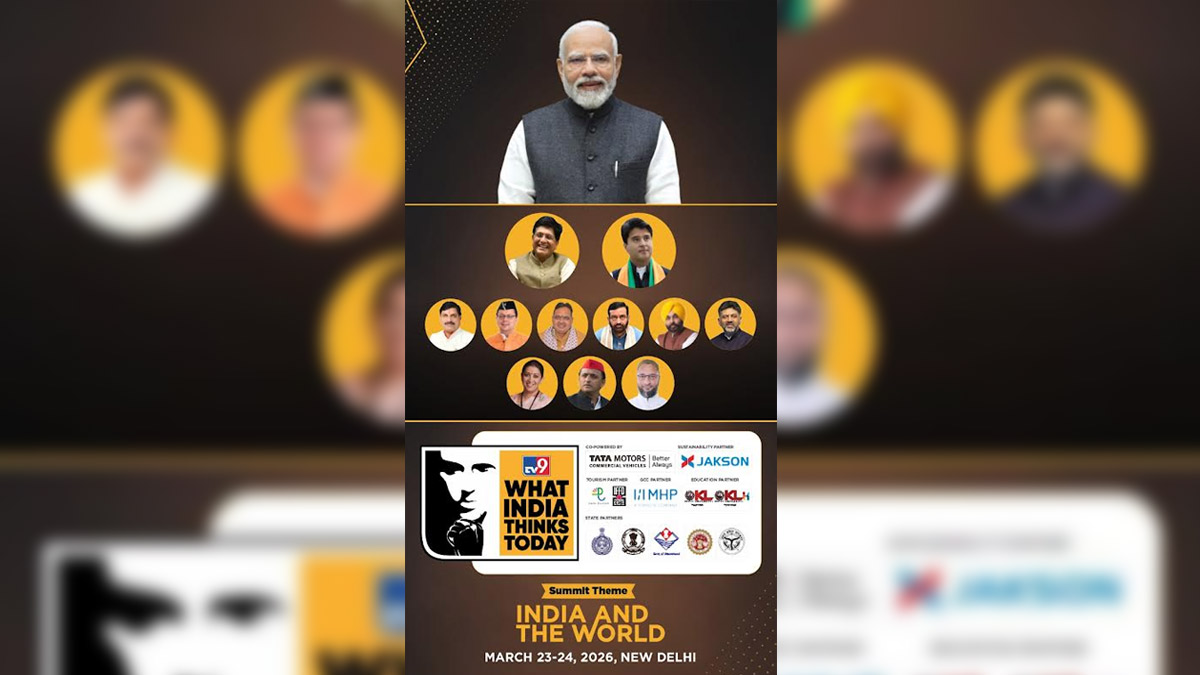
MUMBAI: The WITT Summit just wrapped up with enough big ideas to fill a policy playbook because when India’s leaders, thinkers and icons gather under one roof, even the conversations hit sixes. The eighth edition of TV9 Network’s flagship What India Thinks Today (WITT) Summit 2026 concluded on Saturday after two days of dynamic discussions at its New Delhi venue. India’s largest multi-domain public policy and culture summit brought together political leaders, policymakers, sports icons, artists and technology innovators to examine the forces shaping contemporary India and its global standing.
Prime minister Narendra Modi delivered the keynote address on the theme “India and the World” for the third consecutive year. In a wide-ranging speech, he addressed the ongoing conflict in West Asia, calling for restraint and compassion while highlighting India’s continued development trajectory despite global turmoil.
The summit featured candid conversations with state leaders. Telangana Chief Minister A. Revanth Reddy articulated a people-first governance model and contrasted it with other development approaches. Madhya Pradesh Chief Minister Mohan Yadav declared that Left-wing extremism had been effectively eliminated in his state and highlighted preparations for the upcoming Kumbh Mela. Punjab Chief Minister Bhagwant Mann defended his government’s record, citing the closure of 19 toll plazas and creation of the Sadak Suraksha Force. Karnataka Deputy Chief Minister D.K. Shivakumar expressed confidence in Congress prospects in Assam and addressed recent allegations against him.
On geopolitics and national security, Union Minister Jyotiraditya Scindia outlined India’s ambition to become a builder of trusted digital infrastructure for the world, citing the rapid 5G rollout and village-level 4G connectivity.
Cricket received significant attention. Former India captain Sourav Ganguly praised player freedom and trust as hallmarks of great leadership and named MS Dhoni as the greatest captain due to his World Cup successes. India women’s team bowling coach Aavishkar Salvi credited the BCCI and Women’s Premier League for building a pipeline of world-class talent behind the team’s recent ODI World Cup triumph.
The summit also hosted the inaugural AI² Awards 2026, celebrating the convergence of human creativity and machine intelligence in storytelling and content creation. Poet and kathavachak Kumar Vishwas delivered a nuanced take on India’s concept of Dharma and criticised the recent arrest of an 80-year-old Shankaracharya. Veteran lyricist Sameer Anjaan and storyteller Neelesh Misra reflected on changing music trends and artistic responsibility in the wake of a recent controversy involving Nora Fatehi.
In a country where conversations often run as deep as the Ganges, the WITT Summit proved once again that when leaders, thinkers and storytellers come together, the real winner is public discourse lively, layered and refreshingly unafraid to tackle the big questions shaping India’s tomorrow.








