News Headline
TRAI tariff order’s impact on advertising expenditure on regional channels


MUMBAI: While TV still remains the primary avenue for major brands to break their bank on advertising expenditure (adex), digital is slowly but surely capturing a bigger slice of that pie. According to the FICCI KPMG 2018 report, adex on Hindi GECs saw a decline of nine per cent in FY18 while regional channels witnessed an increase of 5.4 per cent. The new tariff order is likely to ensure that trend continues in FY19 as well, industry experts feel.
Carat India SVP Mayank Bhatnagar said that new tariff regime will not impact the adex on an immediate basis but depending on the viewership patterns, advertising deals or strategy would be recalibrated by brand managers. Likewise, Enterr10 Fakt Marathi MD Shirish Pattanshetty was of the opinion that overall advertising spends are likely to grow this year with general elections, IPL and the cricket World Cup. He stated that the regional language market is likely to grow in double digits.
As per industry reports, ad spends grew 17-18 per cent on FTA channels in 2018 as compared to 10 per cent in 2017, the lowest in five years. TV is expected to be the lead medium as far as reach is concerned for the next three years, with the FMCG category being the highest contributor when it comes to TV ad spends.

Dishum Broadcasting COO Partha Dey believes that the consumption pattern of genres won’t change but the new regulatory framework could compel some viewers to opt for free or cheaper channels.
Stratagem Media founder director Sundeep Nagpal, however, contradicted Dey by stating that this trend had nothing to do with the new tariff order.
“The new tariff order would, in a way, be less detrimental for regional channels than for national channels,” he explained.
HBC founder Harish Bijoor felt that the decline in the adex will be greater for regional channels post the implementation of the new tariff norms.
Now that over the top (OTT) platforms have already entered the race, the industry predicts that both TV and OTT will work together in the long run. Ad spends on TV and digital stand at 45 per cent and 15 per cent respectively and the latter is expected to take bigger strides in the near future. Total ad pie for TV and OTT will rise from the current 60 per cent to 80 per cent in the next three to four years.
The CEO of a major production house pointed out that ad spends on digital media have been growing upwards of 30 per cent in the last five years and that trend is set to continue.
“Having said so, the traditional media including TV will also continue to grow making India the most distinct big market in the world,” he said.
“I have been hearing the regional content conversation for the last eight years. There is every proof that the regional market is critical, fast-growing and is getting more and more localised. The power of regional will only go up,” he highlighted.
According to him, this is not a new trend as it is opening up dramatically in the OTT space as well.
“Each language will gain maturity from the point of view of revenue catchment because along with creating value, you also need a strategy to capture value,” he added.
With DPOs trying hard to migrate subscribers to the new system, TRAI has given customers time till 31 March 2019 to make their new channel selections.
Even the BARC ratings have not been released to the public till there is some stability in viewership.
While the industry remains divided on the impact of the tariff order on adex, a clearer picture will emerge once the dust settles.





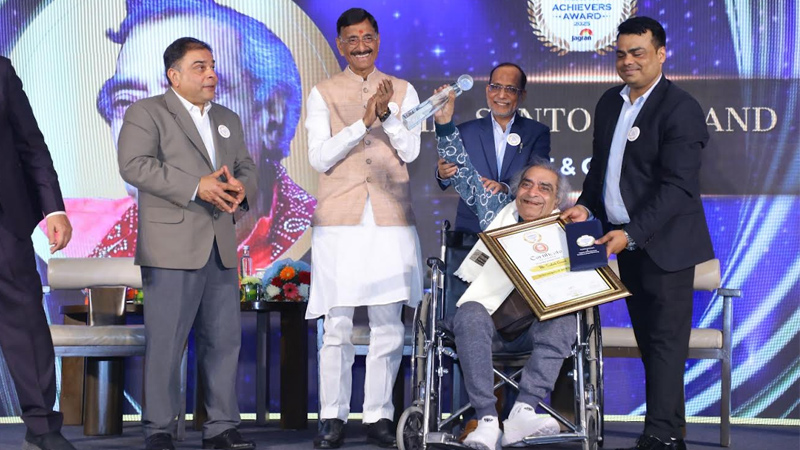
NEW DELHI: Hamdard Laboratories gathered a cross-section of India’s achievers in New Delhi on Friday, handing out the Hakeem Abdul Hameed Excellence Awards to figures who have left their mark across healthcare, education, sport, public service and the arts.
The ceremony, attended by minister of state for defence Sanjay Seth and senior officials from the ministry of Ayush, celebrated individuals whose work blends professional success with a sense of public purpose. It was as much a roll call of achievement as it was a reminder that influence is not measured only in profits or podiums, but in people reached and lives improved.
Among the headline awardees was Alakh Pandey, founder and chief executive of PhysicsWallah, recognised for turning affordable digital learning into a mass movement. On the sporting front, Arjuna Awardee and kabaddi player Sakshi Puniya was honoured for her contribution to the game and for pushing women’s participation onto bigger stages.
The cultural spotlight fell on veteran lyricist and poet Santosh Anand, whose songs have echoed across generations of Hindi cinema. At 97, Anand accepted the honour with characteristic humility, reflecting on a life shaped by perseverance and hope.
Healthcare honours spanned both modern and traditional systems. Manoj N. Nesari was recognised for strengthening Ayurveda’s place in national and global health frameworks. Padma shri Mohammed Abdul Waheed was honoured for his research-backed work in Unani medicine, while padma shri Mohsin Wali received recognition for his long-standing contribution to patient-centred care.
Education and social development also featured prominently. Padma shri Zahir Ishaq Kazi was honoured for decades of work in education, while former Meghalaya superintendent of Police T. C. Chacko was recognised for public service. Goonj founder Anshu Gupta received an award for his dignity-centred rural development initiatives, and the Hunar Shakti Foundation was honoured for empowering women and young girls through skill development.
The Lifetime Achievement Award went to former IAS officer Shailaja Chandra for her long career in public healthcare and governance, particularly in the traditional systems under Ayush.
Speaking at the event, Hamdard chairman Abdul Majeed said the awards were a tribute to those who combine excellence with empathy. “These awardees reflect Hakeem Sahib’s belief that healthcare, education and public service must ultimately serve humanity,” he said.
Minister Seth struck a forward-looking note, saying India’s young population gives the country a unique opportunity to become a global destination for learning, health and wellness by 2047.
The ceremony also featured the trailer launch of Unani Ki Kahaani, an upcoming documentary starring actor Jim Sarbh, set to premiere on Discovery on 11 February.
Instituted in memory of Unani scholar and educationist Hakeem Abdul Hameed, the awards have grown into a national platform that celebrates those building a more inclusive and resilient India. For one evening at least, the spotlight was not just on success, but on service with substance.






