iWorld
Trai seeks views of stakeholders on new tariff order

Mumbai: The Telecom Regulatory Authority of India (Trai) has issued a consultation paper on issues related to the new regulatory framework for broadcasting and cable services. The regulatory body has invited stakeholders to express their written comments on the issues in the consultation paper by 30 May and counter comments by 6 June.
In December 2021, Trai formed a committee consisting of members from the Indian Broadcasting and Digital Foundation (IBDF), All India Digital Cable Federation (AIDCF) and DTH Association to deliberate on the various issues related to the implementation of the New Regulatory Framework 2020.
Implementation of tariff order

The stakeholders’ committee identified several issues related to New Regulatory Framework 2020 for consideration and requested Trai to immediately address the critical issues which could create impediments to the smooth implementation of the tariff order.
To summarise the issues, Trai addressed seven questions to stakeholders concerning the ‘New Tariff Framework 2020’ in the consultation paper as follows:
1. Should Trai continue to prescribe a ceiling price of a channel for inclusion in a bouquet?
A. If yes, please provide the maximum retail price (MRP) of a television channel as a ceiling for inclusion in a bouquet. Please provide details of calculations and methodology followed to derive such ceiling price.
B. If not, what strategy should be adopted to ensure the transparency of prices for a consumer and safeguard the interest of consumers from perverse pricing?
2. What steps should be taken to ensure that popular television channels remain accessible to a large segment of viewers. Should there be a ceiling on the MRP of pay channels? Please provide your answer with full justifications/reasons.
3. Should there be a ceiling on the discount on the sum of a-la-carte prices of channels forming part of bouquets while fixing MRP of bouquets by broadcasters? If so, what should be the appropriate methodology to work out the permissible ceiling on discounts? What should be the value of such a ceiling?
A. Should channel prices in bouquets be homogeneous? If yes, what should be appropriate criteria for ensuring homogeneity in pricing the channels to be part of the same bouquet?
B. If not, what measures should be taken to ensure an effective a-la-carte choice which can be made available to consumers without being susceptible to perverse pricing of bouquets?
C. Should the maximum retail price of an a-la-carte pay channel forming bouquet be capped regarding the average prices of all pay channels forming the same bouquet? If so, what should be the relationship between the capped maximum price of an a-la-carte channel forming the bouquet and the average price of all the pay channels in that bouquet? Or else, suggest any other methodology by which the relationship between the two can be established and consumer choice is not distorted.
5. Should any other condition be prescribed for ensuring that a bouquet contains channels with homogeneous prices? Please provide your comments with justifications.
6. Should there be any discount, in addition to the distribution fee, on MRP of a-la-carte channels and bouquets of channels to be provided by broadcasters to DPOs? If yes, what should be the amount and terms and conditions for providing such a discount?
7. Stakeholders may provide their comments with full details and justification on any other matter relating to the issues raised in the present consultation.
Trai notified stakeholders of the regulations under the New Regulatory Framework 2020 on 1 January 2020. As per the regulations, Trai allowed for 200 SD channels for the maximum price of Rs 130. It also necessitated that in multi-TV homes distributed platform operators (DPOs) charge a network capacity fee (NCF) for any subsequent TV connection that cannot be more than 40 per cent of the NCF for the first TV.
The regulations also mandated that only channels with MRP of Rs 12 could be a part of a bouquet. It also called for reasonable pricing of a-la-carte channels and bouquets by providing twin conditions
a) the sum of the a-la-carte rates of the pay channels (MRP) forming part of a bouquet shall in no case exceed one and half times the rate of the bouquet of which such pay channels are a part and
b) the a-la-carte rates of each pay channel (MRP), forming part of a bouquet, shall in no case exceed three times the average rate of a pay channel of the bouquet of which such pay channel is a part. In a ruling dated 30 June 2021, the Bombay high court struck down the second twin condition after a challenge issued by broadcasters.
“The provisions related to Network Capacity Fee (NCF), multi-TV homes and long-term subscriptions of New Regulatory Framework 2020, have already been implemented and due benefits are being passed on to the consumer at large,” said Trai in its statement.
Pricing of channels
However, Trai noted, that reference interconnection offers (RIOs) filed by broadcasters, listing the MRP and bouquet price of their channels, reflected a common trend. The broadcasters priced their most popular channels including sports channels beyond Rs 20 per month keeping them out of the bouquet. “The revised RIOs as filed indicate a wide-scale changes in the composition of almost all the bouquets being offered,” said Trai.
After the RIOs were filed, Trai received representations from DPOs, local cable operators (LCOs) and consumer organisations. The DPOs highlighted the difficulties faced by them in implementing the new rates in the system and migrating the consumers to the new tariff regime through the informed exercise of options impacting almost all bouquets.
This paper primarily discusses issues related to discounts given in the formation of the bouquet, the ceiling price of channels for inclusion in the bouquet, and discounts offered by broadcasters to DPOs in addition to distribution fees.





iWorld
OpenAI hits back at Elon Musk’s lawsuit ahead of trial
Company calls claims “baseless” and accuses Musk of trying to disrupt a rival.
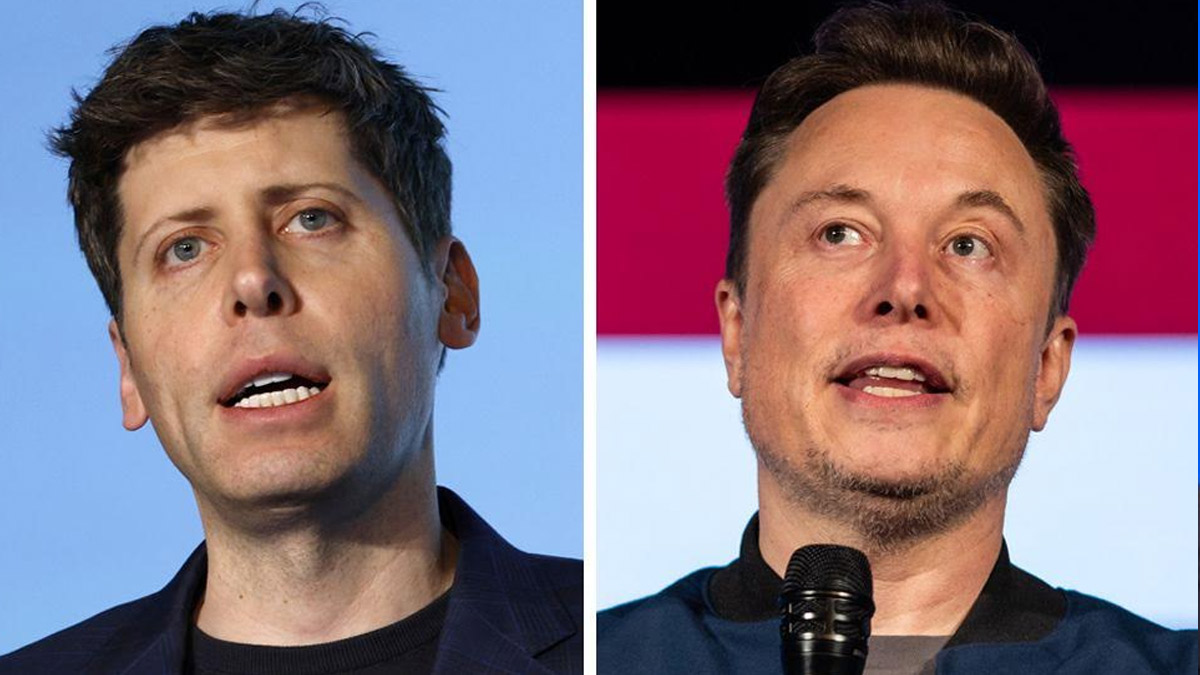
MUMBAI: When the stakes are measured in billions and egos are involved, even Silicon Valley titans can turn a courtroom into a battlefield. OpenAI has issued a sharp public response to Elon Musk’s ongoing lawsuit, accusing the billionaire of filing the case to harass a competitor rather than address genuine concerns. In a strongly worded statement shared on its official X account, OpenAI described Musk’s allegations as “baseless” and suggested the lawsuit is an attempt to disrupt the company as the case heads toward trial later this month in Oakland, California.
The response comes after Musk’s legal team recently amended the complaint, proposing that any damages potentially exceeding $150 billion should go to OpenAI’s nonprofit entity rather than to Musk personally. OpenAI questioned the timing and motive behind this change, calling it a late-stage attempt to “pretend to change his tune” on the nonprofit structure.
The company further labelled the lawsuit a “harassment campaign”, arguing that Musk’s actions are driven by personal rivalry, ego, and a desire for greater control and financial upside.
At the heart of the dispute is Musk’s claim that OpenAI has abandoned its original nonprofit mission of developing artificial intelligence for the benefit of humanity. A co-founder who left in 2018, Musk is seeking governance changes, including the removal of CEO Sam Altman from the nonprofit board, and the return of certain financial gains linked to Altman and President Greg Brockman.
OpenAI has firmly rejected these allegations, maintaining that its current hybrid structure, a public-benefit corporation overseen by a nonprofit parent remains true to its long-term goals. The company has also previously accused Musk of anti-competitive behaviour aimed at weakening its leadership.
As the case prepares for a jury trial, this public exchange highlights the deepening rift between two of the most influential figures in the AI revolution and raises broader questions about governance, mission, and power in the fast-moving world of artificial intelligence.
In the high-stakes game of AI, it seems the real drama isn’t just inside the models, it’s playing out in courtrooms too.






