News Broadcasting
Top policy experts will feature at broadband conference in Washington


‘Broadband Outlook 2002: Vision, Strategy, Implementation’, to be held in Washington on 23 January, aims at exploring cutting-edge trends in broadband business, policy, programming and technology. It will also try to offer unique insights into the future of this fast-paced, dynamic marketplace.
The conference will tackle questions such as:
a) What new services are on tap for 2002 and where will they appear? On the TV? On the PC? On both?

b) When will interactive TV arrive and, more importantly, do consumers want it? What are the limits that consumers are willing to pay for faster Internet connections, pay-for-play streaming services, and interactive TV?
c) What role do broadband communications play in times of crisis and how secure are broadband networks?
d) Are cable companies, telcos, satellite providers and wireless companies technologically ready to deliver on the promise of broadband? Which broadband architecture is best positioned to offer the range of new interactive TV and voice services? What new blueprints are on the drawing board?
e) Will more capital flow to broadband companies due to the importance of communications during times of conflict? Will streaming media gain steam as broadband penetration increases?
f ) What are the financial challenges facing broadband service and content providers? Which new broadband services are investors betting on?
g) Does the government have stake in ensuring broadband network reliability and service in times of national emergencies? How does broadband change the policy landscape and what are the pressing challenges for 2002?
h) Is interactive TV a threat to consumer privacy? Will new laws help or hinder the development of new broadband services?
i) Which broadband medium – cable, satellite, telco or wireless – will win the broadband race?
j) Will the growing number of alliances and cross-ownership linkages among ISPs, phone companies and cable operators speed the penetration of broadband? How will these alliances and linkages shape competition in broadband.
Former Federal Communications Commission chairman Richard E. Wiley will introduce the day’s keynote speakers. There will be an expanded speaker lineup for panels on business models, financial prospects, programming, and technology. The speakers include the senior V-P of Advanced Broadband Services, AT&T Broadband Susan Marshall, VP, Earthlink Communications, Tom Andrus, CTO, Charter Communications Steve Silva, CEO, Intertainer, Jonathan Taplin, VP of Interactive Services, Sony Corp. of America, Saul Shapiro, East Coast managing editor, MSNBC.com Michael Silberman, and VP of Broadband and Interactive Services, ESPN Manish Jha.
Cahners Publishing has signed on as a conference sponsor, joining the National Cable & Telecommunications Association (NCTA), Consumer Electronics Association (CEA), and Broadband Daily. Cahners publishes Multichannel News, Broadband Week, and Broadcasting & Cable.





News Broadcasting
CNN-News18 to host Fury in the Gulf conclave on West Asia crisis
Three-hour summit to unpack geopolitical fallout and impact on India
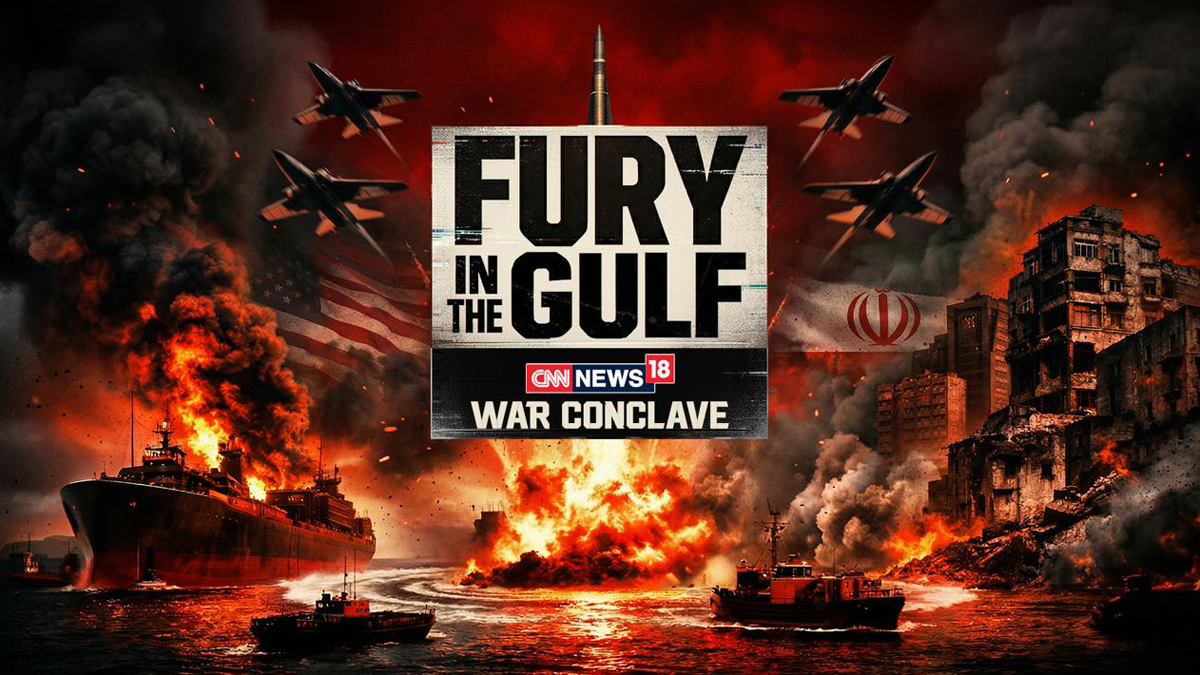
MUMBAI: CNN-News18 is set to host a special three-hour broadcast, Fury in the Gulf – War Conclave, on April 7, aiming to decode the escalating West Asia crisis and its far-reaching implications for India.
Scheduled from 4:00 PM to 7:00 PM, the conclave comes at a time when tensions between Iran and the United States are reshaping global geopolitics and triggering economic uncertainty. With India’s deep energy ties, trade links and large diaspora in the Gulf, the developments carry significant domestic relevance.
Built around the theme ‘Conflict, Consequences, and The Future,’ the programme will feature six curated sessions combining one-on-one interviews and panel discussions. The focus is to cut through the clutter and offer viewers a clearer understanding of the fast-evolving situation.
Key sessions include ‘Diplomacy in Times of War’ featuring Shashi Tharoor, and ‘World After the Iran Conflict’ with voices such as Ram Madhav, Reuven Azar, representatives from the European Union and the Iranian Deputy Envoy. Another session titled ‘Another Dunkirk?’ will bring together K. J. S. Dhillon and Jitin Prasada among others.
CNN-News18 editorial affairs director Rahul Shivshankar said, “In times of war, clarity becomes the most powerful tool. Fury in the Gulf – War Conclave brings together credible voices to address the questions and confusion that arise amid an overwhelming influx of information.”
He added that the initiative is aimed at delivering “facts, perspective, and insight” at a time when misinformation can easily cloud public understanding.
Echoing the sentiment, CNN-News18 CEO– English and business news Smriti Mehra said the conflict marks a defining global moment, with consequences that extend well beyond the region. She noted that the conclave seeks to present the crisis with “depth, nuance and responsibility” so audiences can better grasp its real-world impact.
As geopolitical tensions continue to dominate headlines, the conclave positions itself as an attempt to bring order to the noise, offering viewers a structured, insight-led look at a complex and rapidly shifting global situation.






