Hardware
TiVo exits STB business


MUMBAI: TiVo is exiting the manufacturing, sales and distribution of set-top boxes to a yet-undisclosed third party, the company has said.
CEO Enrique Rodriguez, talking to analysts on its Q1 earnings call, said that consumers would continue to see TiVo-branded boxes in the retail sector, and specifically mentioned outlets such as Best Buy and Amazon. “Once we complete this transition, we still will have direct consumer hardware sales through TiVo.com, which we will be fulfilling through this box manufacturer.”
Q1 revenue was $189.9 million, with core revenue up $9.7 million (5.9 per cent). Product revenue was $116.9 million, up 2 per cent year-on-year.

Rovi Corp acquired TiVo in 2016 and Rodriguez said that synergies had already topped $100 million of its $110 million targeted savings from the combination.
Rodriguez told analysts that its traditional markets consist of consumer electronics, or CE manufacturers, and Pay TV service providers. “The emerging markets for us are virtual service providers, content and new media companies as well as advertisers. These are the areas that we believe will drive TiVo’s future growth.”
He added that TiVo had expanded its patent agreement with Google in Q1 to include YouTube TV. Additionally, KDDI renewed their OTT service agreement with TiVo in Japan. “In Asia, we added Telstra Corp as a licensee in Australia and renewed our IP licence deal with Alticast in Korea. In Europe, we added the number two service provider in a major European country as a customer under a six-year licence arrangement. This comes on top of renewing eight service providers in Europe last year.”
Also Read :
Tata Sky, Airtel DTH gain market share in 2017
Dish TV-Videocon d2h to bank on economies of scale







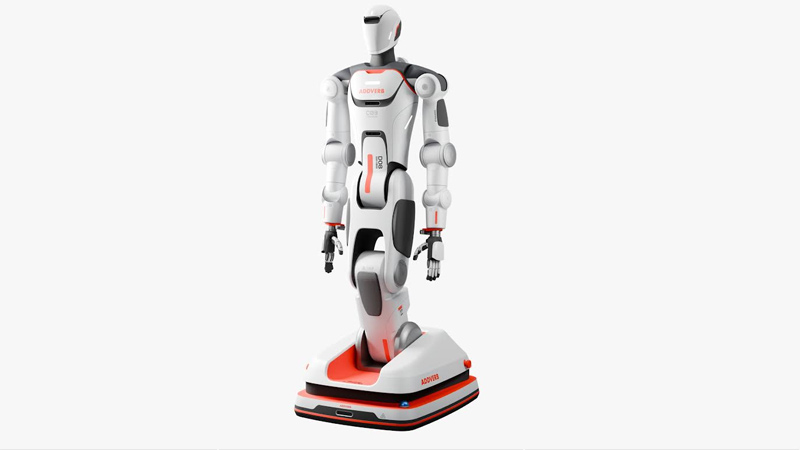
MUMBAI: Addverb has taken a decisive turn on the road to humanoid automation, unveiling its first wheeled humanoid robot, Elixis-W, at LogiMAT India 2026 in Mumbai. Built and manufactured in India, the robot signals the company’s push to make so-called physical AI a practical presence on the factory floor rather than a futuristic concept.
Unlike traditional fixed automation, Elixis-W is designed to move, think and work alongside people in dynamic industrial settings. The robot combines adaptive wheeled mobility with dual arms, each fitted with five-fingered dexterous hands, allowing it to handle tasks that demand precision as well as flexibility.
At its core sits a Physical AI-ready architecture, supported by dual Nvidia Jetson Orin and Thor computing units. This setup is intended to give the robot the ability to perceive, plan and adapt to changing environments, rather than simply follow pre-programmed routines.
According to Addverb CEO and co-founder Sangeet Kumar, the humanoid reflects the company’s long-standing belief in human-robot collaboration. He said the robot is designed to take on repetitive, risky or physically demanding tasks, freeing human workers to focus on higher-value decision-making roles.
Alongside the humanoid, Addverb also showcased two new intralogistics solutions. The Cruiser 360, a four-way pallet shuttle, is aimed at high-density storage environments where space and speed matter. The FlowT, an autonomous forklift, is designed to move materials safely in busy warehouses and factory spaces.
Visitors also saw Trakr, the company’s quadruped robot, navigating the exhibition floor, offering a glimpse of how legged machines could assist in future warehouse and industrial operations.
Addverb, which began as a warehouse automation specialist, has steadily expanded its global footprint across the United States, Europe, Australia and Asia. Its client list includes Reliance, HUL, PepsiCo, Maersk, Mondial Relay and DHL.
With the launch of Elixis-W, the company is steering towards a future where robots are not just bolted to the floor, but rolling, reasoning and working shoulder to shoulder with people on the shopfloor.