News Broadcasting
Times Network’s MK Anand prioritises subscription over advertising model

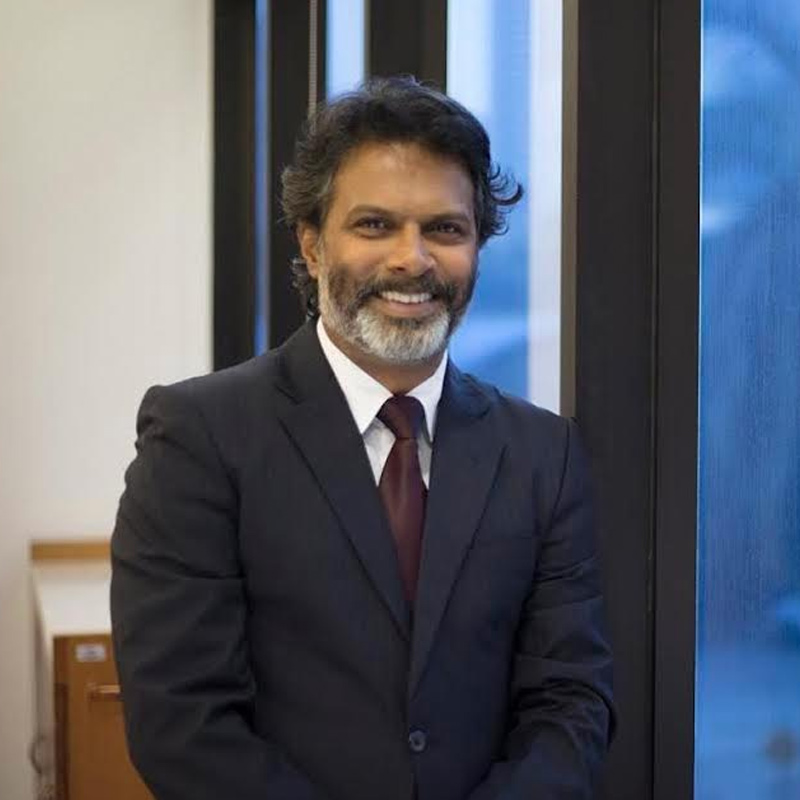
NEW DELHI: On day one of the News Television Summit 2020, Times Network MD and CEO MK Anand had a few words of caution to offer: monetisation by ad sales is a huge steroid that the news business is running on and which it needs to get out of. Instead, he advocated subscription.
“When you go the subscription route, there is no need to be ratings-led. The current subscription numbers are 10x of what they were in 2014, when I joined Times. We have to benchmark ourselves on net distribution income (NDI). When it comes to NDI, a news channel should look at the top of the population pyramid more,” he said during a virtual fireside chat with Indiantelevision.com founder, CEO and editor-in-chief Anil Wanvari.
For instance, Times Network focuses on the top of the pyramid as it believes this is something the organisation needs to cater to, not because of a single-minded determination to chase numbers. “We are numbers-sensitive in the sense that we believe our ratings, our reach, our penetration has to be high. But I absolutely do not consider time-spent (TSV) as a driving factor at all,” he claimed.

Reach is a good driver, said Anand, adding that Times went from 300 headends when he joined the group to 3,000 plus in just two years.
Anand went on to reveal that 54 per cent of the Times Network’s revenue in FY21 is going to come from subscriptions. “The total ratings-led business in our topline is less than 25 per cent. Earlier it used to be 90 per cent. Back then we didn’t have branded content or premium-led ground or digital business. Now 14 per cent is from digital while 14-15 per cent is branded content. Specifically, Times Now’s TRP-led business is less than 11 per cent of the total.”
Wanvari quickly asked Anand if there’s a scenario where the Times Network converts its business model to 90 per cent subscription-led? Anand disagreed with that train of thought for the reason that the network’s audience is hot property for advertisers.
“Our audiences are premium and our reach management is very aggressive. For advertisers, 40-45 per cent of the top-end audience can only be met through Times Network’s English movies or English news channels. We may not depend on them for survival but that’s a very solid audience for us to monetise and one advertisers can’t do without,” he explained.
He went on to qualify that the ratio of ad sales (including digital) to subscription will settle at 40:60.
Anand also upheld rival channel CNBC as a solid example of a subscription-based brand, adding that when it comes to business news channels there isn’t a high degree of dependency on advertising.
“For niche channels, ratings do not matter. At Times, I have never, ever called up my editors and asked them why the ratings were up or down in any given week. I don’t believe that ratings are the be-all and end-all of right content,” he said.
Touching upon the television ratings measurement mechanism, Anand asserted that he genuinely believes in the process – it’s only certain unscrupulous players who are trying to manipulate the system and they must be dealt with.
“Whether it was Tam or BARC, I agree with the statistical and sampling processes. Lapses can happen anywhere but 99 per cent of the time it works. I don’t have a problem with the process. But content sensibilities are very different going down the population pyramid and it’s so much easier to get great numbers by continuously lowering the focus from the top of the pyramid to the bottom,” he added.





News Broadcasting
CNN-News18 to host Fury in the Gulf conclave on West Asia crisis
Three-hour summit to unpack geopolitical fallout and impact on India
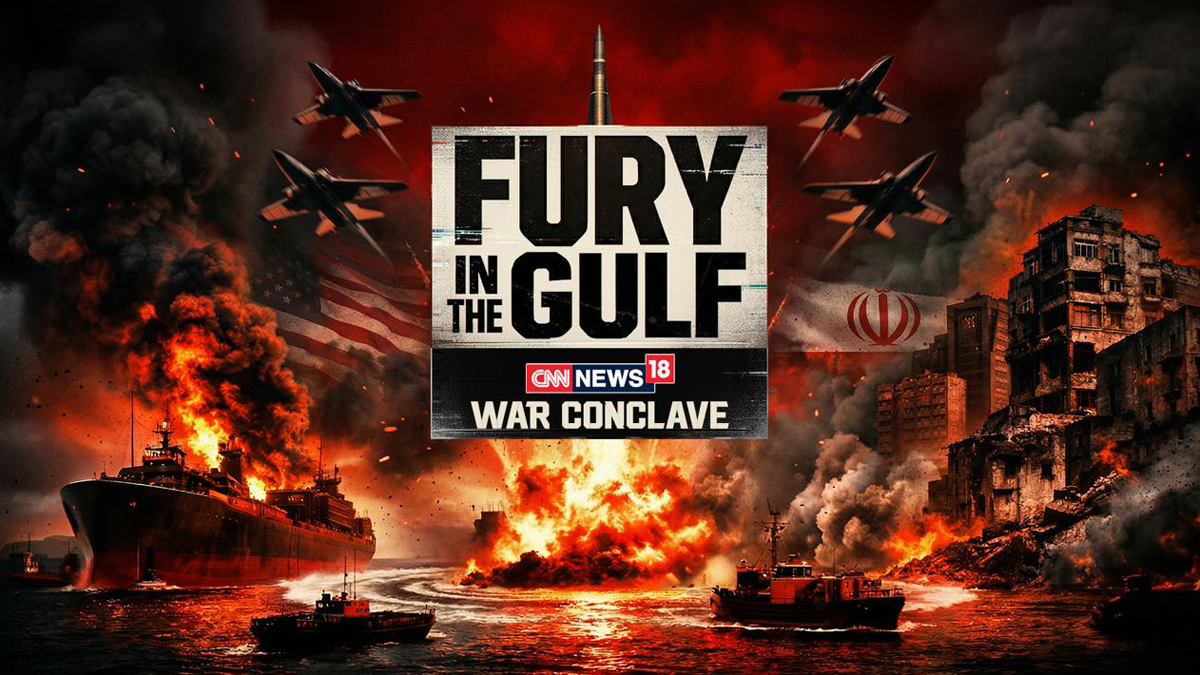
MUMBAI: CNN-News18 is set to host a special three-hour broadcast, Fury in the Gulf – War Conclave, on April 7, aiming to decode the escalating West Asia crisis and its far-reaching implications for India.
Scheduled from 4:00 PM to 7:00 PM, the conclave comes at a time when tensions between Iran and the United States are reshaping global geopolitics and triggering economic uncertainty. With India’s deep energy ties, trade links and large diaspora in the Gulf, the developments carry significant domestic relevance.
Built around the theme ‘Conflict, Consequences, and The Future,’ the programme will feature six curated sessions combining one-on-one interviews and panel discussions. The focus is to cut through the clutter and offer viewers a clearer understanding of the fast-evolving situation.
Key sessions include ‘Diplomacy in Times of War’ featuring Shashi Tharoor, and ‘World After the Iran Conflict’ with voices such as Ram Madhav, Reuven Azar, representatives from the European Union and the Iranian Deputy Envoy. Another session titled ‘Another Dunkirk?’ will bring together K. J. S. Dhillon and Jitin Prasada among others.
CNN-News18 editorial affairs director Rahul Shivshankar said, “In times of war, clarity becomes the most powerful tool. Fury in the Gulf – War Conclave brings together credible voices to address the questions and confusion that arise amid an overwhelming influx of information.”
He added that the initiative is aimed at delivering “facts, perspective, and insight” at a time when misinformation can easily cloud public understanding.
Echoing the sentiment, CNN-News18 CEO– English and business news Smriti Mehra said the conflict marks a defining global moment, with consequences that extend well beyond the region. She noted that the conclave seeks to present the crisis with “depth, nuance and responsibility” so audiences can better grasp its real-world impact.
As geopolitical tensions continue to dominate headlines, the conclave positions itself as an attempt to bring order to the noise, offering viewers a structured, insight-led look at a complex and rapidly shifting global situation.






