iWorld
The screenshot shams: how fake-chat apps are fueling a new era of digital character assassination

MUMBAI: The screenshot was once the internet’s ultimate “gotcha.” In the digital courts of Instagram and WhatsApp, a grabbed image of a damning DM was a social death warrant. No longer. A fresh plague of sophisticated “fake-chat” apps is turning the influencer economy into a digital wild west where reputations are shredded in seconds for the sake of a viral reel. From the posh flats of Chelsea to the high-rises of Mumbai, the “receipts” are being cooked, and the audience is swallowing the poison.
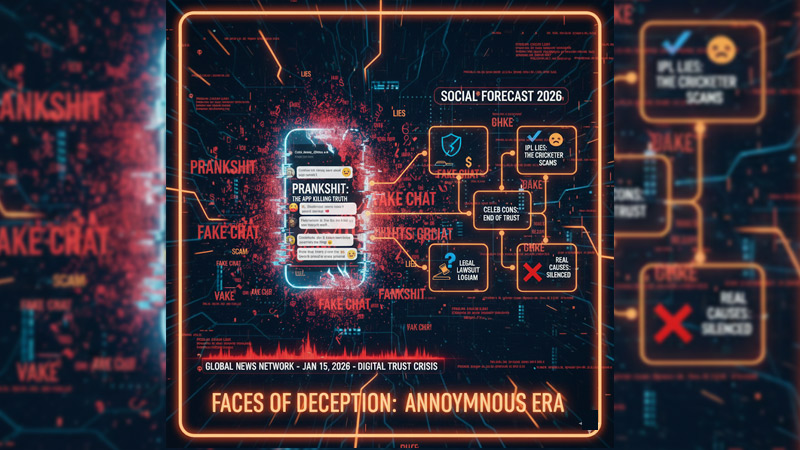
Enter apps like Prankshit, Funsta, and ChatsMock. These are not merely toys; they are precision-engineered deception kits. They allow any bored clout-chaser to clone the Instagram or WhatsApp interface with terrifying accuracy. Want a blue verification tick for a fake celebrity? Done. Need the exact “seen” receipt timestamp to make a betrayal look fresh? Easy. These apps offer 100 per cent control over both sides of a fabricated conversation, allowing creators to script their own scandals.
The mechanics of this deception are chillingly simple. A creator opens an app that mirrors the exact UI of a messaging platform. They upload a profile picture of their target, perhaps a rival influencer or a former flame and begin typing. One tap sends a message from the “target”; another tap sends the “reply.” To the casual scroller, it is indistinguishable from the real thing. In India, where TikTok remains banned and Instagram Reels is the undisputed king of short-form video, these “leaked” screen-recordings are the fuel for a massive “Lafda” (public beef) economy.
The trend has moved beyond petty influencer drama into high-stakes industries like Bollywood and the Indian Premier League (IPL). Viral reels featuring tantalising captions about “cricketer leaks” or “Bollywood secrets” are rarely the work of whistleblowers. Instead, they are often engagement-farming traps. Creators use Prankshit to insert themselves into real trending narratives; when a genuine scandal breaks, dozens of secondary accounts use fake chat generators to claim they have “part two” of the evidence, siphoning off millions of views from unsuspecting fans.
In London, the “toxic boss” trope is the current weapon of choice. Reels featuring grainy, black-and-white footage of a tearful assistant are trending, usually accompanied by a scrolling “expose” of a famous influencer being an absolute melt in the DMs. In Mumbai, the stakes are even more sinister. The “Casting Couch” fake reveal has become a lethal tool for digital blackmail. Fabricated WhatsApp chats, where a casting director appears to demand favours in exchange for a role, go viral across family groups in minutes. By the time the victim issues a denial, their career is already in the bin.
The economics of this fakery are simple. A well-timed “expose” can spike engagement by over 500 per cent. In a world where a million views can be monetised for thousands of dollar, the incentive to lie is irresistible. For the viewers, the “truth filter” is failing. Humans are hard-wired to believe a screen recording of a chat more than a written caption. It feels raw. It feels real. It is, in fact, a script.
The real casualty, however, is not the celebrity reputation—it is genuine activism. Experts warn of a “boy who cried wolf” effect. When dozens of creators use Prankshit to bluff about “exposing” predators for clout, the public becomes desensitized. If a real victim comes forward tomorrow with authentic evidence of harassment or abuse, the instinctive reaction from the internet is now one of doubt: “Is this real, or just another Prankshit edit?” Accountability is being diluted into a meme.
Legal systems are struggling to keep pace. Under India’s Bharatiya Nyaya Sanhita (BNS), creating fake electronic records to defame someone can carry a prison sentence of up to three years. In the UK, the Defamation Act 2013 provides a framework, but the sheer speed of social media means the damage is often done before a lawyer can draft a letter. Victims find themselves fighting ghosts; by the time a post is reported and removed, it has been screen-recorded and re-shared by a thousand anonymous accounts.
Spotting the sham requires a forensic eye. The giveaways are there: a phone battery that stays at 12 per cent throughout a three-minute “scrolling” video, or a “last seen” timestamp that defies the laws of physics by being in the future. Font kerning is another tell; the letter ‘i’ and ‘l’ often look slightly off in the knock-off versions. But in the rush of a “spill the tea” session, few bother to check the math.
The digital trust is bankrupt. In 2026, if you’re basing your worldview on a “leaked” screenshot, you’re not an observer, you’re the mark. The tea is piping hot, but it’s brewed in a lab. Sip at your own peril.
The fact-checker’s toolkit: How to spot a “Prankshit” post
The battery paradox: Check the battery icon in the top right. If it remains frozen at a specific percentage (like 12 per cent or 69 per cent) despite a long scrolling video, it’s a static template.
The verified glitch: Many apps allow users to add a blue tick to any name. However, in real Instagram DMs, the tick is a specific shade of blue. If the video shows a tick that looks slightly pixelated or oversized, it’s a fake.
The cropping clue: Look at the edges of the chat. Often, these apps have a “sloppy” cropping job near the status bar where the fake interface meets the phone’s actual UI.
Timestamp logic: Look at the “Last Seen” or message times. Creators often forget to align these with the clock on the phone’s status bar. If the chat says “Online” at 11:00 PM but the phone clock says 10:30 PM, the jig is up.
The UI lag: Genuine apps have a subtle “bounce” when you scroll to the top or bottom. Fake generators often have a rigid, jerky motion that feels unnatural.