Connect with us

GECs

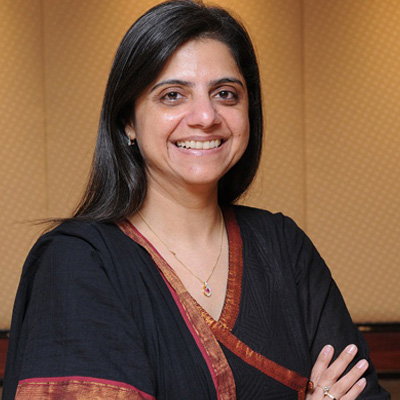
‘The kids market remains hugely under indexed’ : Nina Elavia Jaipuria – Nick India VP and GM

Published

on

It has been a phenomenal journey for Nick in India. From being a channel that was residing at the bottom of the heap, the nine-year-old player has finally emerged as the leader on top in the Hindi speaking market, edging out long-standing market leader Cartoon Network.


And now, having captured the HSM space, the channel is readying to spread its wings across the southern-language market by 2009-end. The next in step is to challenge Cartoon Network which rules the all-India market.

Advertisement


Nick has also made its foray into local content for the Indian market with Little Krishna, acquiring the show’s TV rights for two years for the South Asian territory.


Advertisement

In an interview with Indiantelevision.com’s Anindita Sarkar, Nick India SVP and GM Nina Elavia Jaipuria reveals the strategies that have worked for the channel and how she plans to grow in a fiercely competitive marketplace.


Excerpts:

Advertisement

Nick has emerged as the number one kids channel in the Hindi speaking market. What contributed most towards this growth?
There are a couple of differentiators and unique activities that the channel has done very consistently over a period of time. The biggest differentiator for the channel has been Nicktoons – characters that have helped Nick establish space and engagement with the kids leading to an increase in the stickiness of the channel.


Secondly, we have managed to take Nick beyond television, thus making it more tangible. And I think we did that very successfully with our experimental 360 degree marketing philosophy – we wanted to be in every place where children are. So we were there promoting ourselves right from schools, cinema houses, malls, cable television to comic books, van activation and general entertainment channels.

Advertisement


We also increased our consumer products activities – be it in the form of storyboards, storybooks, activity books, toys with Mattel, clothes with Weekender, linen with Portico, etc. And now that schools are opening, we will be soon coming out with stationary and back-to-school items.


Advertisement

We also intensified our engagement and connection with children through constant promotions, polls, votes, contests and festivals including father’s day, mother’s day, Raksha Bandhan, Holi and so on. We celebrated every festival that was important to kids.

Why did you choose GECs as a promotional platform?
In a one-television household, it is but natural that kids are watching Hindi GECs along with their families. So, we know that today’s kids watch a Balika Vadhu or a Star Plus or Zee TV for that matter. So we decided on this medium as we would be able to capture the entire gambit of captive audience.

But don’t you think that GECs today have actually emerged as contenders to the kids channels?
If you see, even with the emergence of so many GECs, the kids’ category remained almost unaffected. This is because eventually kids come back to watch what is tailormade for them. And, no matter how hard a GEC tries, it cannot attract any child’s absolute attention. He/she at most will continue to remain only a passive viewer. GECs cater to the family as a whole and their content is not custom-made for kids unlike a kid’s category which targets only the kids.

Advertisement

With Little Krishna you finally forayed into local animation. What took you so long to take this decision?
Well, we had been looking for something that was built on a very strong narrative so that it carried not one single hint of boredom. This is because a kid’s attention span is very limited and you have to engage them within the first ten seconds. So, our hunt went real long. And then, finally we came up with Little Krishna, in both English and Hindi, which not only has a very compelling narrative, but is also supported by seven years of extensive authentic research (without any distortion) conducted by Iscon. The show has captured Krishna in various facets and every episode is a standalone. So, you don’t have to know what has happened before or after. Also, the script is extremely strong and tight and with the quality of animation that it has, the show is sure to make it to the overseas market.

What was the need for localisation?
Well, there was not really a need for localisation because as a broadcaster I want content that entertains children and also gets rid of two things – boredom and stress. Yes, I do agree that some amount of local character would surely add some local flavour. But in content, that is not at all a necessity to have. Its more about the localisation of the channel which comes with how you dub, the language you speak, and the promos that the channel lines up.

Even though the kids segment contributes 7 per cent to the total television viewership, our revenue share is less than 2 per cent

How has the co-viewing pattern helped the channel to grow?
Today as a channel, we have the gatekeeper’s (parents) trust. We do not carry any form of content that could be harmful to the kids. We are responsible broadcasters and because of this parents allow their kids to watch our channel. In order to spend time with their kids, they also end up spending a lot of time on the channel. Also, animation as a category is today appealing to adults. Thus, a lot of co-viewing is taking place.

Advertisement

Are advertisers taking advantage of this trend?
Definitely! In fact, in the last one year, we have more than quadrupled our sales revenue as advertisers have found value in what Nick has to offer. We have done a lot of value addition and brand integration with all the categories that have come on board through sampling and on-ground activations. As a result, from 17 brands that we began with, we have now extended to over 75-80.

Are brands confined to the kids’ category alone or is the base expanding?
Absolutely! Two years ago, our reach was 13 per cent and today it is 32 per cent. With a lot of co-viewing happening, advertisers today understand that kids’ channels are also an effective medium to reach out to their target buyers. Also, the mere pressure of pester power that kids have on their parents decisions have pulled a lot of FMCG, insurance and telecom brands on board.

With recession hitting hard, what kind of impact did it have on your advertising revenues?
Look, television is the cheapest medium to reach out to the masses. For every other medium, there is an extra amount to be paid. Manufacturers understand this and they have also recognised our growth. And, thus, even during recession we have doubled our rates. Nick has performed all through and I did not want to succumb to this economic slowdown. Yes, instead of annual deals a lot of quarter deals were being cracked, but this could always be reviewed. As a broadcaster Nick did well and we surely deserved the revenues we generated.

Advertisement

How has the backing from Viacom and Network18 helped in Nick’s growth in India?
The network has been an absolute might. If you go through our tent pole projects in the last quarter, you will see that a lot of awareness and sampling has been created through Colors, IBN7, CNBC Awaaz and MTV amongst family and children outside of the kids’ category. All of them are passive viewers and, therefore, the network has only helped us promote ourselves.

How well are you distributed across the country?
We have got approximately 70-75 per cent all band connectivity wherein we are available in almost 26 million households. We are very well distributed all over the country in various town sizes. While 30 per cent of our ratings come in from metros, 35-40 per cent of the contribution comes in from the 1 million-plus cities and the remaining balance is attracted from the 1-10 million.

So what are your plans going ahead?
Well, until now our focus was to get a foothold in the Hindi speaking market. And now that we have done it, our first plan is surely to continue our growth and sustain our leadership position in this space. Our next plan now is to look South, which is certain to happen by the end of this year. We will head for all the southern markets – Tamil Nadu, Kerala, Karnataka and Andhra Pradesh. We will cater to them with the same content. We will initially begin with English and then move on to the regional languages with dubbed content as we get a foothold.

Advertisement


However, the major challenge there is going to be distribution because unlike the HSM market, we are not distributed there at all.

Is there any change in the ratio between advertising and subscription revenues?
Advertising still remains the predominant one, contributing over 60 per cent to our revenues. Distribution, meanwhile, is a constant revenue stream that you get year after year, but it’s the biggest payout as well. We have also taken baby steps in consumer products. When we started off with 2-3 products in the consumer product business, it was only a marketing tool. But now I think its time that it will start paying off. We are already available across 17 categories and will soon be launching in stationary, plush and home DVD with Excel. This year, therefore, we will see revenues flowing in from this stream as well.

Why do you think that even after witnessing a growth in viewership, the kids category has not grown in terms of revenue share?
The kids market remains hugely under indexed. Even though the kids segment contributes 7 per cent to the total television viewership, our revenue share is less than 2 per cent. This is because of the baggage that the space has been carrying over the years where advertisers are used to paying to the GECs.

Advertisement


But with a lot of co-viewing happening now along with integrated value addition to brands and the pester power of kids, I think we are ready to shed that baggage.

Advertisement
How has the interactive media contributed towards Nick’s growth?
Our website has about 10 per cent penetration with kids today – and this is growing. But I have to say that at the end of the day, everything feeds into one another. Therefore, it’s very essential for us to go multiplatform.
Click to comment

Leave a Reply

Your email address will not be published. Required fields are marked *

GECs

Asianet Television Awards 2026 celebrates women power in Malayalam TV

“She is the Colour” theme honours icons as ceremony airs on March 14 and 15 at 7 PM.

Published

on

MUMBAI: If television lights up living rooms, this year Asianet decided to let women provide the colour. The Asianet Television Awards 2026 turned the spotlight firmly on women empowerment with the theme “She is the Colour”, celebrating the strength, resilience and achievements of women who continue to shape society and the Malayalam entertainment industry.

The ceremony honoured several distinguished personalities whose journeys have left a lasting cultural imprint. Among them was legendary playback singer Vimala Varma, widely recognised as the first Malayalam playback singer. The evening also paid tribute to Padma Shri awardees Devaki Amma and Vimala Menon for their exceptional contributions in their respective fields.

Leading women from the Malayalam film industry were also recognised during the event, including actor Shweta Menon, who currently serves as president of the Association of Malayalam Movie Artists, and National Award winning actor Surabhi Lakshmi.

Advertisement

The awards ceremony brought together a glittering lineup of actors and industry figures, including Jayasurya, Vijay Babu, Asha Sarath, Lena, Esther Anil, Anumol, Akhila Bhargavan, Sarayu Mohan, Prajod Kalabhavan, Gayathri Suresh, Sabumon Abdusamad, Swasika, Tini Tom, Sijoy Varghese, Kailash, Veena Nandakumar, Sabareesh Varma, Ansiba Hassan and Dinesh Prabhakar. Kishan Kumar, executive vice president Malayalam at JioStar, was also present at the event.

Beyond individual recognitions, the awards celebrated excellence across Malayalam television, acknowledging artists and technicians whose work continues to drive the industry forward.

The evening also offered plenty of spectacle, with elaborate dance performances, stunt acts and comedy skits performed by popular television and film personalities, turning the ceremony into a full fledged entertainment showcase.

Advertisement

Viewers will get to watch the celebrations when the Asianet Television Awards 2026 air on Asianet on March 14 and 15, Saturday and Sunday, from 7 pm onwards, bringing the star studded tribute to homes across Kerala and beyond.

Continue Reading

Advertisement News18
Advertisement All three Media
Advertisement Whtasapp
Advertisement Year Enders

Copyright © 2026 Indian Television Dot Com PVT LTD

This will close in 10 seconds