News Broadcasting
The Khers’ ‘ER’ experience

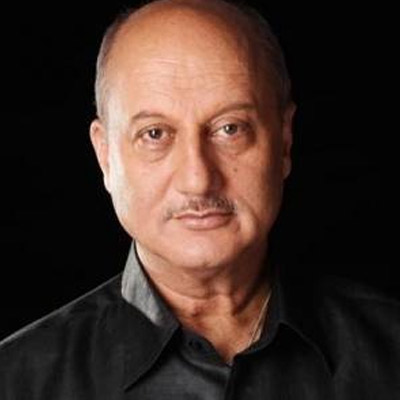
MUMBAI: Even as he is battling censorship issues, Central Board of Film Certification (CBFC) chief, Anupam Kher, is also busy making more of a mark for himself overseas. Kher was back last week after completing the shooting, along with his partner Kirron Kher, for a guest appearance in the hit medical saga ER.
The series centers on medical personnel in the emergency room of a Chicago hospital. ER is a creation and produced by best-selling author Michael Crichton, who has also authored Jurassic Park.
The filming took place in Los Angeles, Kher informed indiantelevision.com. He said that his wife and he play the role of Parminder Nagra’s (the Bend It Like Beckham star) parents and that appearance is limited to a single episode only, which is to be telecast in the first week of October.
Parminder Nagra in ‘ER’

“We had four scenes, one short one, while the others are longer. We were there for eight days, though we shot for only three. The remaining days were spent in understanding the role, travelling, et al. But we were paid for the full eight days,” he points out.
He says that Kirron and he shot at the Warner Brothers studio which has facilities that stretch to an area of almost a city. They were remarkable. There are separate buildings for make-up, editing, dubbing and every other aspect required. There are trailers. There are cars at your disposal even if you want to travel the smallest of distances. The air-conditioner comfort is there without the asking. Importantly, there are at least three stand-in reserves kept for rehearsals. At times, it pays to be on the other side than doing the rehearsal directly ourselves,” he continues.
“There is tremendous attention to detail,” he highlights. “Their preplanning is thorough. Detailed call sheets right from the time you are picked up from your hotel to the unit to the rehearsal to the final take – are charted out. You know what you are doing at 6 pm, 6:15 pm, 6:30 pm. You don’t waste a lot of time chatting like we do. Everyone is there for a job, and you have to do it well. From 7 am to 7 pm, you have to work. And because there is the fear of being fired, very few emotional excuses are resorted to.”
On the production side, he says ER is shot on 35 mm film and that raw stock there is least important. “They shoot the master shot first and then they shoot the same scene from various angles. And we have to be there to give cues to our co-actors. There is no resting. Most of it is shot using a Steadicam, you have long shots. The show has a battery of writers and seven assistant directors. David Zabel was the producer of our episode, while Paul McCrane (who also plays Dr Robert Romano) was the director.”
Moving on, Kher says that the locals easily recognised him in LA, simply because he had a substantial role in Gurinder Chaddha’s hit film Bend it like Beckham. “I don’t think there would be anybody there who hasn’t seen that film.”
Kher is also impressed with the budget that is used to shoot TV shows in the US of A. “There is no need to compare them with the budgets which are allotted to the TV shows in India. Believe it or not, the budget per episode of a TV show in the States is equivalent to the average budget alloted to a feature film in India.”
Kher has recently finished filming Gurinder Chadha’s second film Bride and Prejudice (Aishwarya Rai, Namrata Shirodkar, Meghna Kothari, Peeya Rai) and an episode of another serial Spooks (a BBC series) which will also be telecast in the US.
“On the international projects’ front, I also did a telefilm Second Generation. I am enjoying myself working in set-ups which have something different to offer. It’s such an enriching experience,” he adds.
Kher shot for Spooks earlier this year in April, while the Second Generation filming took place in December last year. Spooks has still not been telecast. It is expected to see the light of day in the last week of the on-going month.
Incidentally, Parminder stars in Second Generation too, which is a drama about the tangled relationships of two Indian families, stretching from Southall to Calcutta. It also stars Om Puri, Amita Dhiri, Rita Woolf and Danny Dyer. The drama, written by Neil Biswas, features music by Amar and Shahin Bada and a score by Nitin Sawhney.
Parminder plays the hot-headed fiercely independent – Heere Sharma, who fled her oppressive family nine years ago and is engaged to a journalist. Christopher Simpson plays Sam Khan, a DJ and boss of hip record label Monsoon Record, who is worried that he’s selling out. Sam and Heere are childhood sweethearts, while Kher fits in as Sam’s father.
In Bride and Prejudice, Kher plays father to the Rai, Shirodkar and Kothari, unable to pay their dowries owing to poor economic conditions in the family. Nadira Babbar plays his wife.
Anupam has acted in over 275 films in the last fifteen years. He has appeared in over ten TV plays, films and series and has his own chat show. He has also appeared in over 100 plays in the theatre and has directed fifteen. He has also produced a Bengali feature film Bariwali.
Directed by Rituparno Ghosh, Bariwali was the story of a lonely middle-aged spinster, Banolata (Kirron Kher) who is forced by circumstances to rent her family’s sprawling home to a film crew. Kirron won the National Award for her role in this film.
Just four months back, Kirron was honored with a tribute and screenings of Bariwali and also the award-winning Khamosh Pani (Silent Waters).
On date, the sensitive actress Kirron Kher can be seen on Indian television too, playing an evil ‘saas’ to ‘bahu’ Jyoti Mukerji (Rani Mukerji’s sister-in-law) in Sahara Manoranjan’s afternoon daily Prratima which inexplicably changed timings from its originally scheduled 2 pm to 3 pm and has failed to take off.






News Broadcasting
Network18 channels lead YouTube news viewership in March 2026
CNN-News18, News18 India and CNBC channels top categories with record views

MUMBAI: When the world hit refresh on breaking news, Network18’s channels were already streaming ahead. As geopolitical tensions and war-driven headlines fuelled a surge in global news consumption, the network’s digital playbook delivered big clocking record Youtube viewership across English, Hindi and business news categories in March 2026.
At the forefront was CNN-News18, which emerged as the clear leader in the English news segment with 130 million live and video-on-demand views. The channel edged past competitors such as Times of India (126.5 million), Times Now (101.1 million), India Today (88.2 million) and NDTV (77.5 million), according to Databeings data for March.
In the Hindi news arena, News18 India delivered a commanding performance, racking up a staggering 3,297 million views on YouTube. The channel comfortably outpaced NDTV India, which recorded 3,119 million views, underlining its deep reach and consistent engagement with mass audiences, as per Playboard data.
The network’s dominance wasn’t confined to general news. In the Hindi business segment, CNBC Awaaz topped the charts with 92 million views, narrowly ahead of Zee Business (90 million) and well ahead of ET Now Swadesh (57 million). Meanwhile, its English counterpart CNBC-TV18 posted a strong 58 million views, reinforcing the network’s cross-category strength.
The spike in viewership reflects a broader shift in audience behaviour, with viewers increasingly turning to digital platforms particularly Youtube for real-time updates and in-depth coverage during high-intensity news cycles. For Network18, the numbers signal more than just scale; they underline the effectiveness of a multi-platform strategy that blends speed, credibility and continuous coverage.
In a month where the news never paused, it seems viewers chose to stay tuned where the stream never stopped.






