News Broadcasting
The after-effect of Arnab Goswami’s exit

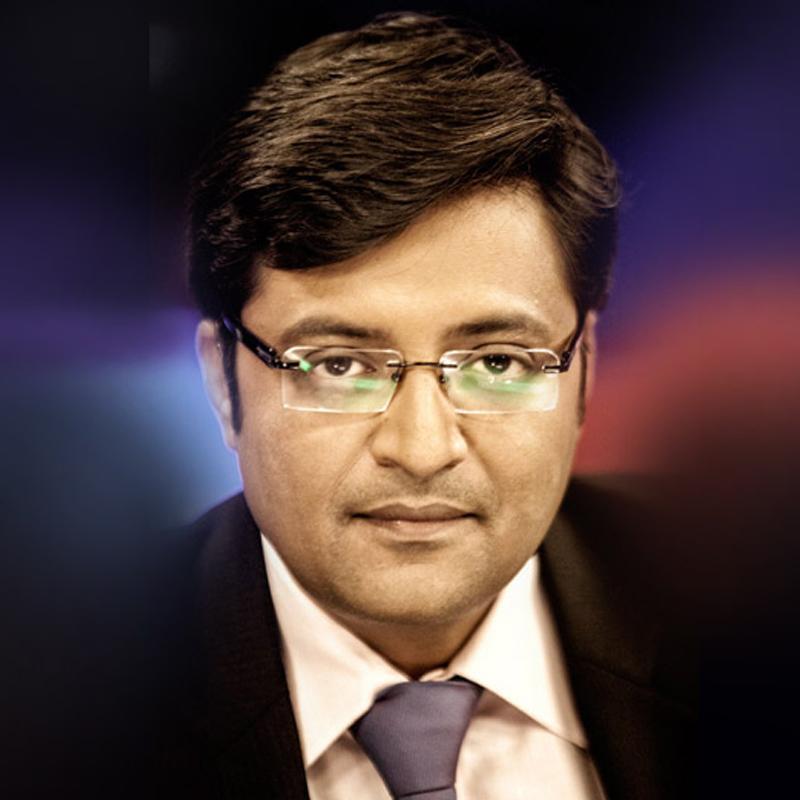
MUMBAI: Seldom in the media industry, there are days when the newscaster becomes the breaking news. November 1 was one such day. November 1 was Arnab Goswami’s last day in office. Tuesday’s episode of The Newshour was Goswami’s last.
The dynamic broadcast journalist who is often credited with pioneering debate-style news programming in India has called it a day as the editor-in-chief of the news channel — Times Now.
Since the news surfaced, the media world has gone loony trying to guess ‘what is next for Arnab?’ Some speculate that Goswami plans to start his own independent media venture with digital media leanings, based on the strong hints that he had earlier dropped at a conference.

Amid the hue and cry of ‘The nation wants to know’ what Goswami is up to post-Times Now, a question that hasn’t been entertained is — what does Arnab Goswami’s exit from Times Now mean for the channel and its network?
While the channel hasn’t come out with an official statement (until the filing of this article) to address Goswami’s resignation, or its plans to find a replacement of Goswami, both as the face of the channel as well as the host of The Newshour, it goes without saying that the channel’s flagship prime time debate show ‘The Newshour’ that brings the channel its highest ad rates will not retain its brand identity without Goswami’s emphatic voice and pointed questions.
Credited to most often boasting a full ad inventory, the show’s contribution to the network’s revenues is uncontested, and rumoured to be north of Rs 100 crore.
A media expert requesting anonymity outright rejected the Rs 100-crore plus effect on Times revenue that is being bandied about in the news industry circles. According to this expert, the total revenue of Times Network was in the range of Rs 160-170 crore; how could the effect of the departure of an anchor be three-fourths of that figure?
Although he admitted that it would definitely dent Times Network’s revenues, he was not willing to put a figure to it. He however acknowledged that The Newshour revenue commanded 8-10x the overall ‘Times Now’ channel’s ER. He sought to extrapolate a figure at the rate of Rs 20,000 per 10-second ad slot of the program.
While other media experts shied away from commenting on the immediate monetary effect that Goswami’s decision would cost the network, most unanimously agreed that this event will definitely have significant repercussions.
“Arnab has created a distinct identity within the English News consumers mind space. Newshour commands a premium over the channel’s operating rates to the tune of 10X, and that will have its impact on perception and pricing of the show. Having said that, organisations are larger than individuals, and Times is an entity that is a seasoned media / news group,” said Reliance Broadcast Network Limited’s chief business officer Vikas Khanchandani.
Echoing similar sentiments was Dentsu Aegis Network south Asia chairman Ashish Bhasin. “Whenever someone as prominent and established as Arnab Goswami, who was akin to the face of Times Now the channel, leaves, it does shake up the network. I foresee a period of settling down on the part of the channel, post-Goswami’s resignation. Having said that, I believe organisations are larger than individuals and they will find an appropriate content replacement and a presenter on air.”
Commenting on the ad rates of the show post-Goswami, Bhasin shared, “Tying it (Goswami’s resignation) to a loss in the network’s revenue and business will be making a hasty judgement. Ad rates aren’t as spontaneous as the stock exchange. The first effect, if any, will be on the viewership numbers. Only if the viewership numbers continue to drop for a prolonged period of time will there be an effect on the ad rates.”
Whether Goswami’s goodbye will blow a hole in Times Now’s pockets or whether The Newshour will retain its glory amid loyal advertisers, or whether the network will replace the debate show with an equally engaging content are things that we can’t put a finger on for certain. What we do know for sure is that Goswami quitting Times Now is unprecedented in the industry.
Said senior journalist in CNN-News18 is Bhupendra Chaubey: I have not worked with him for almost 10 years now but, what I remember of him as a colleague in NDTV, he is a bright companion. I wish him all the luck with whatever he plans to do.
Similarly senior media executive and BTVi COO Monica Tata too expressed her shock upon hearing the news. “Waiting to hear more news about his future plans,” she added.






News Broadcasting
Senior media executive Madhu Soman exits Zee Media
Former Reuters and Bloomberg leader says he leaves with “no regrets” after brief stint at WION and Zee Business

NOIDA: Madhu Soman, a veteran of global newsrooms and media sales floors, has stepped away from Zee Media Corporation after a short stint steering business strategy for WION and Zee Business.
In a reflective LinkedIn note marking his departure, Soman said his time within the network’s corridors was always likely to be brief. “Some chapters close faster than expected,” he wrote, signalling the end of a nearly two-year spell in which he oversaw both editorial partnerships and commercial strategy.
Soman joined Zee Media in 2022 after more than a decade abroad with Reuters and Bloomberg, returning to India to take on the role of chief business officer for WION and Zee Business. His mandate was ambitious: bridge the newsroom and the revenue desk while expanding digital and broadcast reach.
During the stint, Zee Business reached break-even for the first time since its launch in 2005, while WION refreshed programming and strengthened its digital footprint across platforms such as YouTube and Facebook.
But Soman suggested the cultural fit proved uneasy. Describing himself as a “cultural misfit”, he hinted at deeper tensions between editorial instincts shaped in global newsrooms and the realities of India’s television news ecosystem.
Before joining Zee, Soman spent more than seven years at Bloomberg in Hong Kong as head of broadcast sales for Asia-Pacific, expanding the company’s news syndication business across several markets. Earlier, he held senior editorial roles at Reuters, overseeing online strategy in India and managing Reuters Video Services from London.
His career began in television and wire reporting, including a stint with ANI during the 1999 Kargil conflict, before moving into digital publishing as India’s internet media landscape took shape.
Now, after nearly three decades in broadcast and digital media, Soman is leaving Delhi NCR and returning to his hometown, Trivandrum.
Exhausted, he admits. But unbowed. And with one quiet line that sums up the journey: he didn’t sell his soul — because some things, after all, are not for sale.