News Broadcasting
Ten-DD war of words continue


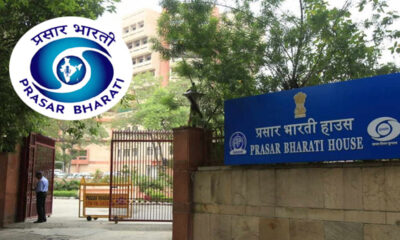
NEW DELHI: The Supreme Court would have thought that it’s interim order would have settled matters for now. But the war of words continue.Even while lashing out at Ten Sports for spreading disinformation and not getting all its facts right, Prasar Bharati today indicated that it may settle for an out of court settlement if the Dubai-based sports broadcaster responds, a fact that was reported by indiantelevision.com yesterday.
“Yes, I’d go for that,” Prasar Bharati CEO KS Sarma told journalists when asked if Doordarshan would prefer an out of court settlement. However, he added that this was his personal opinion and he’d go by whatever the Solicitor and Attorney Generals opine in this regard.According to him, it would also be wrong to say that DD refused an offer from Ten Sports as things had not progressed beyond a certain point.
Sarma, at his charmingly sarcastic best at a press briefing today evening – an hour after Ten Sports had organised a similar exercise – also indicated that a law mandating must-give-signals to terrestrial broadcaster is in the offing and the government may bring it “sooner than later.”
And to support his claim, he also produced documents that listed 16 events in the past where the telecast rights holders had willingly shared partial to full signals of events with DD on a commercial basis, including the last cricket World Cup.
These events include the Coca-Cola Bangladesh Independence Cup held in 1998, the Sharjah Cup in India played amongst India, England and Pakistan in the desert city, Sri Lanka Independence Cup in 1998 played in Sri Lanka, Titan Cricket Cup in 1996 and the Wills World Cup in 1996, played in India, Pakistan and Sri Lanka.
In the light of this, he added, what Ten Sports was resorting to can be termed “electronic hoarding.”
Starting off on an aggressive note that various misconceptions regarding Prasar Bharati’s role have been spread, Sarma said that historically DD never bid for sporting events outside India as such an activity would amount to taking risks on a long term basis on taxpayers’ money.
Sarma also clarified that DD National had been taken off PAS-10 satellite – contrary to the allegations made in the court by Ten – almost two years back.
But Dubai-based Taj TV has also made sure that its claims are heard loud and clear. It said that the court would direct the guilty party to reimburse the losses that would accrue to it by sharing its feed with DD, though would try re-negotiating with advertisers – at a higher rate – again, now that the reach of the matches would increase tremendously through DD.
Pointing out that the Supreme Court observations have solved one part of the problem, Taj Television Limited CEO Chris McDonald said, “The second issue, however, relates to the revenues generated by our distributors in India through cable systems into the consumers homes. The court has assured that actual damages shall be obtained not only in respect of loss of cable revenues but also on account of breaches of contracts that would occur in case the DD signal overlaps into other countries and territories, such as the Middle East and the rest of Asia.”
According to Ten sources, subscription revenue losses alone would amount to over Rs 2,000 million, while DD sources point out that the carriage fee for transmitting Ten signals would amount to about Rs 600 million. “This would get added to the losses,” a DD source said, adding, plus there would be losses through opportunity cost – the airtime that would be taken up by cricket would have generated some revenue for DD. At prime time 30 minutes of airtime on DD National easily fetches Rs 50,000 as telecast fee.
But Taj TV reiterated its tale of woes. “We know how important cricket and especially this series is for the people of India. However, at the same time, it is very important for all concerned to understand the sanctity of exclusive rights and of the international regime governed by norms under which contractual rights and intellectual property is protected,” McDonald said.
Though he also went on to say that SC has assured that such damages “shall be payable by DD”, Sarma retorted, “We’ll see who pays the damages to whom.”
End of round one. Now, the wait is till mid-April for another round of war of words. But by that time the Indo-Pak series would have got over and the dust would have also settled. Unless Ten and/or DD would like to bring about newer twists in the tale in the interim.