iWorld
Tanla Platforms faces growth hurdles amid mixed Q2 FY25 performance


Mumbai: Tanla Platforms’ second-quarter results for the fiscal year 2025, disclosed on 17 October 2024, reveal a business grappling with mounting expenses and stagnant revenue. Despite a series of strategic efforts, including the recent ValueFirst acquisition, the cloud communications company encountered a modest revenue decline compared to the previous year, alongside increased operational costs that pressured profitability.
The company’s revenue from operations dipped to Rs 1,00,072.28 lakh, a slight reduction from Rs 1,00,859.22 lakh in the corresponding quarter last year. Total consolidated income remained nearly flat at Rs 1,01,098.10 lakh, showing only a minimal increase from Rs 1,01,493.34 lakh in Q2 FY24. Meanwhile, expenses surged to Rs 85,025.81 lakh, driven primarily by higher service costs and employee benefits, eroding the gains made from cost-control initiatives earlier in the year.
“Our continued focus on enhancing operational efficiency has yielded some positive outcomes, but the evolving market dynamics present formidable challenges,” stated Tanla Platforms, chairman and CEO, D. Uday Kumar Reddy. The company’s service costs grew by 0.9 per cent, indicating the struggle to optimise expenses while sustaining the quality of operations.

Tanla reported a profit before tax of Rs 16,072.29 lakh for the quarter, down from Rs 17,872.33 lakh a year earlier. Net profit attributable to shareholders also declined to Rs 13,021.15 lakh from Rs 14,254.99 lakh in Q2 FY24. The company’s earnings per share fell to Rs 9.70 from Rs 10.60, highlighting the strain on shareholder returns amid rising operational pressures.
A deeper look at the expenses reveals an escalation in employee benefits, which rose 23 per cent to Rs 5,437.11 lakh, reflecting the cost of retaining talent in a competitive market. Additionally, depreciation and amortisation expenses increased by 3.8 per cent to Rs 2,344.08 lakh, indicating substantial investments in technology and infrastructure.
The results also underscore Tanla’s ongoing strategic efforts, such as the acquisition of ValueFirst, which are yet to fully realise the anticipated synergies. The financials for the half-year ended 30 September 2024, showed a revenue increase to Rs 2,00,292.77 lakh from Rs 1,91,970.43 lakh in the same period last year, largely attributable to consolidating ValueFirst’s operations. However, profit before tax for the half-year saw a modest decline, signalling potential headwinds ahead.
Tanla’s current assets increased to Rs 2,24,991.07 lakh, up from Rs 2,03,782.46 lakh as of March 2024, driven by higher trade receivables and cash reserves. This bolstered liquidity provides some buffer, but also raises questions about cash flow management, as trade receivables growth may indicate delayed collections.
With the CPaaS market becoming increasingly competitive, Tanla faces the challenge of reinvigorating its growth trajectory while managing costs. The company’s reliance on expanding its client base and introducing new product offerings will be pivotal in driving future performance. Investments in digital infrastructure and potential acquisitions may further strain margins in the short term, but could pay off with stronger growth in the long term.




iWorld
Akhil Gupta retires as Bharti Enterprises vice chairman after three decades
The man who outsourced Airtel’s network and built Indus Towers leaves behind a telecom industry transformed
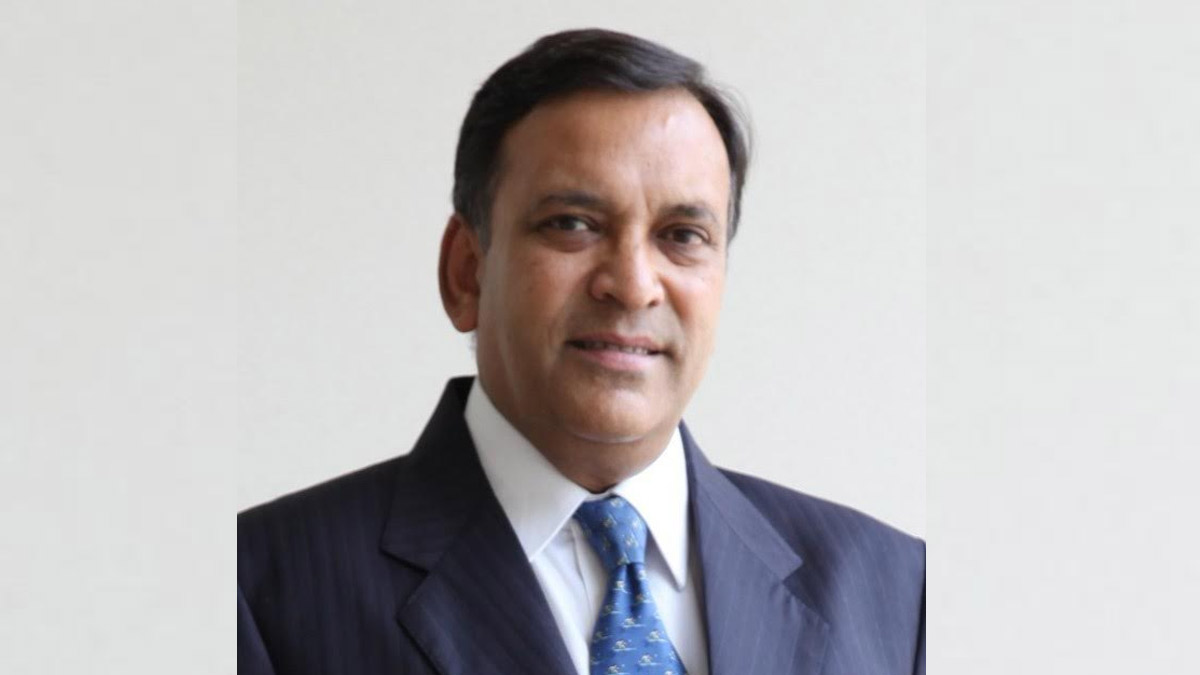
NEW DELHI: He was not the most visible face of Bharti. He was, by most accounts, the most consequential one. Akhil Gupta, known within the group simply as AKG, has retired as vice chairman of Bharti Enterprises with effect from March 31st, 2026, closing a chapter that stretched across more than three decades and reshaped Indian telecoms in ways still felt today.
Gupta was there at the beginning, part of the core leadership team that steered Bharti Airtel from a scrappy domestic operator into one of the world’s largest telecom and digital services companies. But it is two decisions in particular that cement his legacy. The first was persuading the industry that a telecom company need not own its own network. His outsourcing partnerships with IBM and Ericsson, considered eccentric at the time, stripped out capital costs and sharpened Airtel’s competitive edge. The model was subsequently copied across the global industry. The second was the creation of Indus Towers, now one of the largest tower companies in the world.
Both initiatives were studied as case material at Harvard Business School, where Gupta himself had studied. A chartered accountant by training and a dealmaker by instinct, he accumulated industry accolades across his career without ever particularly courting the limelight.
Bharti Enterprises, announcing the retirement on LinkedIn, credited Gupta with building the foundation of the group’s success and driving innovation, partnerships and long-term value creation.
The tributes are deserved. Gupta did not just help build Airtel. In many respects, he helped invent the playbook that modern telecoms runs on.






