Brands
DMart’s Q3 shows 17.7 per cent uptick in revenue growth; Profits struggle
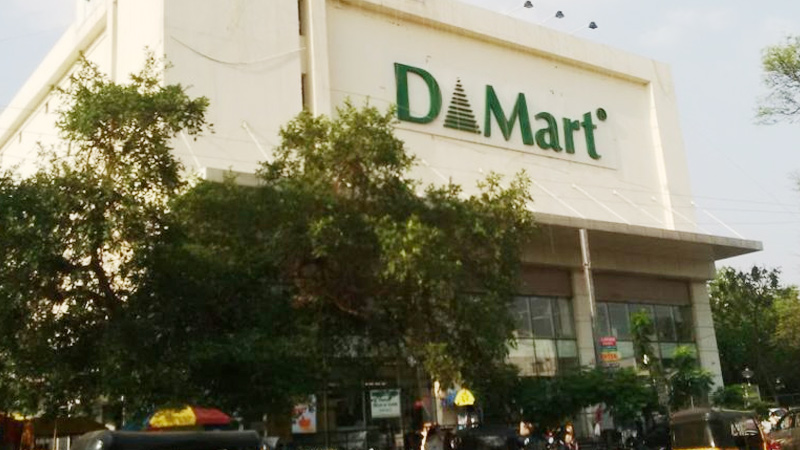
MUMBAI: In a bustling FMCG retail landscape, where affordability meets aspiration, DMart emerges as the champion for value-conscious shoppers. Much like a modern-day Spiderman swinging through a web of rising costs and fierce competition, DMart’s Q3 FY25 results reveal its unwavering commitment to delivering affordability.
The results, unveiled on 11 January 2025, showcase a robust revenue growth trajectory, driven by the brand’s steadfast focus on cost-effective retailing and operational efficiency.
Yet, beneath the surface of this success lies a battle with tightening profit margins—a challenge that highlights the resilience and strategic adaptability of this retail giant in an increasingly competitive arena.
As DMart continues to redefine FMCG retail with its unbeatable value-for-money offerings, the Q3 results provide a lens into how it balances growth aspirations with the pressures of a rapidly evolving market.
This is the story of a retailer that, much like a superhero, delivers hope to neighbourhoods while navigating the complexities of its mission.
DMart’s consolidated revenue from operations climbed to Rs 15,972.55 crore in Q3 FY25, marking a 17.7 per cent increase compared to Rs 13,572.47 crore in Q3 FY24. For the nine months ending 31 December 2024, revenue surged by 16.9 per cent, reaching Rs 44,486.19 crore compared to Rs 38,062.28 crore during the same period last year. This growth was driven by a combination of new store openings and robust demand in core categories.
However, other income declined to Rs 24.14 crore in Q3 FY25 from Rs 32.92 crore in Q3 FY24, suggesting subdued performance in ancillary revenue streams.
Despite the revenue upswing, DMart’s consolidated net profit for Q3 FY25 fell to Rs 723.54 crore, a 4.9 per cent decrease from Rs 759.44 crore in Q3 FY24.
The nine-month net profit stood at Rs 2,156.66 crore, reflecting a marginal growth of 0.4 per cent from Rs 2,147.12 crore during the same period last year.
Margins remained under strain, with the EBITDA margin compressing due to higher costs in employee benefits (up by 30.1 per cent YoY to Rs 304.83 crore) and depreciation (up 20.4 per cent YoY to Rs 228.12 crore).
DMart’s purchase of stock-in-trade for Q3 FY25 escalated to Rs 13,376.72 crore, an 18 per cent rise from Rs 11,330.93 crore in Q3 FY24, aligning with its expansion strategy. However, changes in inventory of stock-in-trade presented a marginal increase, indicating effective inventory control amidst fluctuating demand.
The company also reported a contingent liability of Rs 235.98 crore under the Goods and Service Tax Act, reflecting ongoing regulatory challenges.
DMart’s robust revenue trajectory signals strength in its core retail operations. However, declining profit margins highlight the need for cost optimisation and operational efficiency. The company’s cautious approach to expansion and investment in digital initiatives will be crucial in navigating market challenges and enhancing shareholder value.

Brands
Uber launches hotel bookings feature in partnership with Expedia
From hotel bookings to room service at your door, the ride-hailing giant is making its boldest push yet into everyday life
CALIFORNIA: Uber is done being just a taxi app. At its annual GO-GET product event, the world’s leading mobility and delivery platform unveiled a sweeping set of new features designed to plant itself at the centre of how people travel, eat and shop, hotel bookings included.
The headline move is a partnership with Expedia Group that lets Uber users in the United States book hotels directly within the Uber app, with access to a catalogue that will eventually grow to more than 700,000 properties worldwide. Uber One members get 10 per cent back in Uber One credits on all hotel bookings and savings of at least 20 per cent on a rolling list of more than 10,000 hotels globally. Vacation rentals from Vrbo, Expedia Group’s home-rental brand, will be added later this year. The partnership is expected to expand beyond the United States. From June, Uber rides will also be integrated directly into the Expedia app, with push notifications sent to travellers ahead of hotel check-in to book discounted Uber rides for the duration of their stay.
Dara Khosrowshahi, chief executive of Uber, framed the expansion in terms of the modern condition. “Uber is becoming an app for everything, helping people go, get, and now travel all in one place,” he said. “We’re all living through a moment of real cognitive overload: too many apps, too many decisions, too much noise. At the end of the day, our job is to help people reclaim their time, spending less of it managing the logistics of life and more of it actually living.”
Ariane Gorin, chief executive of Expedia Group, struck a similarly ambitious note. “Travel should feel effortless, and this partnership gets us one step closer to offering a seamless traveller experience,” she said. “By connecting our two-sided marketplace with Uber, we’re bringing Uber rides directly into the Expedia app and Expedia Group’s lodging inventory into the Uber app through our Rapid API technology. Together, we’re helping travellers spend less time planning and more time enjoying the journey.”
Beyond hotels, the product announcements come thick and fast. Travel Mode, available within both the Uber and Uber Eats apps, offers curated recommendations on local favourites, tourist destinations, OpenTable restaurant reservations and on-demand delivery to hotel rooms. Uber One International means the membership programme now works globally, allowing members to earn credits on rides abroad that can be redeemed once back home. A new Shop for Me feature lets users request items from any store, even those not listed on the app. Eats for the Way allows riders in select cities booking an Uber Black or Uber Black SUV to have a drink or snack waiting for them in the car. Voice Bookings, powered by artificial intelligence, lets users book a ride conversationally, without touching their phone. And a redesigned One Search bar consolidates results for places, food and items across the entire Uber platform in a single query.
Uber has now logged more than 72 billion trips since it launched in 2010. The question it is now answering is what comes after the ride. The answer, apparently, is everything else. Whether users want a hotel in Paris, a coffee in the back of a car or a snake plant from the local garden centre, Uber would very much like to be the one to provide it. The app economy’s land grab has a new front-runner.
NOTE: The image used is AI generated and only for representational purposes.