News Broadcasting
Survival mantra for news channels – innovate or perish


MUMBAI: Innovation is what news channels have to look for to survive in a cluttered space..
Speaking today at the second of a series of interactions between the television industry and media, TAM Media Research VP Atul Phadnis stated, “There were as many as 11 news channels in 2002 and at present we have 24 news channels.”
He added that the viewership has grown in the news channel genre, which has seen 74 per cent growth in 2004 from a minuscule percentage in 2002.

Dwelling on television advertisements Phadnis said, “The Aaj Tak strategy of roping in low cost advertisers in volume saw the appearance of small time advertisers on the small screen.”
Radio Today chief operating officer Abraham Thomas stressed on the importance of the ad sales, marketing and deliver teams jointly working on how to deliver focussed content, which could facilitate the generation of advertising.
Abraham was quick to point out that it was essential also to know and delineate the boundaries of such activity as editorial credibility was one commodity that should not be compromised on.
Radio Today manages FM Radio stations in various cities under the Red FM Brand.
Citing an example of how news channels have been experimenting with innovations to offer news in an entertaining way without compromising on news value, Abraham pointed to NDTV India’s using Bollywood stars Abhishek Bachchan and Rani Mukherjee in characters as Bunty and Bubbly from their latest movie Bunty Aur Bubbly presenting serious news. This, he said was innovative and entertaining. What would not have been acceptable, according to him, was if what the two read out was not actual news.
Here, the entertainment has been delivered, but the level of serious news has been maintained, Abraham explained.
Moving beyond simple commercials or promos, cross-promotional activities endorsed by the movie Bunty Aur Bubbly should be promoted without denting the news value, the panelists said.
News channels would witness increasingly stiff competition, but the higher standard of journalism should be maintained. The channels should move beyond superficial reportage and more of in-depth analysis should happen, Abraham averred.
Responding to the criticism that in the race to break the news first, channels were often guilty of getting their facts wrong, Media Content and Communications Services India Pvt. Ltd. (managers of Star News and Star Ananda) CEO Uday Shankar, accepted that was an issue that all were grappling with.
The way forward, according to Shankar: “To survive amongst the 24 odd news channels, it is essential for a channel to seek out its own identity and carve out its niche within the given space.” That should character of the channel should be reflected not just in what editorial direction a channel takes but also in the way it presents its news, he added.
He stressed on “innovation as being crucial” to compete in the whole genre.
Some of the other points made during the discussuion were following :
+ Counting day of the Lok Sabha election ate into 30 per cent of the general entertainment channels
+ Shock value is what viewers look for
+ Anchors are faces of a channel but driven by the brand
+ When known anchors leaves the organisation the face suffers more than the brand
+ Crime shows beamed at prime time across news channels garner more viewers
+ Brands however uncomfortable advertising on crime shows
+ News magazines have seen a dip in readership: 86 million in 2002 to 69 million in 05
+ Lack of innovation within the news magazines
+ Niche magazines like auto magazines are flourishing
This was the second of the Blink knowledge series titled “Impact of News channels on the print media” organised by Tam Media Research and Press Club, Mumbai. The third session will be on Regulation of TV content and will be held next Friday, 17 May.
The first of the Blink knowledge series was held last Friday and covered pros and cons of direct-to-home (DTH) services in a country like India.







News Broadcasting
News18 India launches Command Centre war explainer with Arya
New show shifts from debates to decoding global conflicts and impacts
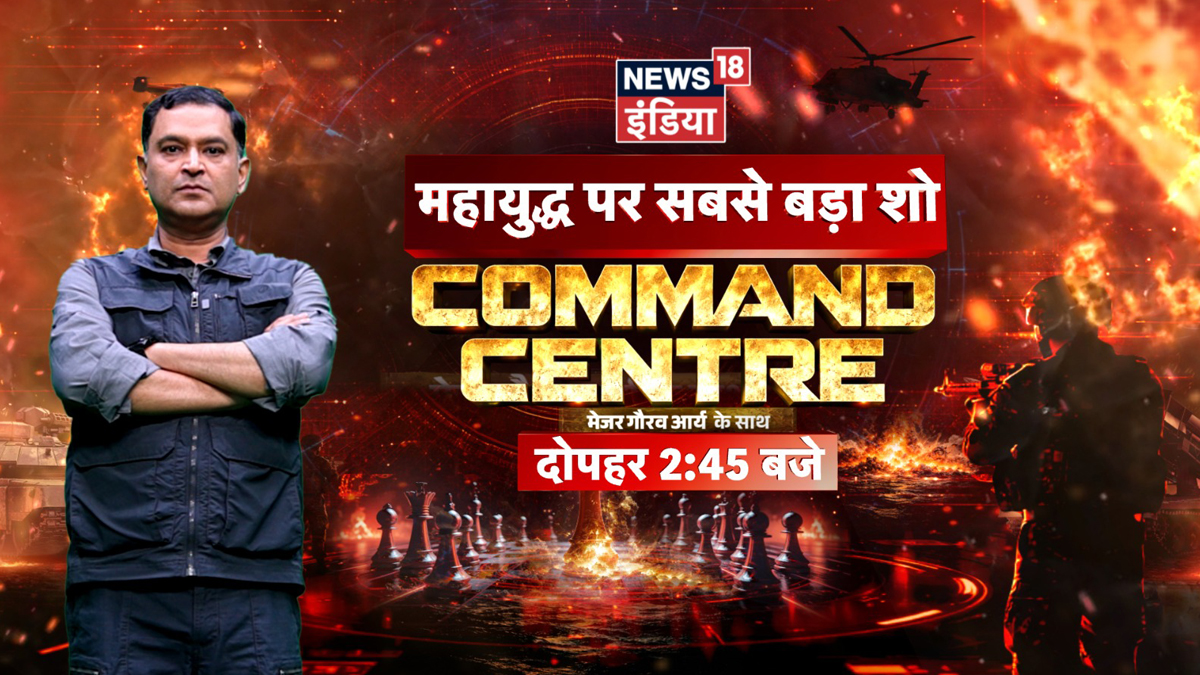
MUMBAI: News18 India has rolled out a new war-focused programme, Command Centre, featuring Gaurav Arya, as it looks to offer viewers a sharper, more grounded take on global conflicts amid rising tensions in West Asia.
Positioned as an “insider war room”, the show moves away from conventional panel debates and instead focuses on explaining military developments, decoding strategy and connecting global events to their everyday impact, from fuel prices to economic shifts.
The format leans heavily on visuals and data. The studio has been designed like a command hub, complete with large LED war maps, real-time graphics and an alert system to track developments as they unfold.
At the centre of it all is Arya, who brings his military background to simplify complex war strategies for viewers. His signature line, “Seedhi baat samjhiye”, anchors the show’s promise of clarity over noise.
News18 India managing editor Jyoti Kamal said, “Command Centre, featuring Major Gaurav Arya is designed to deliver accurate insights and a clear perspective on how evolving conflicts impact everyday life, from household budgets to national security. With expert voices analysing every development in real time, the show goes beyond headlines to decode what’s happening now, what it means, and what could come next.”
Echoing the intent, Gaurav Arya added, “In times of war, confusion is the biggest threat. With News18 India’s Command Centre, we are bringing viewers inside the war room, decoding strategies, tracking every escalation, and explaining, in the simplest terms, what it means for India and for every household. Seedhi baat samjhiye, this is where you understand not just what is happening, but what happens next.”
The weekday show will air in the afternoon slot and will also feature Gaurav Shukla, adding to its editorial depth.
With its mix of analysis, visuals and a clear focus on impact, the show reflects a broader shift in news consumption. Viewers are no longer just watching events unfold, they are looking to understand what those events mean for them.







