Connect with us

iWorld

Subtle yet creative, Google unveils new logo

Published

on

MUMBAI: The times they are a-changin’! Google acknowledges these evergreen lines from Bob Dylan’s song as it changes its logo and branding yet again. The last change had come about in September 2013.

As the world bid adieu to the good old days when Google was only accessed from desktops, the company is re-inventing itself yet again. Since Google’s launch 17 years back, a lot has changed. Thanks to the aggressive penetrations of internet and smartphones, Google now is as mobile as human beings are. On 1 September 2015, the world’s largest used search engine changed its logo and identity once again, which reflects this reality and shows people when the Google magic is working for them, even on the tiniest screens.

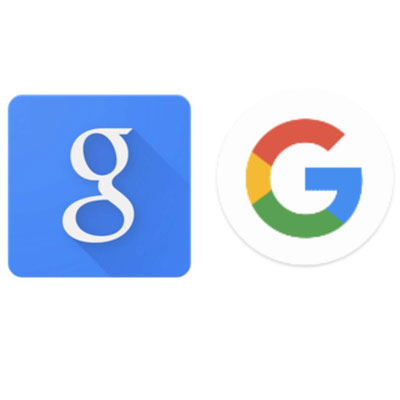
Google has said goodbye to the small blue ‘g’ and replaced it with a capital ‘G,’ which has all four colors – blue, red, green and yellow – in it.

Advertisement

So why did they do so? In an announcement, the company said, “As you’ll see, we’ve taken the Google logo and branding, which were originally built for a single desktop browser page, and updated them for a world of seamless computing across an endless number of devices and different kinds of inputs (such as tap, type and talk).”

Google is known for its subtle changes and the voyage started from 1998 when Larry Page and Sergy Brin used the logo for their Stanford University graduate project.

August 1998: The team heads to Burning Man and creates the first Doodle as an out of office message.

Advertisement

September 1998: Google moves to Google.com and shares its beta release with the world.

May 1999: Still playful, the logo gets a more sophisticated look based on the Catull typeface.

May 2010: The logo brightens up and sports a reduced drop shadow.

Advertisement

September 2013: The logo goes flat with some typographical tweaks.

September 2015: The logo becomes part of a new family that includes the Google dots and ‘G’ icon.

The new logo doesn’t simply tell consumers that they’re using Google, but also shows them how Google is working for them. For example, new elements like a colourful Google mic helps identify and interact with Google whether a person is talking, tapping or typing.

Advertisement

Complimenting the subtle yet creative development, RK Swamy Hansa Group chairman S K Swamy said, “Google has been refreshing its logo quite often but the current change is a larger and continuing step. I quite like the modern looking upper case – lower case version.”

“Google has succeeded in striking a fine balance of form with function in its new logo. It’s a homegrown typerface and vector based, which makes it scalable across devices in so far as legibility is concerned and sports a contemporary look at the same time. Although it will take some time to get used to the new look, it’s nice that Google has retained slight tilt of ‘e’, ” said Leo Burnett’s digital creative agency’s Indigo Consulting national creative director Navin Kansal.


Advertisement
Click to comment

Leave a Reply

Your email address will not be published. Required fields are marked *

iWorld

Meta plans 8,000 layoffs in new AI-led restructuring wave

First phase from May 20 may cut 10 per cent workforce amid AI pivot.

Published

on

MUMBAI: At Meta, the future may be artificial but the cuts are very real. The social media giant is reportedly preparing a fresh round of layoffs, with an initial wave expected to impact around 8,000 employees as it doubles down on its artificial intelligence ambitions. According to a Reuters report, the first phase of job cuts is slated to begin on May 20, targeting roughly 10 per cent of Meta’s global workforce. With nearly 79,000 employees on its rolls as of December 31, the move marks one of the company’s most significant workforce reductions in recent years.

And this may only be the beginning. Sources indicate that additional layoffs are being planned for the second half of the year, although the scale and timing remain fluid, likely to be shaped by how Meta’s AI capabilities evolve in the coming months. Earlier reports had suggested that total cuts in 2026 could reach 20 per cent or more of its workforce.

The restructuring comes as chief executive Mark Zuckerberg continues to steer the company towards an AI-first operating model, committing hundreds of billions of dollars to the transition. Internally, this shift is already visible: teams within Reality Labs have been reorganised, engineers have been moved into a newly formed Applied AI unit, and a Meta Small Business division has been created to align with broader structural changes.

Advertisement

The trend is hardly isolated. Across the tech sector, companies are trimming headcount while investing aggressively in automation. Amazon, for instance, has reportedly cut around 30,000 corporate roles nearly 10 per cent of its white-collar workforce citing efficiency gains driven by AI. Data from Layoffs.fyi shows over 73,000 tech employees have already lost jobs this year, compared with 153,000 in all of 2024.

For Meta, the move echoes its earlier “year of efficiency” in 2022–23, when about 21,000 roles were eliminated amid slowing growth and market pressures. This time, however, the backdrop is different. The company is financially stronger, generating over $200 billion in revenue and $60 billion in profit last year, with shares up 3.68 per cent year-to-date though still below last summer’s peak.

That contrast underlines the shift underway. These layoffs are less about survival and more about reinvention. As Meta restructures itself around AI from autonomous coding agents to advanced machine learning systems, the question is no longer whether the company will change, but how many roles will be left unchanged when it does.

Advertisement
Continue Reading

Advertisement News18
Advertisement
Advertisement
Advertisement
Advertisement Whtasapp
Advertisement Year Enders

Indian Television Dot Com Pvt Ltd

Signup for news and special offers!

Copyright © 2026 Indian Television Dot Com PVT LTD

This will close in 10 seconds