Hardware
STB market set to grow globally with HD channels & falling prices of smart TVs


NEW DELHI: Even as India has embarked on a Make in India programme, an international research says that availability of High Definition (HD) channels and falling prices of smart TVs are expected to surge set top box (STB) market growth between 2015 and 2022.
Cooperation between STB operators and the manufacturers along with efficient customer support is expected to positively contribute towards market growth, according to Grand View Research.

The Asia Pacific STB market is expected to witness rapid growth due to growing consumer adoption and favorable government mandate in the region.
Regulations mandating the digitization of traditional cable television and the subsequent migration from analog to digital TV have led to an increased demand for STBs over the past few years. Technological advancements and better quality of signal transmission may further supplement STB market growth over the next seven to eight years.
The improvements in technology and better quality of signal transmission in digital television are expected to spur market growth over the forecast period. Moreover, features such as recording, live streaming through internet, and remote viewing through smartphones and tablets are further expected to drive STB market growth.
However, high costs of such STBs and associated costs of pay channels could challenge market growth. Cable service providers who are unwilling to participate in rolling out of STB due to major capital expenditure amidst business uncertainties may also challenge market growth. Factors such as operator upgrades to high definition technologies, attractive development policies, plans, growth interest in over-the-top hybrid set top box designs, and rising global penetration of pay-TV are expected to provide growth opportunities for the set top box market over the forecast period.
Types of set top box include Internet Protocol Television (IPTV), satellite Direct-To-Home (DTH), cable, and Digital Terrestrial Transmission (DTT). The IPTV segment is expected to account for a major share in the market.
Strategic acquisitions and mergers are expected to play a key role in expanding market share. For instance, in April 2015, ArrisGroup Inc., a broadband media technology, and Pace PLC, a UK-based technology provider for the Pay-TV and Broadband industries, announced that Arris would acquire Pace for a cash consideration of $2.1 billion. The acquisition is expected to enhance the company’s product portfolio and its presence in the satellite segment, the California-based research group said.







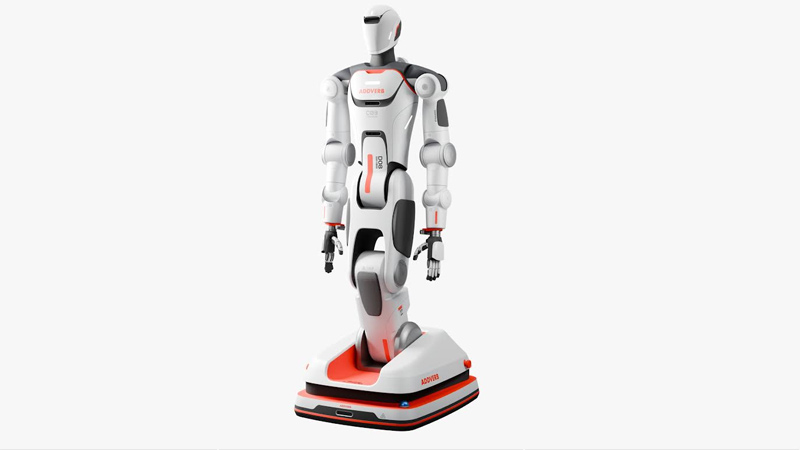
MUMBAI: Addverb has taken a decisive turn on the road to humanoid automation, unveiling its first wheeled humanoid robot, Elixis-W, at LogiMAT India 2026 in Mumbai. Built and manufactured in India, the robot signals the company’s push to make so-called physical AI a practical presence on the factory floor rather than a futuristic concept.
Unlike traditional fixed automation, Elixis-W is designed to move, think and work alongside people in dynamic industrial settings. The robot combines adaptive wheeled mobility with dual arms, each fitted with five-fingered dexterous hands, allowing it to handle tasks that demand precision as well as flexibility.
At its core sits a Physical AI-ready architecture, supported by dual Nvidia Jetson Orin and Thor computing units. This setup is intended to give the robot the ability to perceive, plan and adapt to changing environments, rather than simply follow pre-programmed routines.
According to Addverb CEO and co-founder Sangeet Kumar, the humanoid reflects the company’s long-standing belief in human-robot collaboration. He said the robot is designed to take on repetitive, risky or physically demanding tasks, freeing human workers to focus on higher-value decision-making roles.
Alongside the humanoid, Addverb also showcased two new intralogistics solutions. The Cruiser 360, a four-way pallet shuttle, is aimed at high-density storage environments where space and speed matter. The FlowT, an autonomous forklift, is designed to move materials safely in busy warehouses and factory spaces.
Visitors also saw Trakr, the company’s quadruped robot, navigating the exhibition floor, offering a glimpse of how legged machines could assist in future warehouse and industrial operations.
Addverb, which began as a warehouse automation specialist, has steadily expanded its global footprint across the United States, Europe, Australia and Asia. Its client list includes Reliance, HUL, PepsiCo, Maersk, Mondial Relay and DHL.
With the launch of Elixis-W, the company is steering towards a future where robots are not just bolted to the floor, but rolling, reasoning and working shoulder to shoulder with people on the shopfloor.