GECs
StarOne ‘SET’ to enter new programming vistas


MUMBAI: The generational leap forward — a programming ploy oft used by Hindi entertainment television’s lead channel Star Plus to take the plots of its “saas-bahu” soaps ahead. Come 1 November and India’s lead network will be attempting a far more significant leap forward with the launch of its new metro-centric channel StarOne.
According to Star India COO Sameer Nair, after four years of the staple that Star Plus offered, StarOne represents the “next generation of Hindi entertainment television”. Nair and his team have identified StarOne’s core audience as aspirational young urban professionals (SEC A-B, 25 to 34-year-olds). It is no coincidence that the TG StarOne is targeting is exactly the same as that which the number two channel Sony Entertainment Television has identified as its key audience in the past one year. SET’s gameplan has been to focus on men and women, between the ages of 25 and 34 who belong to the upper middle and higher income groups. .
And if the TG that StarOne is looking to address looks much the same as that which the Times Group’s newly launched nonfiction lifestyle entertainment channel Zoom is targeting as well, that is because it is much the same demographic.

But that’s where the similarity between StarOne and Zoom ends. StarOne defines itself primarily as high-end fiction (five lifestyle shows back to back on Sundays being the principal exception).
In a conversation with Indiantelevision.com, Nair offered an insight into some of the key aspects of the programming that constitute StarOne, “The first time a full-fledged channel is being launched that is totally new.”
In brief, StarOne is launching 1 November with 21 new shows mainly slotted between 8 and 11:30 pm on weekdays.
Among the highlights on weekdays are two comedy bands – 9 to 9:30 pm and 11 to 11:30 pm. The 11 pm band has been titled the Great Indian Comedy Show and comprises a half hour of gags. Broadly inspired by Groucho Marx, points out Nair.
In the 9 pm band there are four shows slotted. Sarabhai Vs Sarabhai (Monday) is about a dysfunctional industrialist family. Viewers of Star Plus will be familiar with Tuesday’s offering which has been newly titled Instant Khichdi (earlier avatar was Khichdi). The story is basically Beverly Hillbillies in an Indian setting. As in the hick town characters that made up the original Khichdi cast have struck it rich (oil has been found on their land). Pyar Ki Kashti Mein (young romance) is on Wednesdays and Dil Kya Chatta Hai (revolves around four guys) is on Thursdays.
Another weekday highlight is a one-hour daily soap (8 to 9 pm Mondays to Thursdays) titled “Remix” and produced by Goldie Behl’s Rose Movies. It is an Indian adaptation of a Spanish telenovella that translates as “Rebel The Way”, informs Nair. This is probably the first time that a one-hour daily soap is being attempted on Hindi entertainment television though Star World regulars would be familiar with it in the long running series Santa Barbara (which went off air quite a while ago).
As for the weekends, Star is introducing the telefilm concept on Fridays. Each telefilm will be of 72 minutes duration with just one ad break, says Nair. This is another first as well. The telefilms strategy is important from another perspective as well. Nair stresses that STarOne will not be resorting to the “safe” bet of airing Bollywood films on the channel. This is a lazy way to fill up the channel’s FPC as well as chase ratings, Nair argues. It may be noted that the strategy of keeping off Bollywood is one that has been followed since its inception by FTA comedy channel SAB TV as well.
There is a lifestyle band on Sunday late mornings in which five shows have been slotted: “Har Ghar Kuch Kehta Hai (all about good homes), “Mind, Body and Soul”, “Exotica” (travel show), “Cook na Kaho” (tips for men who can’t cook) and “Men Mange More” (latest gadgets, trends).
Also included in the FPC is an animation band from 7 to 8 pm “that has some never before seen in India cartoons,” says Nair.
Two key differentiators from other channels is that all the stories have a finite time frame (26 or 39 episodes for the weeklies) with a story that goes forward (none of the dragging on that we see on the channels currently, promises Nair). If the shows do well they will come back after a “one season break” and if not they will end as per their scheduled time frame will be the aim, Nair says.
The strategy certainly seems to be clear. If the free-to-air “re-run” channel Utsav was launched with the intent to eat into Sahara One and SAB TV, StarOne looks to be aiming to disable SET.
But to give credit where it is due, there is no denying that StarOne attempts to address many of the complaints that have been hurled the way of Hindi entertainment’s lead network, especially with regard to the content that airs on its flagship Star Plus.






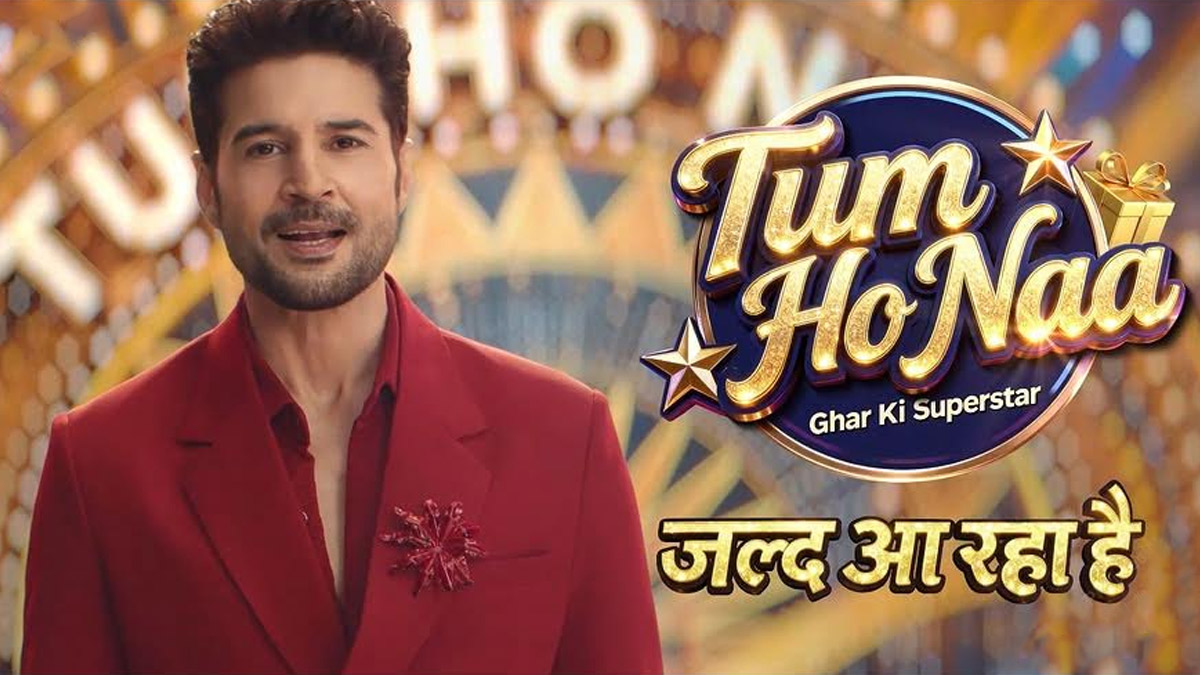
MUMBAI: Lights, camera… connection because this time, the game isn’t just about winning, it’s about who’s with you. Sony Pictures Networks India is gearing up to launch a new reality game show, Tum Ho Naa, expanding its unscripted slate with a format that promises both emotion and engagement.
The show will premiere soon on Sony Entertainment Television and stream on Sony LIV, with Rajeev Khandelwal stepping in as host. Known for his measured screen presence and selective choices, Khandelwal’s return to television adds a layer of familiarity and credibility to the upcoming format.
While specific details of the gameplay remain under wraps, the positioning suggests a reality format that leans as much on emotional resonance as it does on competition, an increasingly popular blend in Indian television, where audiences are gravitating towards content that offers both stakes and storytelling.
Khandelwal, reflecting on his return, noted that his choices have often been guided by instinct rather than convention, describing Tum Ho Naa as a project that feels “close to the heart”. His association also signals Sony’s continued focus on anchoring new formats with recognisable faces who bring both relatability and depth.
The launch comes at a time when broadcasters are doubling down on original non-fiction formats to drive appointment viewing, even as digital platforms expand parallel reach. By placing the show across both linear television and OTT, Sony appears to be aiming for a dual-audience strategy capturing traditional viewers while engaging digital-first consumers.
As the countdown to premiere begins, Tum Ho Naa positions itself not just as another game show, but as a reminder that sometimes, the biggest prize on screen isn’t the jackpot, it’s the journey shared along the way.






