News Broadcasting
Star Plus seeks its break; Zee improves: Hindi GEC Q3 Study


The Hindi General Entertainment Channel (GEC) space is back in the spotlight. Strategies, counter strategies, experiments and innovations enchant the market, though audiences remain cautious while deciding their staple programming diet.
The ongoing churn owes a lot to the manner in which Subhash Chandra’s Zee TV made its comeback to the reckoning. Because, this turnaround has forced the channel’s rivals (both leader Star Plus and trailing number three Sony Entertainment) to re-think their strategies and hence, we have a real humdinger of a ratings battle going on these days. This exciting range of happenings has inspired Indiantelevision.com to examine the GEC arena a bit more closely, as it completes its 2006 calendar year’s third quarter.
Relative channel share- All Day, CS4+ HSM

A first look at the data gives an obvious picture. Star Plus leads the tally, followed by Zee TV, Sony, Star One, Sahara One and Sab TV (Average market share data, All Day, CS4+ HSM, 1 July to 30 September, Tam).
Star Plus, which maintained an above 50 per cent average when we did an April 2006 (All Day Part) analysis, has recorded an average market share of 46.1 per cent for the three month period (Average market share data, All Day, CS4+ 1 July to 30 September, Tam).
Though the channel made its best efforts to improve its position through various new launches during this period, the market share score missed the 50 per cent mark in this period. In September, it even dropped below the 45 per cent mark for the first time since the KBC phenomenon rewrote Indian television history. From 45.9 per cent of July, the channel improved its position considerably to 47.8 per cent in the month of August. However, in September, the share recorded a slight drop at 44.9 per cent.
However, Star One has recorded an improvement during this period, as compared to its April 2006 share. The channel, which struggled during the first half of the year due to affairs such as cable blackout in certain parts of the country, has now recorded an average channel share of 6.4 per cent, while the April score stood at 5.38 per cent. The channel is now banking on properties such as Nach Baliye 2, Paraaya Dhan and Kadvee Khatti Meethi to better its position by the end of 2007.
“We have launched about three to four shows during this period including Nach Baliye 2, Saathi Re & Paraaya Dhan (Star One) and Antariksh, Karam Apnaa Apnaa and Prithviraj Chauhan (Star Plus) and the effort is to take on any kind of competition in any time band. Star Plus is not going to sit pretty on its relatively strong position. Now, the effort will be to constantly improve the performance. There will be no let off from our side on this front”, says Star India EVP content Deepak Segal.
During this three month period, the number two channel Zee TV has actually improved its position – from an average market share of 19 per cent in April 2006 to an average of 22.9 per cent for the July to September period, according to Tam. The score reads like this: July 23.4 per cent), August (22.1 per cent) and September (23.3 per cent).
“The turnaround started with Saath Phere and Kassamh Se and the kind of innovations and experiments we employed in our storylines have really contributed to this good performance. This way, we managed to get the audience flow. We have steadied our soaps. The launch of Betiyann has completed our soap range for the year and now the focus is on various other genres. Hence, we will have now programmes such as the mythology Raavan and reality show Cinestars coming up. So, the strategy will revolve around non-soap genres for the next phase,” says Zee TV programming head Ashwini Yardi.
Sony’s position hasn’t undergone any drastic changes as the channel recorded an average market share of 12.5 per cent for the three month period as compared to its April 2006 score of 12.36 per cent.
Though flagship channel Sony may be still struggling, but sister channel Sab has been making a slow and steady improvement, on the other hand. The channel which scored an average channel share of 3.04 per cent for April in the All Day Part has improved the score significantly to 4.9 per cent for the June to September period.
Sahara One, which received an April ‘windfall’ in terms of cricket telecast rights and scored an average market share of 10 per cent during that period, has now gone down in the chart. The channel has scored an average market share of 5.3 per cent for the July to September period in All Day Part.
Rating Score Card – Prime Time
Kyunki Saas Bhi… continues to be Star Plus’ channel driver programme. The long running soap of Hindi television recorded its best rating of 14.17 TVR on 31 July, 14.31 TVR on 29 August and 13 TVR on 4 September. The channel has a fixed line up of shows occupying all the top four positions including Kyunki… and the shows are Kahaani Ghar Ghar Ki, Kasauti Zindagi Kay and Kahiin To Hoga. While in July, the fourth and fifth positions were occupied by Baa Bahoo Aur Baby and Kkavyanjali respectively, in August the positons went to special shows Nach Baliye 2 Muh Dekhai and Shaadi Ke Rang Bhabhi Ke. In September, Prithviraj Chauhan (best TVR 7.38) and Karam Apnaa Apnaa (best: 7.12 TVR) made it to the reckoning.
Zee TV has three different soaps recording the channel’s best ratings in the prime time in these three months. In July 2006, Saath Phere recorded the highest 7.32 TVR, while in August it was the Balaji Telefilms soap Kasamh Se (6.16 TVR). The top slot for the month of September escaped both the shows and went to the finals of Saregamapa Lil Champs (6.81 TVR).
Zee TV’s good show in the rating chart has a lot to do with the impressive opening week rating its new launches record these days. For example, Banoo Main Teri Dulhann recorded its best launch-month (august) rating of 3.5. TVR. And in September, Dulhann further consolidated its position with a best of the month rating of 4.37 TVR. Ghar Ki Lakshmi Betiyann’s best of the month (September launch) rating stands at 4.99 TVR.
For Sony, CID continues to be the channel driver with an average rating of 3.5 TVR for the three month period, according to Tam (HSM CS4+). In September, newly launched reality dance show Jhalakk Dikhla Ja has made its appearance in the top 10 chart for Sony. The show has filled the second slot in Sony’s line up with its best rating of 2.95 TVR.
Betiyann Vs Kahaani Ghar Ghar Ki + Naach Baliye 2
The month of September also witnessed an interesting battle between Zee TV and Star Plus in the coveted 10 pm slot. The story was about how Zee TV unpacked its biggest soap launch of the year — Ghar Ki Lakshmi Betiyann and positioned it against Star Plus’ unchallenged 10 pm property Kahaani…
Giving the development to a total new twist was Star One’s strategy to launch Naach Baliye 2 on the same day that Zee scheduled Betiyann’s launch – on 25 September. Though Naach Baliye was slotted in the 8 pm post and it looked the launch had nothing to do with Zee’s 10 pm introduction of Betiyann, Star had different plans in mind. Star One telecast a 2.30 hours special episode of Naach Baliye 2 on 25 September in order to let the celeb dance show’s launch clash with the launch episode of Betiyann. Then on the other side, Star Plus had a spiced up episode of Kahaani…to counter the Zee TV soap.
Now, let’s see how all these three programmes finally delivered as per Tam ratings:
The Star ploy of countering Betiyann with Naach Baliye 2 special episode worked well for the channel. Betiyann’s launch ratings stood at 2.58 TVR, while Nach Baliye 2 opening episode recorded a rating of 4.86 TVR (CS4+ HSM). However, it looks like the ploy had backfired in Kahaani…’s case as the soap could gather only 6.14 TVR for the particular day. (Kahaani… normally records a rating of about 8 TVR on an average).
However, Betiyann recovered from the initial blow quickly and came up with an improved performance during the rest of the week: 3.24 (26 Sept), 4.18 (27 Sept) and 4.99 TVR (28 Sept). And the Betiyann figures also reveal Zee’s success in giving a jolt to Kahaani… in the initial week itself. The Star Plus soap had recorded an average rating of 8.75 TVR in week 38 (17 Sept to 23 Sept). And in the week that Betiyann got launched, Kahaani..’s average rating has slipped to 7.25 TVR, as per Tam.
Post Script:
So what is waiting the GEC market in coming months? One genre that is expected to make its presence felt during this period is Reality. Two big ticket reality shows, Sony’s Bigg Brother and Zee TV’s Cinestars, will be unveiled in November. Star One has just kicked off its Naach Baliye 2 and the show has competition from Sony’s celeb dance show Jhalak Dikhla Ja. So the space will have not less than four reality shows engaged in an eyeball war with each other in this quarter.
Strategy-wise, as Yardi has revealed, Zee TV’s focus will be now on non-soap programmes such as Raavan and Cinestars. Star Plus is looking at the kids genre in a big way and has even accommodated a kids-oriented superhuman show Antariksh in its weekday 8 pm prime time band. The channel has lined up another kids show Lucky for the same slot on Saturdays. As Segal puts it, “We are looking to develop kids also as a key viewer segment of ours. Star has always been popular for its quality kids shows.” Sahara One’s October-November plans will mainly revolve around the upcoming soap Solhah Singaar’.
As the market leader Star Plus is seeking a good break to go back to its old good days of undisputed leadership and Zee TV uncorking fresh concepts to win back its lost glory, the Hindi GEC space is going through one of its best times. Then we have international players such as BBC and Viacom (reportedly in talks with Sahara One for a stake in the channel) and then our own NDTV gearing up their general entertainment channel plans for the Hindi market.
So the big question remains: Will all these high profile suitors be able to come up with path breaking concepts and innovative positioning strategies to help the market really expand further?





News Broadcasting
TV9 to host What India Thinks Today Summit 2026 in Delhi
PM Narendra Modi to keynote two day forum on India and the world
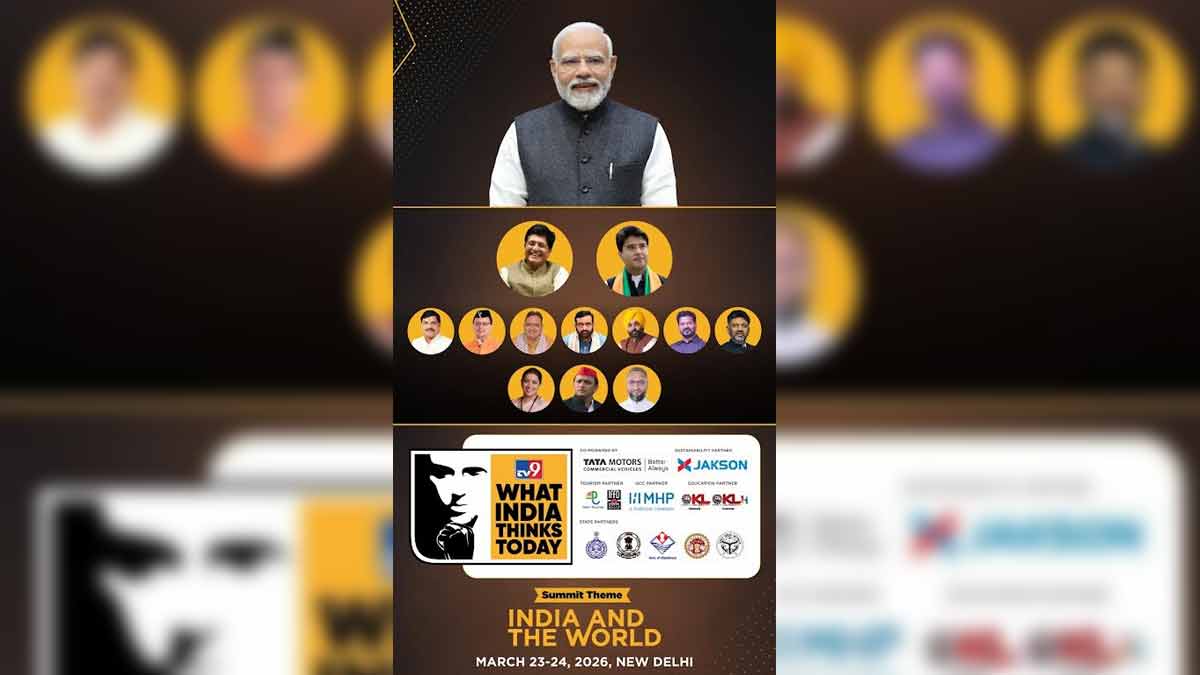
NEW DELHI: TV9 Network is gearing up to host the fourth edition of its flagship What India Thinks Today Summit 2026 on March 23 and 24 in the national capital, bringing together a wide spectrum of voices to debate India’s place in a shifting global order.
The summit will open with a keynote address by Narendra Modi, setting the tone for this year’s theme, “India and the world”, as the country positions itself at the crossroads of economic growth, geopolitical shifts and technological change.
From cabinet ministers to chief ministers, business leaders to cultural figures, the event promises a crowded stage and a lively exchange of ideas. Union ministers such as Piyush Goyal and Jyotiraditya Scindia are expected to attend, alongside state leaders including Mohan Yadav, Pushkar Singh Dhami, Bhajan Lal Sharma, Nayab Singh Saini and Bhagwant Mann.
Political voices from across the aisle, including Smriti Irani, Akhilesh Yadav and Asaduddin Owaisi, will also join the conversation, ensuring that the debates are as diverse as they are dynamic.
Adding a cultural and sporting touch, personalities such as yoga guru Swami Ramdev, poet Kumar Vishwas and cricketing names like Sourav Ganguly, Axar Patel and Arshdeep Singh are set to share the stage. Global business leaders and diplomats will further widen the lens, reflecting the summit’s international outlook.
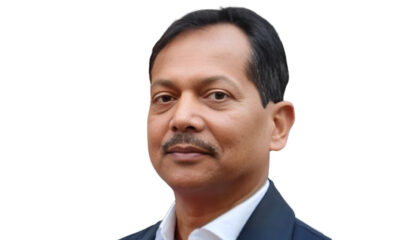
Speaking ahead of the event, TV9 Network managing director and chief executive officer Barun Das, said India stands at a unique moment in history, combining demographic strength, technological capability and entrepreneurial energy. He noted that in uncertain times, honest conversations and bold ideas will shape the country’s trajectory.
The summit will explore themes ranging from economic growth and governance to innovation, sustainability and culture, positioning itself as a platform for dialogue at a time when the world is in flux.
With a packed agenda and a high-profile guest list, What India Thinks Today Summit 2026 aims to do more than just talk. It seeks to capture a moment where India is not only part of the global conversation, but increasingly helping lead it.