GECs
Star having a rethink on its DTH plans


Star India, which in January was reported to have in place the blueprint for its DTH operations, appears to be having second thoughts after the government’s recent notification that there would be no changes to the guidelines it issued to broadcasters in November 2000.
Altaf Ali Mohammed, president digital platforms group, who had been brought in from Hong Kong to oversee Star’s DTH project in December last after Star abandoned its DTH plans for Hong Kong, has this to say: “At this point, the risks of going in for DTH are much higher than the possible rewards.”

“Even leaving aside the guidelines themselves, which are anyway extremely stringent, the government has not spelt out clearly some other issues,” Mohammed says. “ As far as computing our costs go, we still don’t have a clear picture on what spectrum usage fees and the uplinking licence fee mentioned in the notification will entail. Add the service tax and new income tax regime in the present budget and it effectively leaves us with little room to manouvre,” Mohammed says.
Queried whether Star has given up on DTH, Mohammed says: “We are putting together a business plan which will go into all aspects of this and the whole process will take at least 30 days. If at the end of this, we feel it is commercially viable for us to get into DTH we will, otherwise no.”
Why a business plan is required at this stage is the question if talk that Mohammed had already readied a report to be presented before the Star’s board in Hong Kong is true. Especially considering that in January, Star officials were quoted as saying that “in the absence of any positive response from the government on the issue of raising the foreign equity ceiling to a minimum of 49 per cent, it was anyway launching the project to take a first mover advantage.






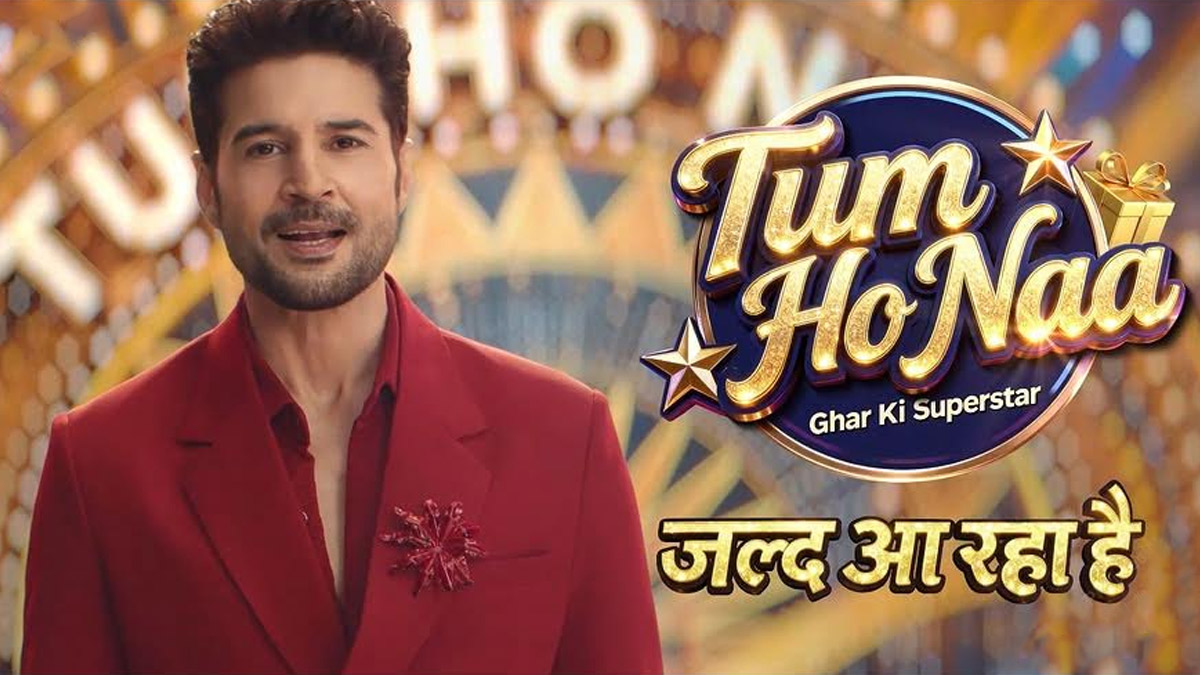
MUMBAI: Lights, camera… connection because this time, the game isn’t just about winning, it’s about who’s with you. Sony Pictures Networks India is gearing up to launch a new reality game show, Tum Ho Naa, expanding its unscripted slate with a format that promises both emotion and engagement.
The show will premiere soon on Sony Entertainment Television and stream on Sony LIV, with Rajeev Khandelwal stepping in as host. Known for his measured screen presence and selective choices, Khandelwal’s return to television adds a layer of familiarity and credibility to the upcoming format.
While specific details of the gameplay remain under wraps, the positioning suggests a reality format that leans as much on emotional resonance as it does on competition, an increasingly popular blend in Indian television, where audiences are gravitating towards content that offers both stakes and storytelling.
Khandelwal, reflecting on his return, noted that his choices have often been guided by instinct rather than convention, describing Tum Ho Naa as a project that feels “close to the heart”. His association also signals Sony’s continued focus on anchoring new formats with recognisable faces who bring both relatability and depth.
The launch comes at a time when broadcasters are doubling down on original non-fiction formats to drive appointment viewing, even as digital platforms expand parallel reach. By placing the show across both linear television and OTT, Sony appears to be aiming for a dual-audience strategy capturing traditional viewers while engaging digital-first consumers.
As the countdown to premiere begins, Tum Ho Naa positions itself not just as another game show, but as a reminder that sometimes, the biggest prize on screen isn’t the jackpot, it’s the journey shared along the way.







